THE LYONS REPUBLICAN
Clyde, Lyons, Galen, Wayne, New York, The Empire State
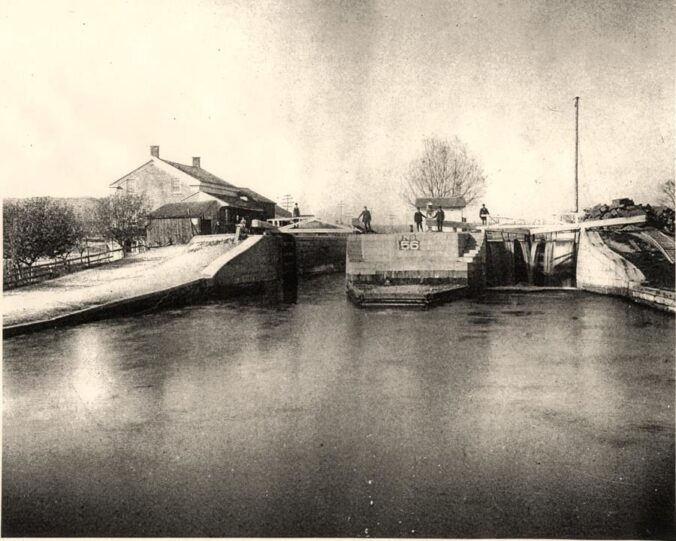
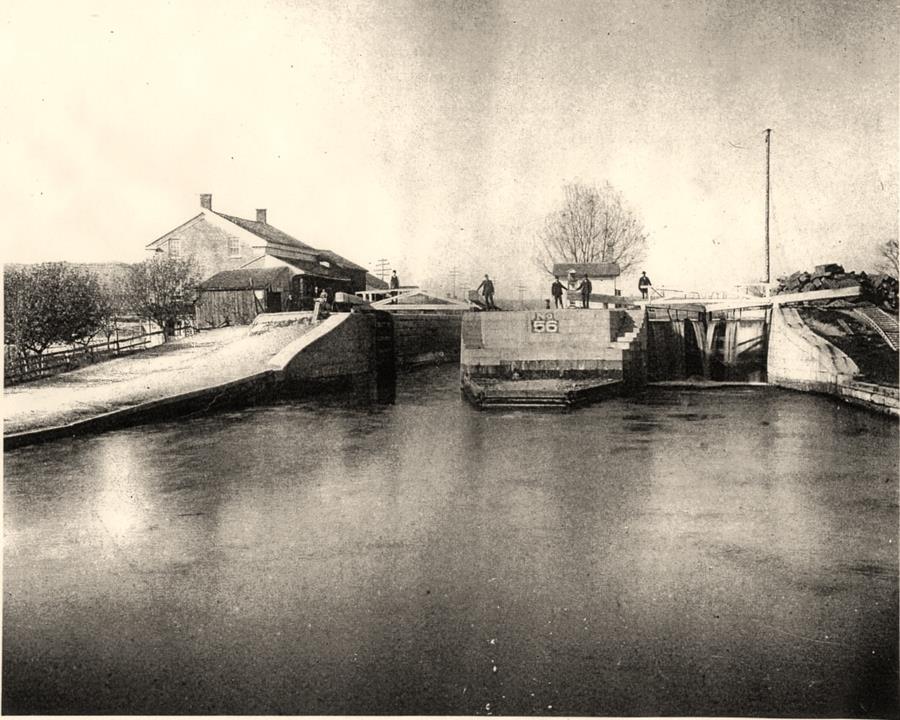
Clyde and Lyons, in Wayne County, New York, are paired communities whose identities pivot on a subtle distinction: Clyde remains an incorporated village within the Town of Galen, while Lyons, long the county seat and once an incorporated village, is now a hamlet within the Town of Lyons, its former village government dissolved and its urban core administered directly by the town. Both lie along the Erie Canal, and both truly expanded and took shape during the canal era: construction through this section in 1821–1822 and the canal’s opening in 1825 brought population growth, trade, and the emergence of local newspapers that gave these young canal communities their own printed voice.
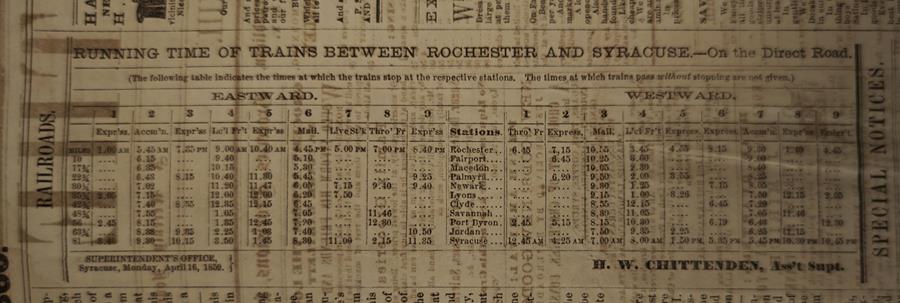
The railroad arrived three decades later, when, in June 1853, the new Rochester–Syracuse line was opened along the same low‑gradient corridor as the canal: at first it reinforced development in Clyde and Lyons, but over time it helped to undermine canal traffic, which declined sharply and was effectively eclipsed after the First World War. Eventually, as passenger service was cut back, the smaller intermediate stations were abandoned—by the early 1970s regular local stops had disappeared—and the great age of rail‑served canal towns receded into memory.
It is there that our investigation is set, on the morning of 18 February 1861, when the Lincoln inaugural train halted at Clyde station to the intense excitement of Clyde’s residents and, at the same time, to the deep disappointment of the people of Lyons, who could only watch the President‑elect’s train pass by without stopping.
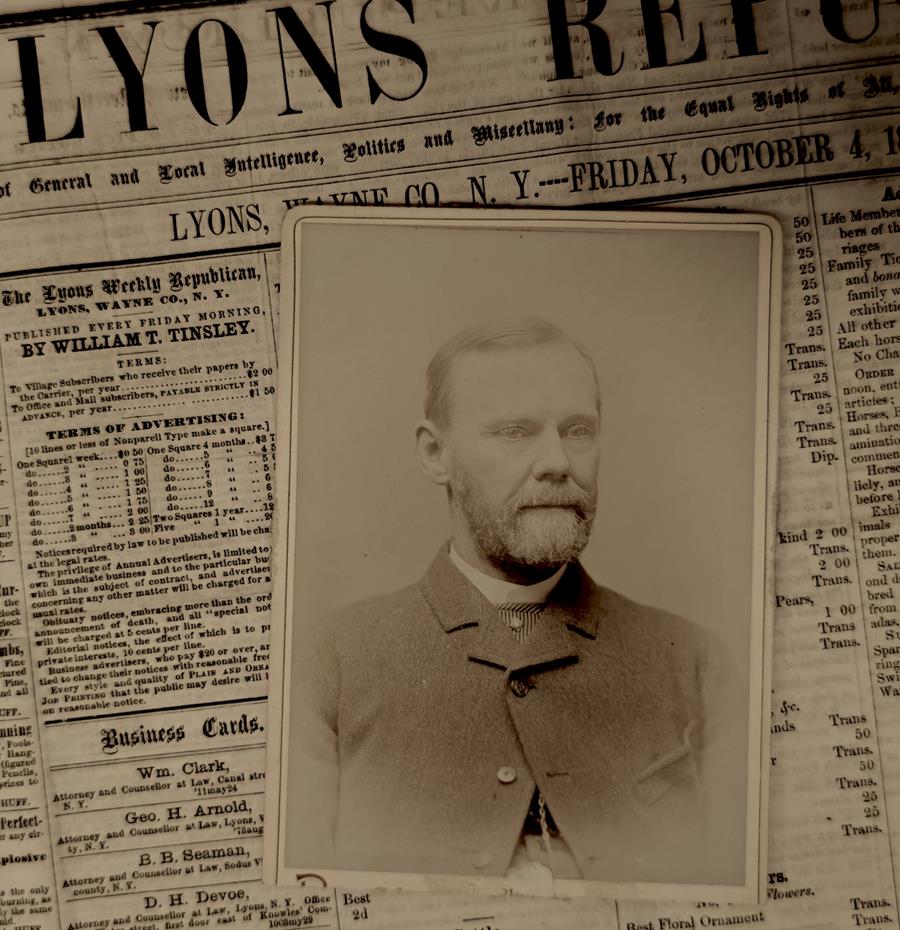
William T. Tinsley (1833–1893), editor and proprietor of the Lyons Republican from 1859 to 1889, was regarded in his own time as one of the leading weekly newspaper publishers in the country. Living near Clyde, just eight miles (thirteen kilometers) away by road, he was uniquely placed to cover events along the canal corridor, including the presidential visit, and turned his paper into an essential local chronicle.
Born in Whittlesea, England, Tinsley celebrated his second birthday on shipboard while crossing to America with his parents. His father, an eccentric portrait painter, fostered in him a taste for learning and close observation that would later inform his journalism; in adulthood, Tinsley’s private library became one of the largest in Wayne County. Trained in the printing trade, he worked as a journeyman printer in several villages across western New York and in Freeport, Illinois, before marrying Emma Guiteau in 1858 and settling in Lyons.
Beginning as foreman of the Lyons Republican, he soon purchased the establishment and developed it into one of the foremost Republican weeklies of the region. Colleagues and contemporaries praised not only the paper’s typographical quality and breadth of coverage, but also Tinsley’s unwavering personal integrity.
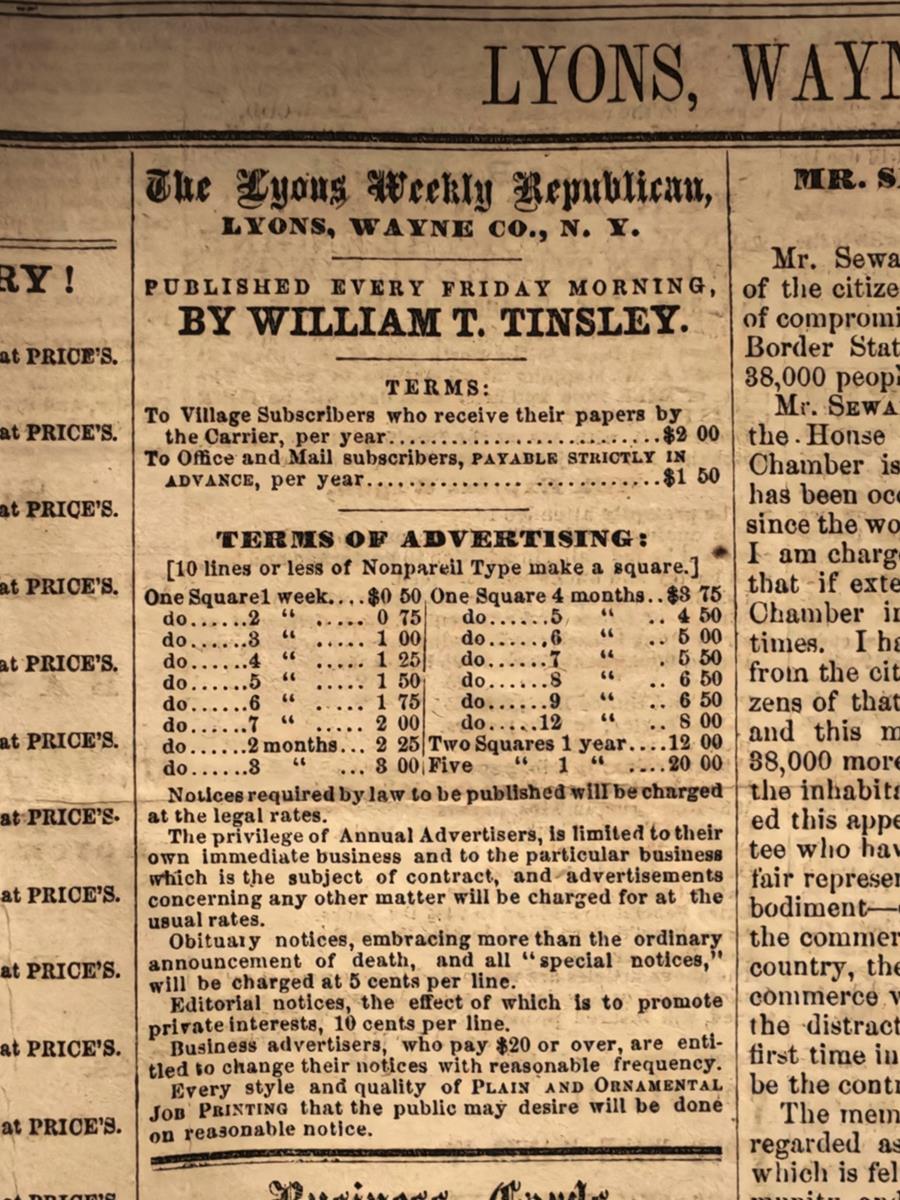
The Lyons Weekly Republican, Lyons, Wayne Co., N.Y.
Published every Friday morning, by William T. Tinsley.
Terms:
To village subscribers who receive their papers by the carrier, per year.. $2 00
To office and mail subscribers, payable strictly in advance, per year….. $1 50
Terms of Advertising:
10 lines or less of nonpareil type make a square…
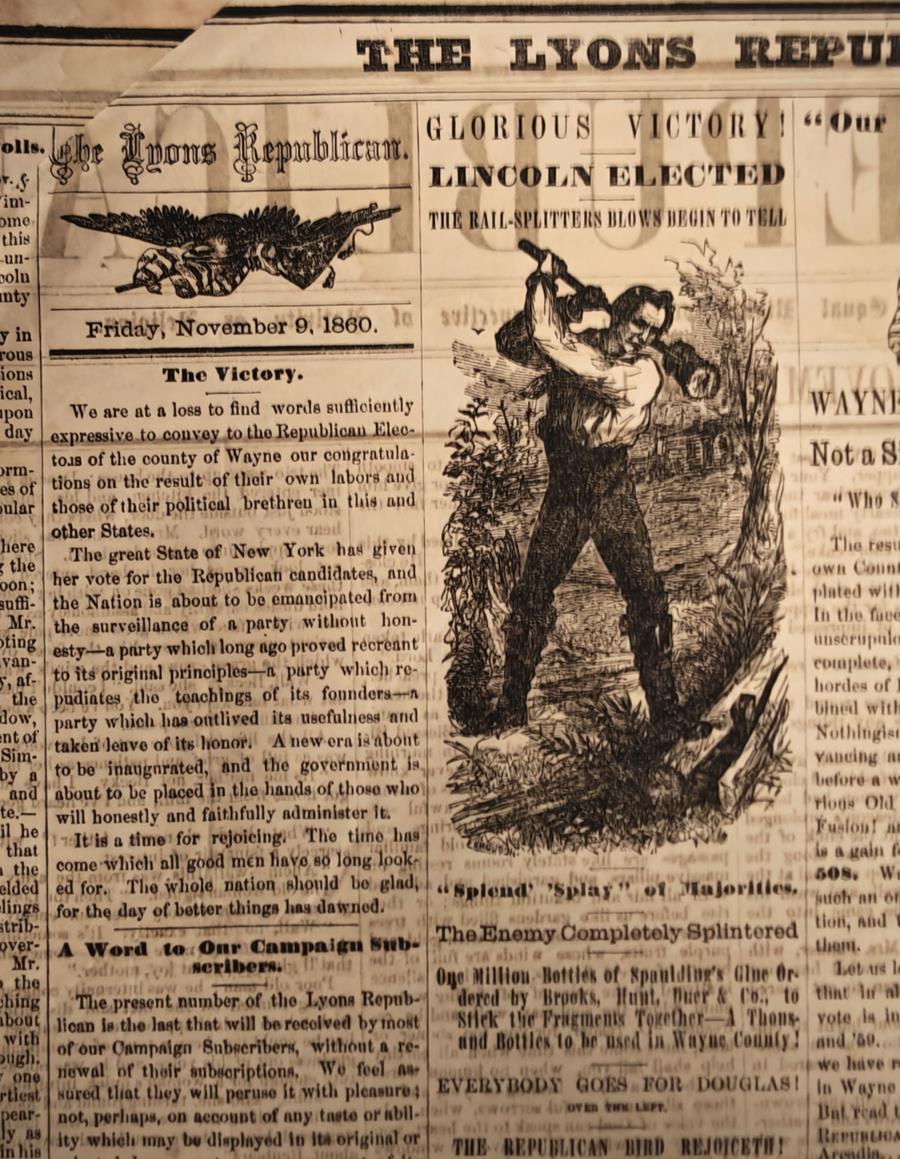
The Victory.
« We are at a loss to find words sufficiently expressive to convey to the Republican Electors of the county of Wayne our congratulations on the result of their own labors and those of their political brethren in this and other States. The great State of New York has given her vote for the Republican candidates, and the Nation is about to be emancipated from the surveillance of a party without honesty—a party which long ago proved recreant to its original principles; a party which repudiates the teachings of its founders—a party which has outlived its usefulness and taken leave of its honor. A new era is about to be inaugurated, and the government is about to be placed in the hands of those who will honestly and faithfully administer its affairs. It is a time for rejoicing. The time has come which all good men have so long looked for. The whole nation should be glad, for the day of better things has dawned. »
(William Tinsley, The Lyons Republican, Friday 9 November 1860)
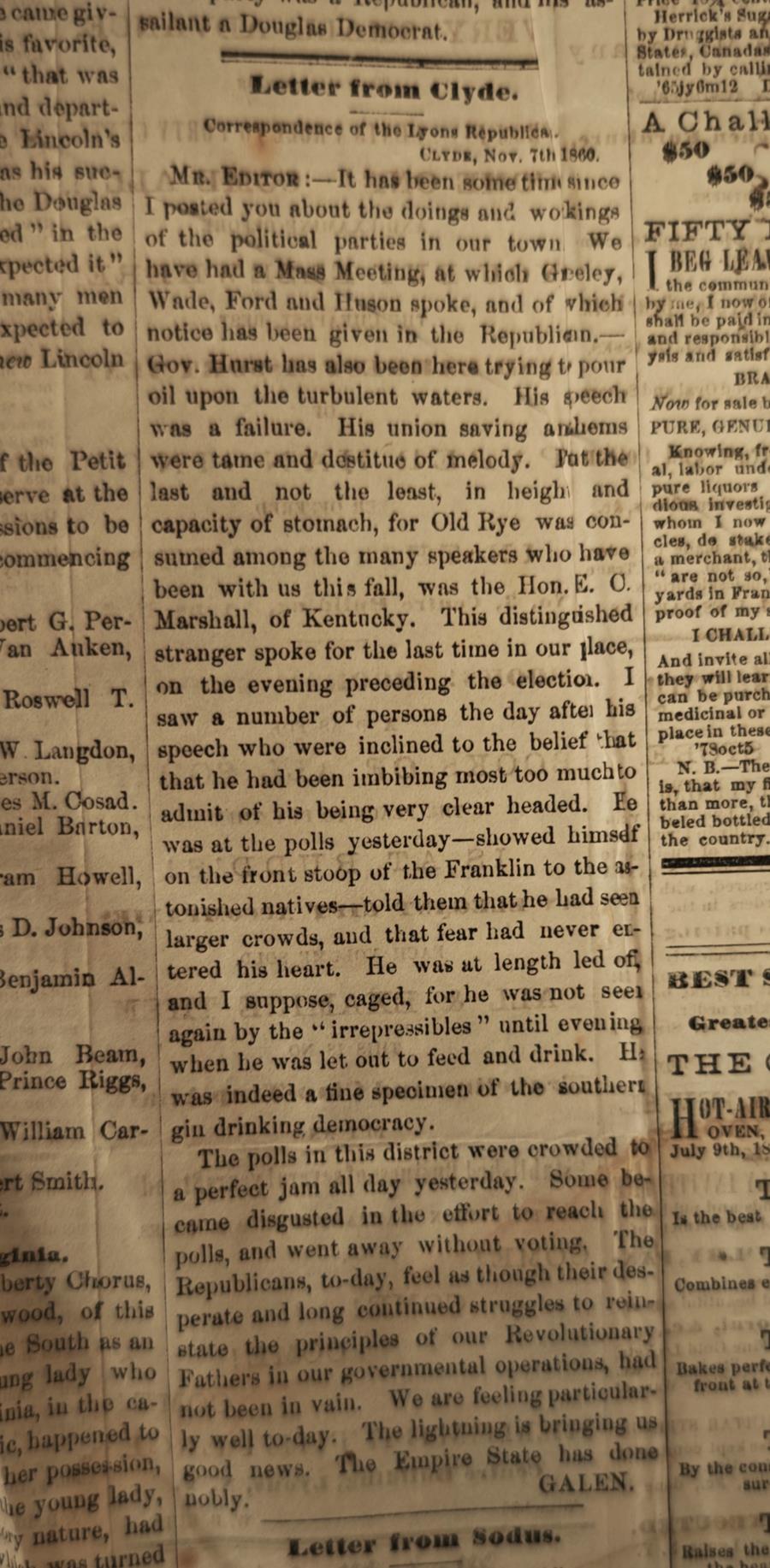
Letter from Clyde.
« MR. EDITOR: – It has been some time since I posted you about the doings and workings of the political parties in our town. We have had a Mass Meeting, at which Greeley, Wade, Ford and Huson spoke, and of which notice has been given in the Republican, – Gov. Hunt has also been here trying to pour oil upon the turbulent waters. His speech was a failure. His union saving anthems were tame and destitute of melody. Last, the last and not the least, in height and capacity of stomach, for Old Rye was consumed among the many speakers who have been with us this fall, was the Hon. E. C. Marshall, of Kentucky. This distinguished stranger spoke for the last time in our place, on the evening preceding the election. I saw a number of persons the day after his speech who were inclined to the belief that he had been imbibing most too much to admit of his being very clear headed. He was at the polls yesterday – showed himself on the front stoop of the Franklin to the astonished natives – told them that he had seen larger crowds, and that fear had never entered his heart. He was at length led off, and I suppose, caged, for he was not seen again by the “irrepressibles” until evening when he was let out to feed and drink. He was indeed a fine specimen of the southern gin drinking democracy.
The polls in this district were crowded to a perfect jam all day yesterday. Some became disgusted in the effort to reach the polls, and went away without voting. The Republicans, to‑day, feel as though their desperate and long continued struggles to reinstate the principles of our Revolutionary Fathers in our governmental operations, had not been in vain. We are feeling particularly well to‑day. The lightning is bringing us good news. The Empire State has done nobly.. »
(Signed: Galen, The Lyons Republican, Friday 9 November 1860)
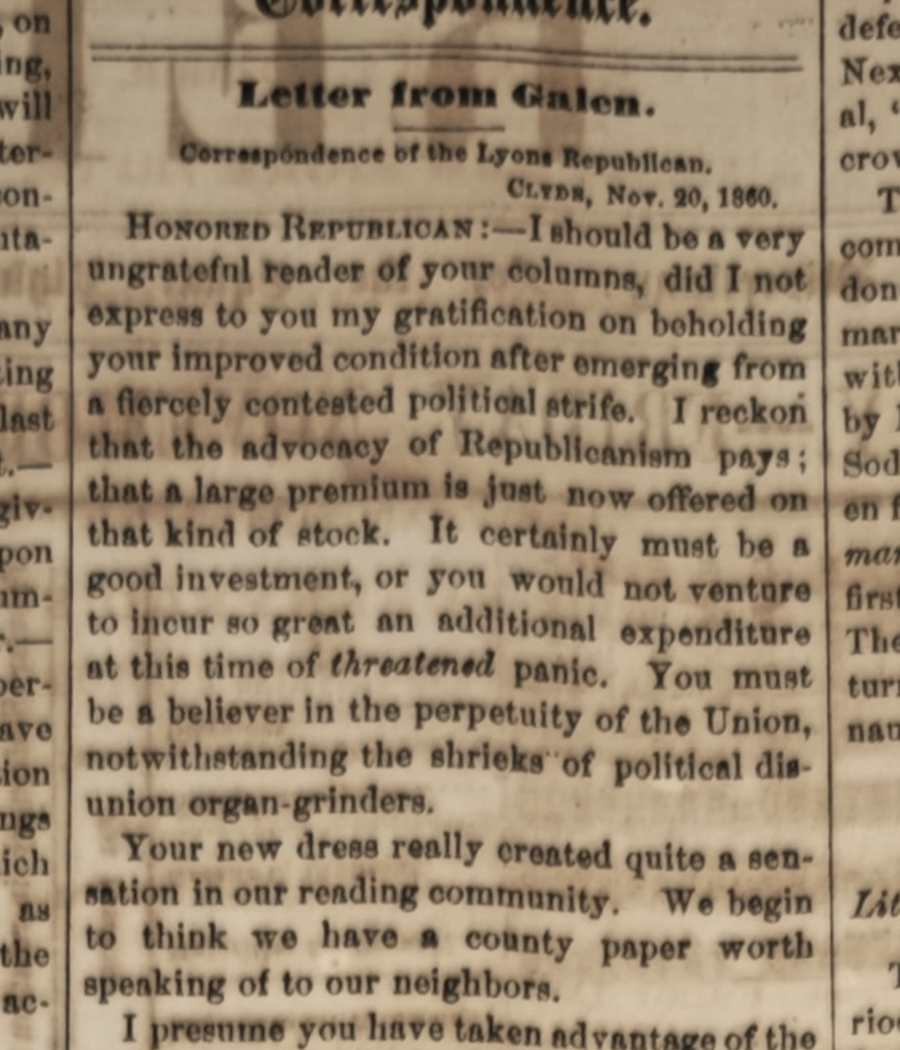
Letter from Galen.
Correspondence of the Lyons Republican.
Clyde, Nov. 20, 1860.
« HONORED REPUBLICAN: – I should be a very ungrateful reader of your columns, did I not express to you my gratification on beholding your improved condition after emerging from a fiercely contested political strife. I reckon that the advocacy of Republicanism pays; that a large premium is just now offered on that kind of stock. It certainly must be a good investment, or you would not venture to incur so great an additional expenditure at this time of threatened panic. You must be a believer in the perpetuity of the Union, notwithstanding the shrieks of political disunion organ‑grinders. »
Then he addresses the initiative to increase the size of the Lyons Republican:
« Your new dress really created quite a sensation in our reading community. We begin to think we have a county paper worth speaking of to our neighbors… »
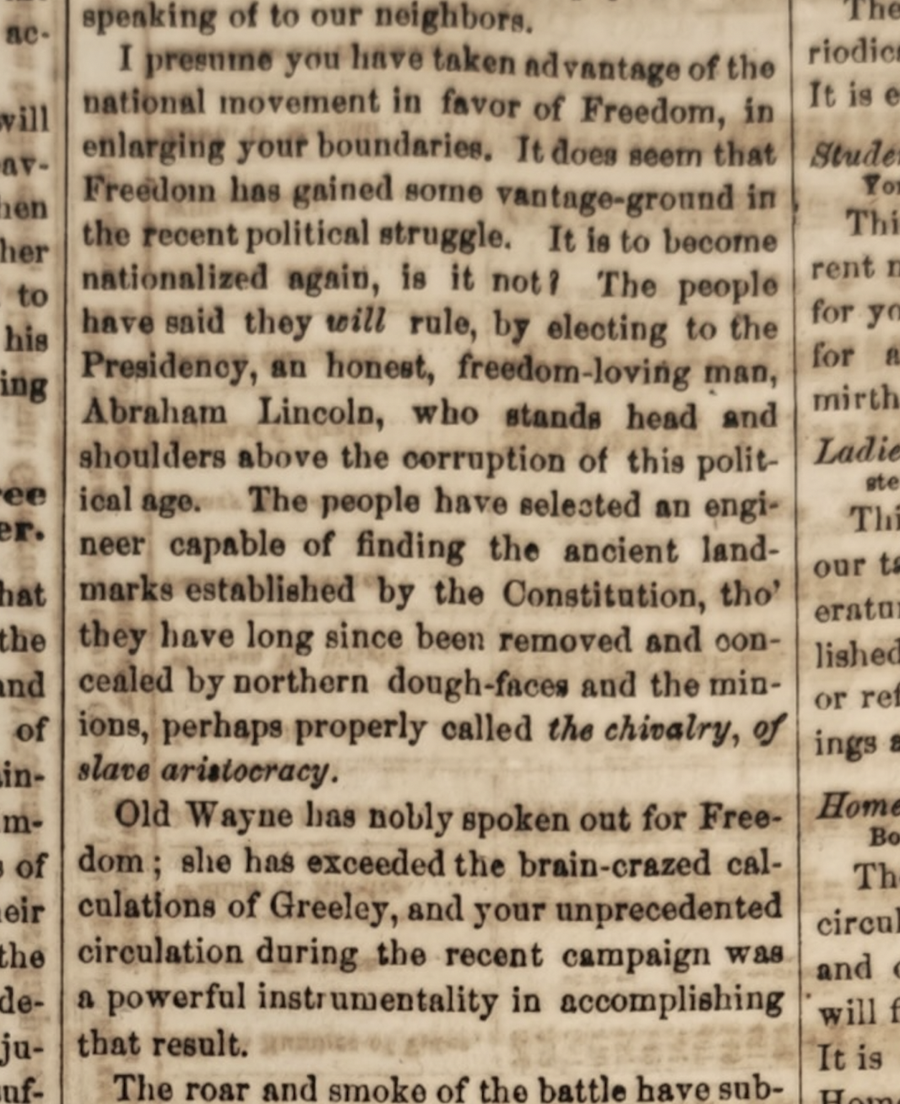
» … I presume you have taken advantage of the national movement in favor of Freedom, in enlarging your boundaries. It does seem that Freedom has gained some vantage‑ground in the recent political struggle. It is to become nationalized again, is it not? The people have said they will rule, by electing to the Presidency, an honest, freedom‑loving man, Abraham Lincoln, who stands head and shoulders above the corruption of this political age. The people have selected an engineer capable of finding the ancient landmarks established by the Constitution, tho’ they have long since been removed and concealed by northern dough‑faces and the minions, perhaps properly called the chivalry, of slave aristocracy.
Old Wayne has nobly spoken out for Freedom; she has exceeded the brain‑crazed calculations of Greeley, and your unprecedented circulation during the recent campaign was a powerful instrumentality in accomplishing that result… »
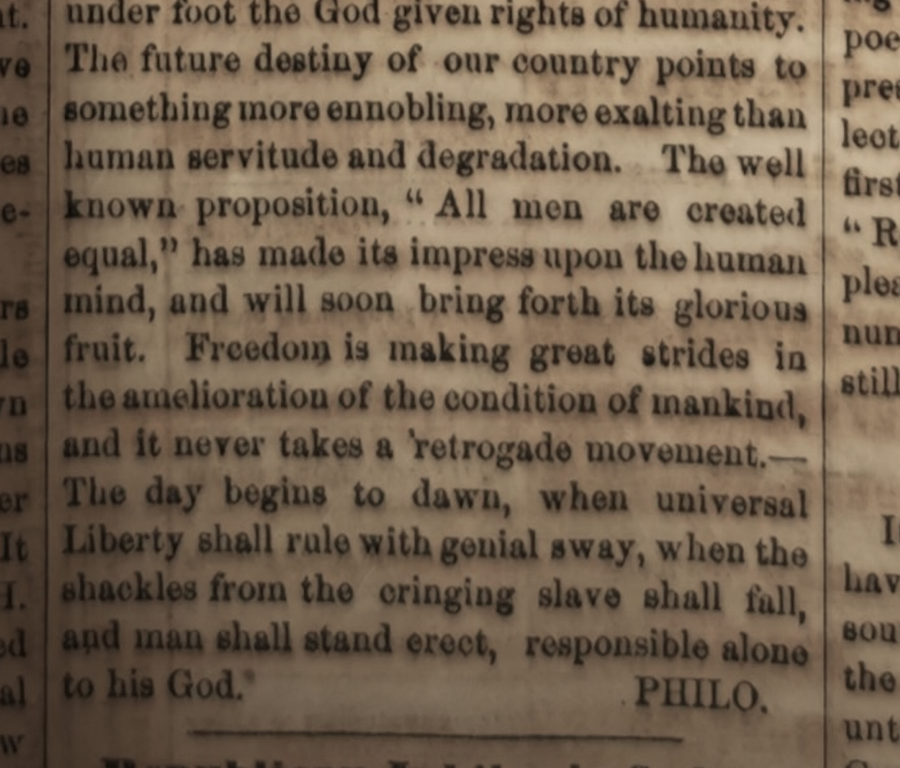
« … The future destiny of our country points to something more ennobling, more exalting than human servitude and degradation. The well‑known proposition, “All men are created equal,” has made its impress upon the human mind, and will soon bring forth its glorious fruit. Freedom is making great strides in the amelioration of the condition of mankind, and it never takes a retrograde movement. The day begins to dawn, when universal Liberty shall rule with genial sway, when the shackles from the cringing slave shall fall, and man shall stand erect, responsible alone to his God. »
(Signed: Philo, The Lyons Republican, Friday 23 November 1860)
William Tinsley is praised not only for his militant support of Lincoln and Republicanism, but also for his broad curiosity: he covers news about Garibaldi, follows the progress of photography, and earns compliments from journalists in much larger cities.
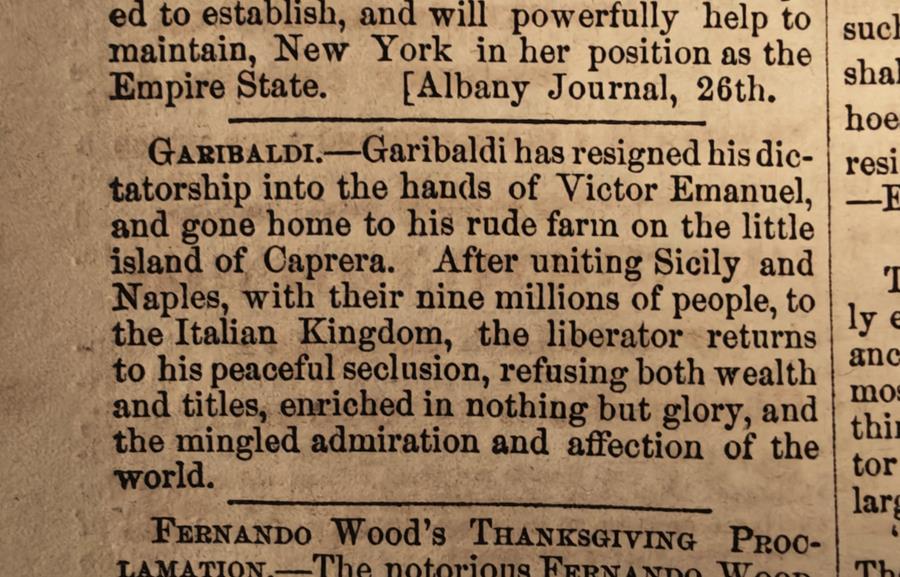
« Garibaldi. — Garibaldi has resigned his dictatorship into the hands of Victor Emanuel, and gone home to his rude farm on the little island of Caprera. After uniting Sicily and Naples, with their nine millions of people, to the Italian Kingdom, the liberator returns to his peaceful seclusion, refusing both wealth and titles, enriched in nothing but glory, and the mingled admiration and affection of the world. »
(William Tinsley, The Lyons Republican, Friday 9 November 1860)
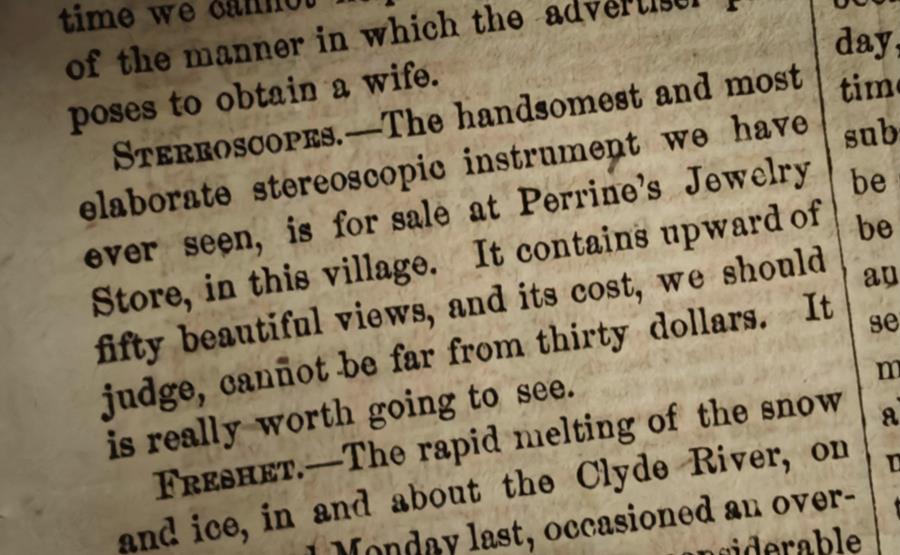
(William Tinsley, The Lyons Republican, Friday 23 November 1860)
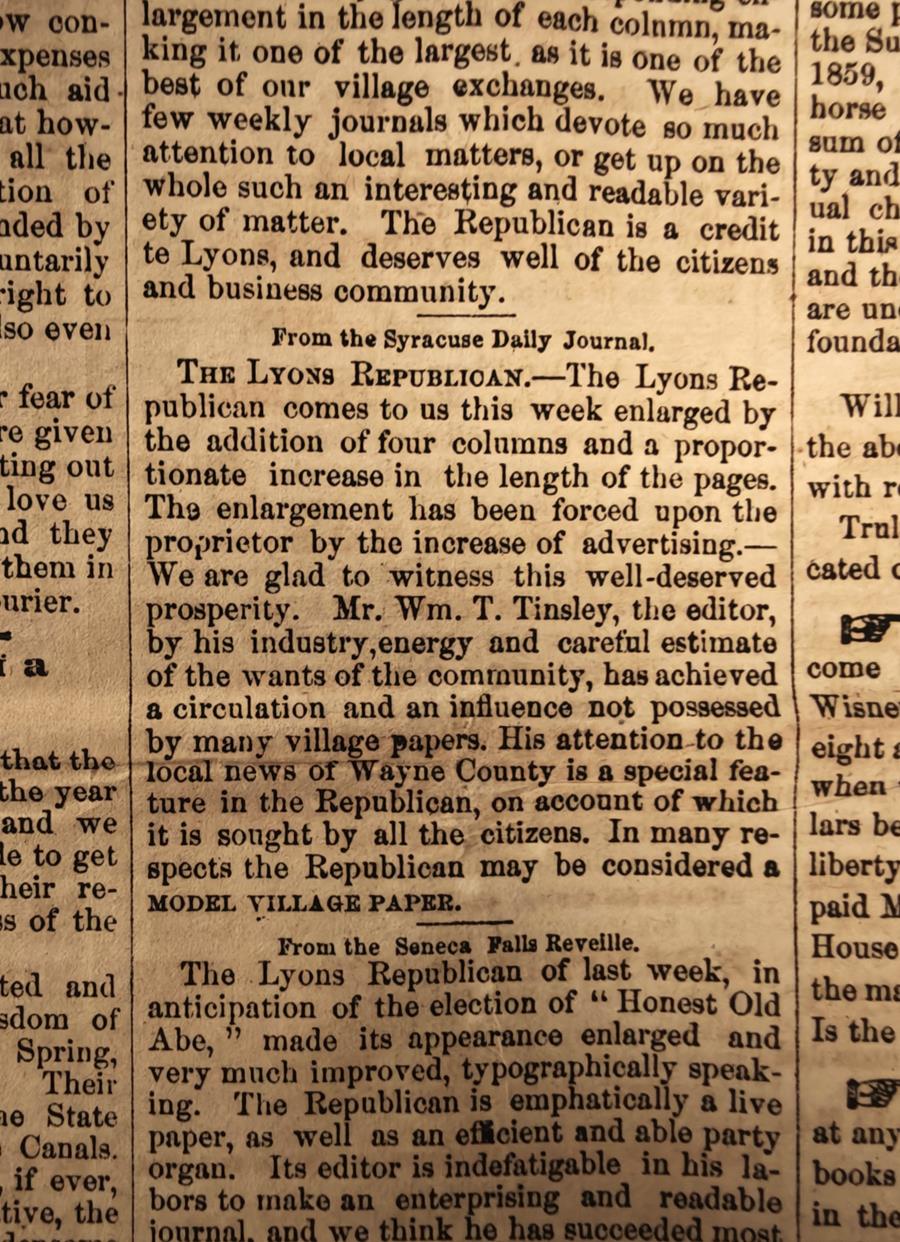
« …enlargement in the length of each column, making it one of the largest, as it is one of the best of our village exchanges. We have few weekly journals which devote so much attention to local matters, or get up on the whole such an interesting and readable variety of matter. The Republican is a credit to Lyons, and deserves well of the citizens and business community.
From the Syracuse Daily Journal.
The Lyons Republican. — The Lyons Republican comes to us this week enlarged by the addition of four columns and a proportionate increase in the length of the pages. The enlargement has been forced upon the proprietor by the increase of advertising. — We are glad to witness this well‑deserved prosperity. Mr. Wm. T. Tinsley, the editor, by his industry, energy and careful estimate of the wants of the community, has achieved a circulation and an influence not possessed by many village papers. His attention to the local news of Wayne County is a special feature in the Republican, on account of which it is sought by all the citizens. In many respects the Republican may be considered a model village paper.
From the Seneca Falls Reveille.
The Lyons Republican of last week, in anticipation of the election of “Honest Old Abe,” made its appearance enlarged and very much improved, typographically speaking. The Republican is emphatically a live paper, as well as an efficient and able party organ. Its editor is indefatigable in his labors to make an enterprising and readable journal, and we think he has succeeded most admirably. »
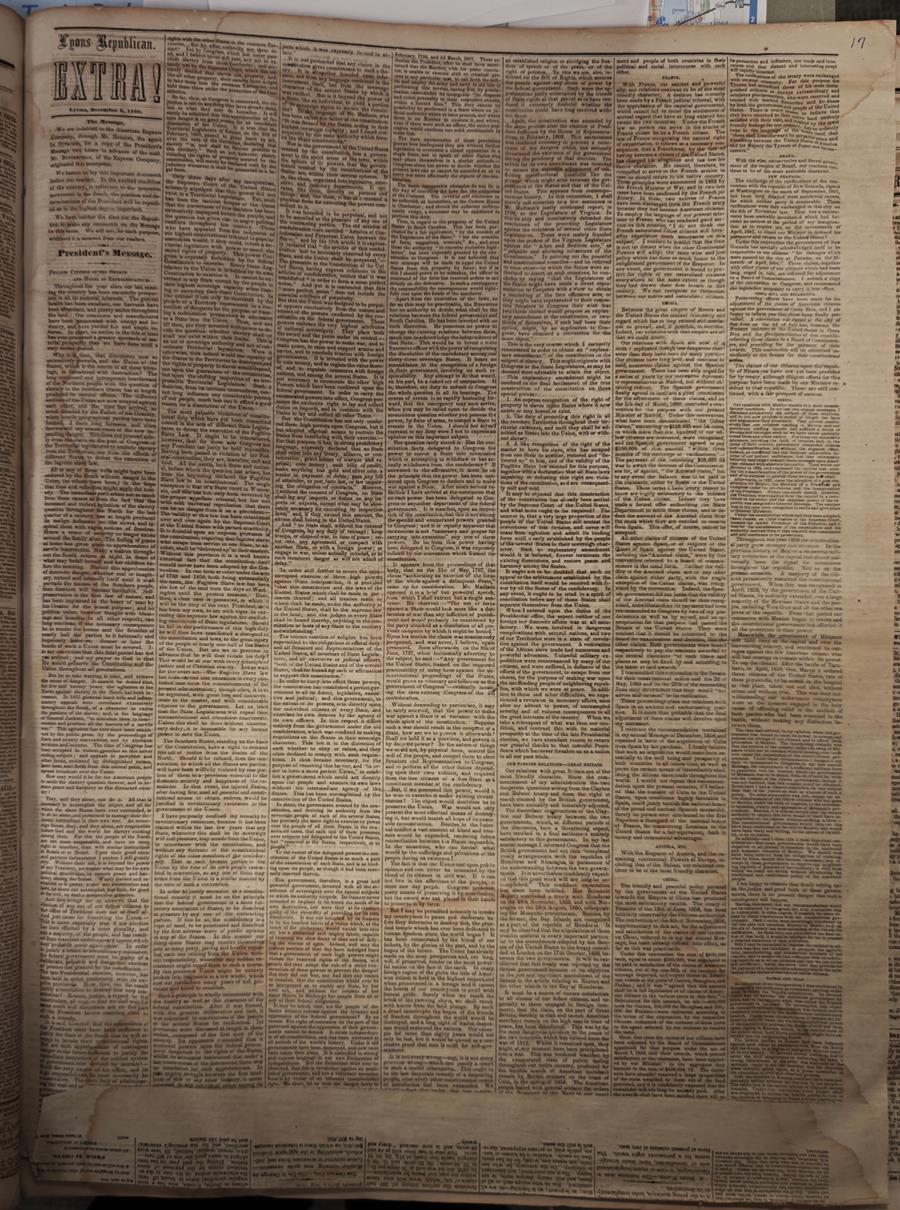
The physical format of the newspaper is itself impressive when compared with most small‑town papers in the United States in 1860.
William Tinsley did not hesitate to fill this large surface with very long and substantial texts, not only about Lincoln and Republican politics, fas the complete Inaugural address, but also, for example, by printing President James Buchanan’s Fourth Annual Message to Congress, delivered on 3 December 1860, which he managed to publish for his readers as early as Friday morning, 6 December, in order to guide them through the mounting national crisis.
He also announces an extraordinary event: President‑elect Abraham Lincoln will pass through Wayne County and the canal region by train. For many local residents, this may be the only chance in their lifetime to see the man who now embodies their greatest hopes, for whom they have just voted in overwhelming numbers.
William Tinsley emphasizes this inaugural railroad journey as a historic moment that will briefly bring the future President into the heart of this small canal community.
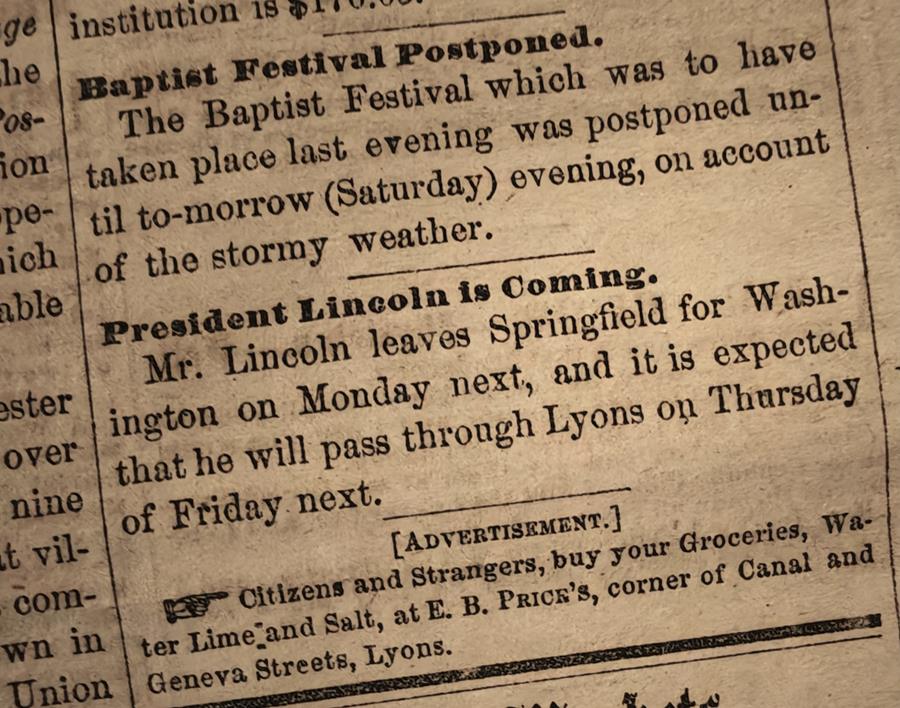
President Lincoln is Coming.
« Mr. Lincoln leaves Springfield for Washington on Monday next, and it is expected that he will pass through Lyons on Thursday or Friday next. »
(William Tinsley, The Lyons Republican, Friday 8 February 1861)
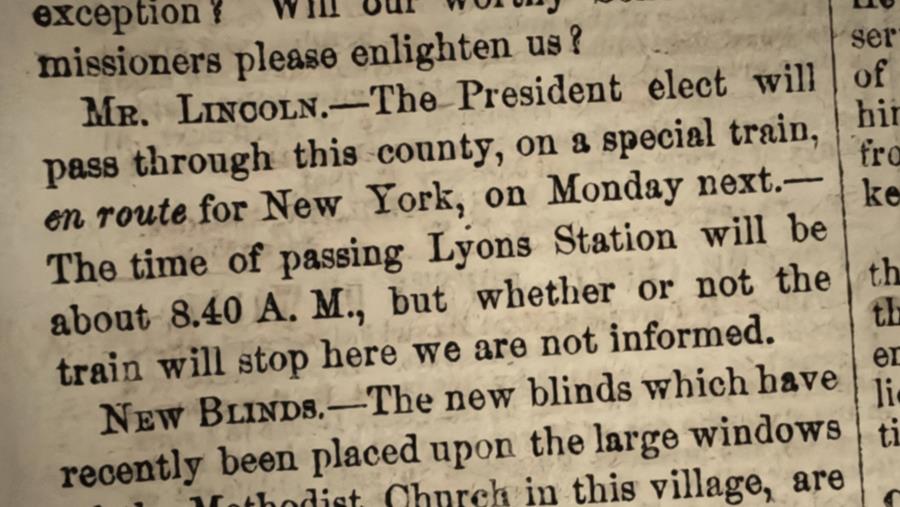
(William Tinsley, The Lyons Republican, Friday 15 February 1861)
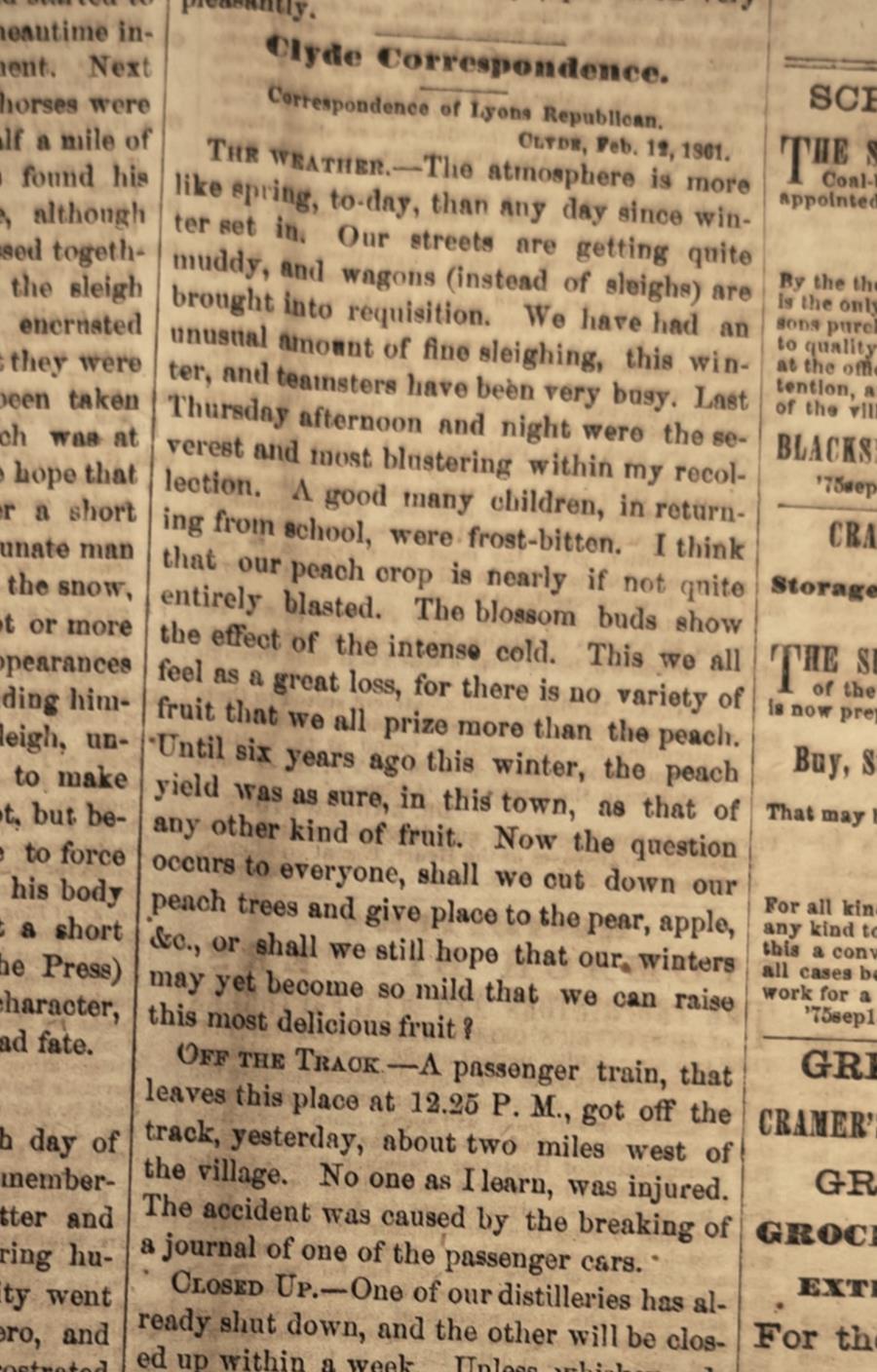
Clyde Correspondence.
Correspondence of the Lyons Republican.
Newark, February 12, 1861.
« THE WEATHER. — The atmosphere is more like spring, to‑day, than any day since October set in. Our streets are getting quite muddy, and wagons (instead of sleighs) are again in requisition. We have had an unusual amount of fine sleighing, this winter, but farmers have been very sorry for it. Thursday afternoon and night were the severest and most blustering within the memory of most of us, and Saturday night was but a little behind. A good many children, in returning from school, were frost‑bitten.
Our peach crop is nearly if not quite entirely blasted. The blossoms have been cut off by the intense cold. This we all feel as a great loss, for there is no variety of fruit that we all prize more than the peach. Until six years ago this winter, the grape yield was as sure, in this town, as that of any other kind of fruit. Now the question occurs to every one, shall we cut down our peach trees and give place to the pear, apple, or grape, or shall we still hope that our winters may yet become so mild that we can raise again this delicious fruit?
OFF THE TRACK. — A passenger train, that leaves this place at 12.35 P.M., got off the track yesterday, about two miles west of the village. No one, as I learn, was injured. The accident was caused by the breaking of a journal of one of the cars.
CLOSED UP. — One of our distilleries has already shut down, and the other will be used up within a week…«
(signed: Galen, The Lyons Republican, 15 February 1861)
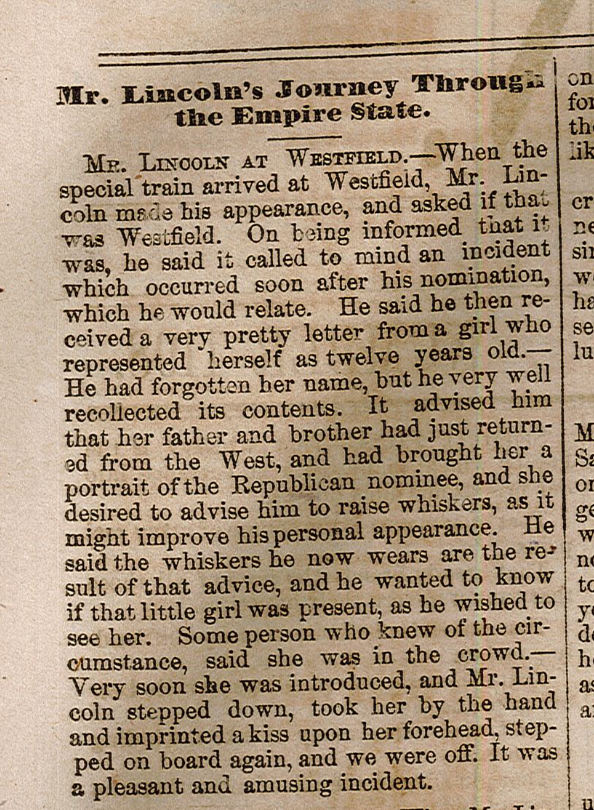
« Mr. Lincoln at Westfield — When the special train arrived at Westfield, Mr. Lincoln made his appearance, and asked if that was Westfield. On being informed that it was, he said it called to mind an incident which occurred soon after his nomination, which he would relate. He said he then received a very pretty letter from a girl who represented herself as twelve years old. — He had forgotten her name, but he very well recollected its contents. It advised him that her father and brother had just returned from the West, and had brought her a portrait of the Republican nominee, and she desired to advise him to raise whiskers, as it might improve his personal appearance.
He said the whiskers he now wears are the result of that advice, and he wanted to know if that little girl was present, as he wished to see her. Some person who knew of the circumstance, said she was in the crowd.
Very soon she was introduced, and Mr. Lincoln stepped down, took her by the hand and imprinted a kiss upon her forehead, stepped on board again, and we were off. It was a pleasant and amusing incident… »
(William Tinsley, The Lyons Republican, 22 February 1861)
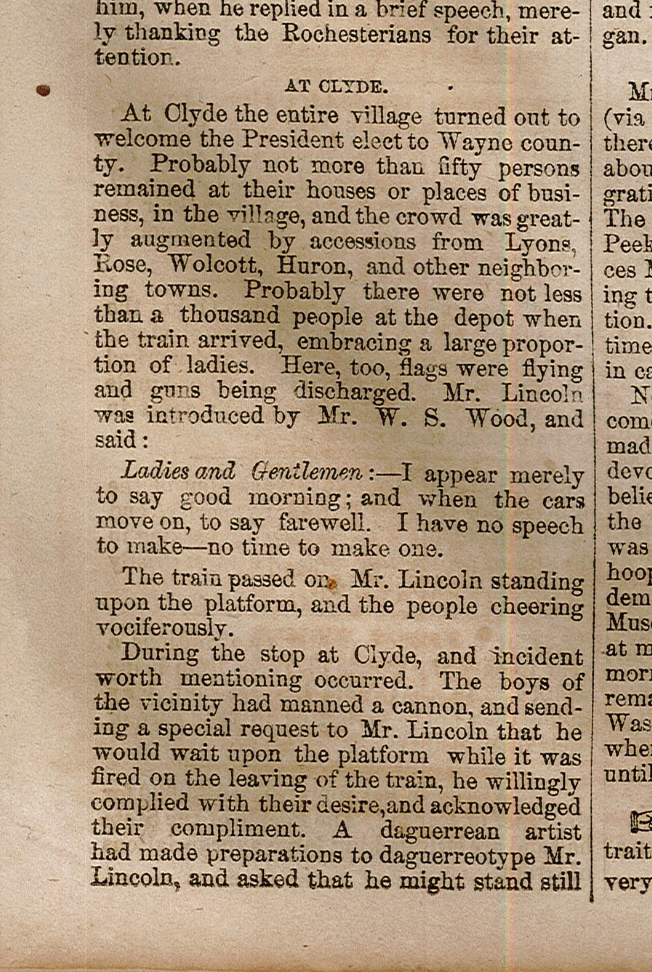
At Clyde – A Daguerrean Artist had made preparations
« At Clyde the entire village turned out to welcome the President-elect to Wayne county. Probably not more than fifty persons remained at their houses or places of business, in the village, and the crowd was greatly augmented by accessions from Lyons, Rose, Wolcott, Huron, and other neighboring towns. Probably there were not less than a thousand people at the depot when the train arrived, embracing a large proportion of ladies. Here, too, flags were flying and guns being discharged. Mr. Lincoln was introduced by Mr. W. S. Wood, and said:
Ladies and Gentlemen:—I appear merely to say good morning; and when the cars move on, to say farewell. I have no speech to make—no time to make one.
The train passed on, Mr. Lincoln standing upon the platform, and the people cheering vociferously.
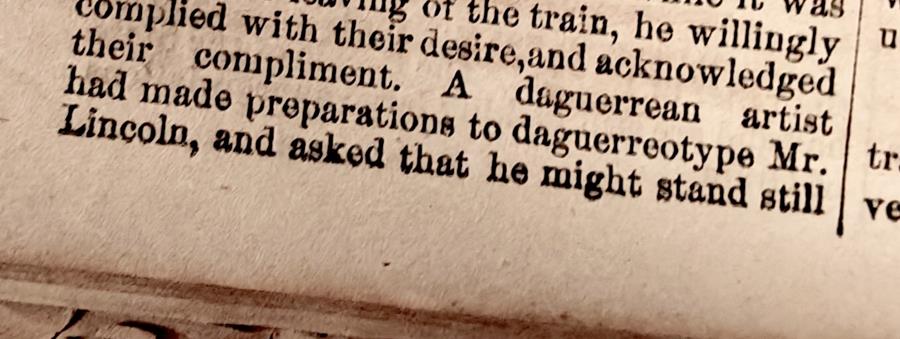
During the stop at Clyde, an incident worth mentioning occurred. The boys of the vicinity had manned a cannon, and sending a special request to Mr. Lincoln that he would wait upon the platform while it was fired on the leaving of the train, he willingly complied with their desire, and acknowledged their compliment. A daguerrean artist had made preparations to daguerreotype Mr. Lincoln, and asked that he might stand still [column brake] «
At Clyde …
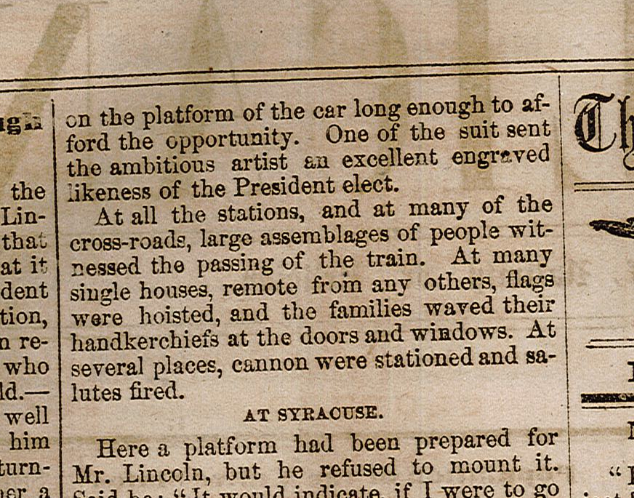
… A daguerrean artist had made preparations to daguerreotype Mr. Lincoln, and asked that he might stand still [column brake] on the platform of the car long enough to afford the opportunity. One of the suit sent the ambitious artist an excellent engraved likeness of the President-elect.
At all the stations, and at many of the cross-roads, large assemblages of people witnessed the passing of the train. At many single houses, remote from any others, flags were hoisted, and the families waved their handkerchiefs at the doors and windows. At several places, cannon were stationed and salutes fired. »
(William Tinsley, The Lyons Republican, 22 February 1861)
How Mr. Lincoln Looks.
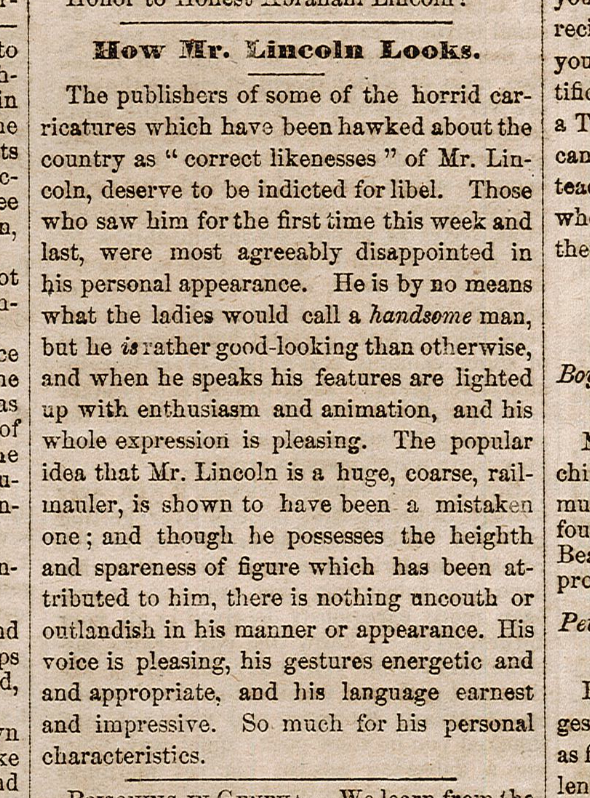
« The publishers of some of the horrid caricatures which have been hawked about the country as “correct likenesses” of Mr. Lincoln, deserve to be indicted for libel.
Those who saw him for the first time this week and last, were most agreeably disappointed in his personal appearance. He is by no means what the ladies would call a handsome man, but he is rather good-looking than otherwise, and when he speaks his features are lighted up with enthusiasm and animation, and his whole expression is pleasing. The popular idea that Mr. Lincoln is a huge, coarse, rail-mauler, is shown to have been a mistaken one; and though he possesses the height and spareness of figure which has been attributed to him, there is nothing uncouth or outlandish in his manner or appearance. His voice is pleasing, his gestures energetic and appropriate, and his language earnest and impressive. So much for his personal characteristics. »
(William Tinsley, The Lyons Republican, 22 February 1861)
Letter from Newark.
Correspondence of the Lyons Republican.
Newark, February 20, 1861.
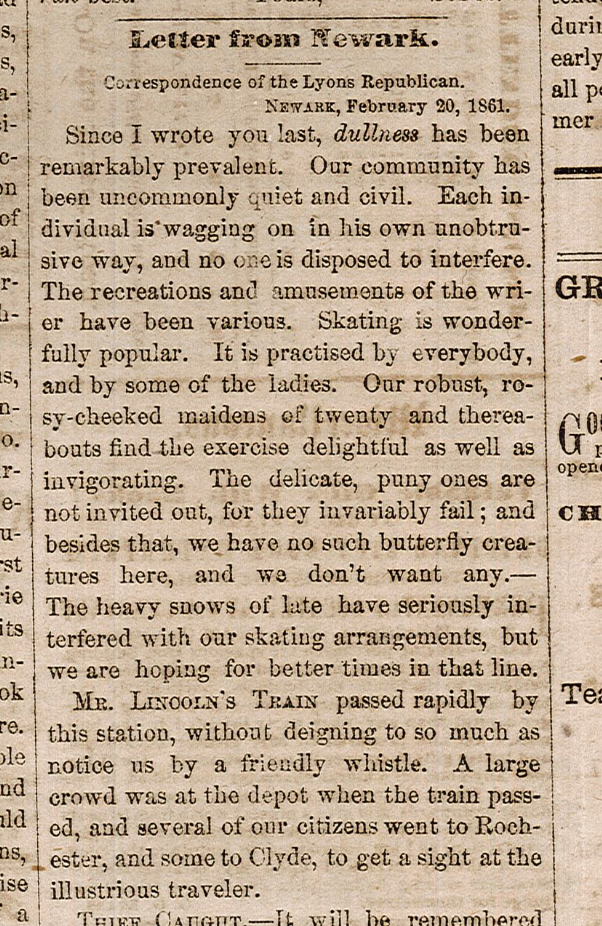
« Since I wrote you last, dullness has been remarkably prevalent. Our community has been uncommonly quiet and civil. Each individual is wagging on in his own unobtrusive way, and no one is disposed to interfere. The recreations and amusements of the writer have been various. Skating is wonderfully popular. It is practised by everybody, and by some of the ladies. Our robust, rosy-cheeked maidens of twenty and thereabouts find the exercise delightful as well as invigorating. The delicate, puny ones are not invited out, for they invariably fail; and besides that, we have no such butterfly creatures here, and we don’t want any.
The heavy snows of late have seriously interfered with our skating arrangements, but we are hoping for better times in that line.
Mr. Lincoln’s train passed rapidly by this station, without deigning to so much as notice us by a friendly whistle. A large crowd was at the depot when the train passed, and several of our citizens went to Rochester, and some to Clyde, to get a sight at the illustrious traveler. »
(The Lyons Republican, 22 February 1861)
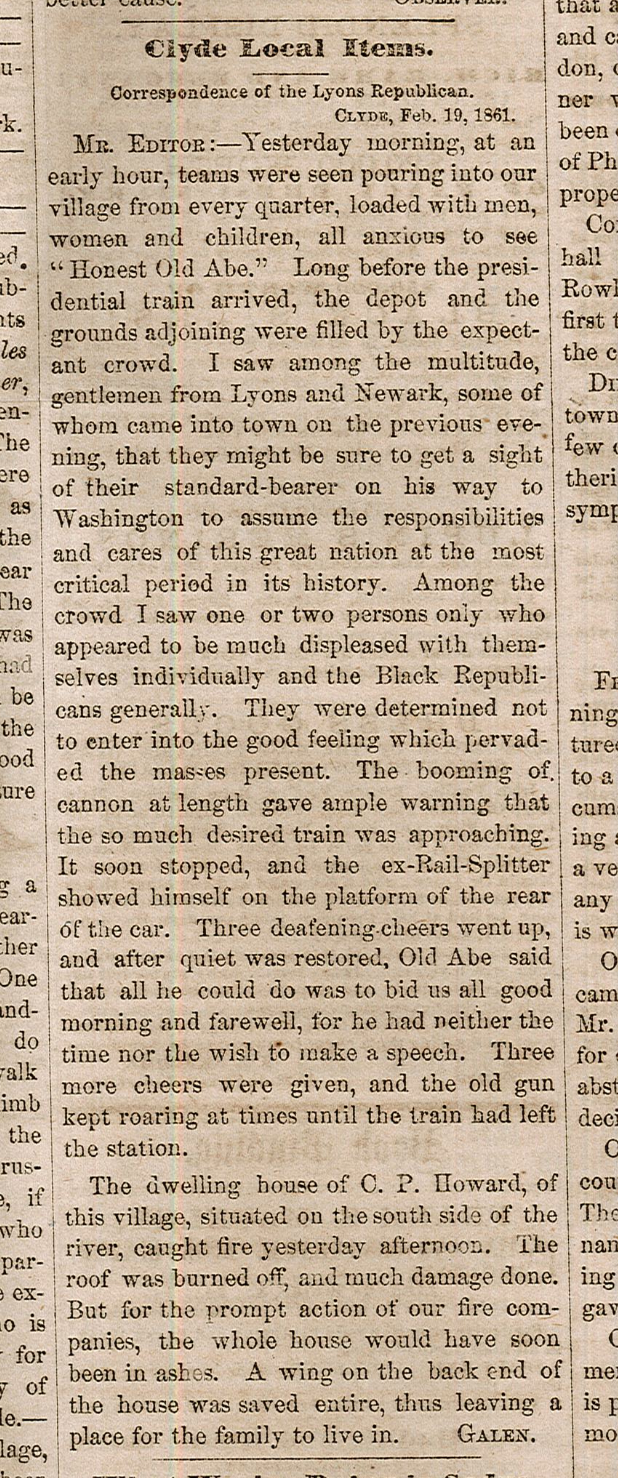
Clyde Local Items.
Correspondence of the Lyons Republican.
Clyde, Feb. 19, 1861.
« Mr. Editor:—Yesterday morning, at an early hour, teams were seen pouring into our village from every quarter, loaded with men, women and children, all anxious to see “Honest Old Abe.” Long before the presidential train arrived, the depot and the grounds adjoining were filled by the expectant crowd. I saw among the multitude, gentlemen from Lyons and Newark, some of whom came into town on the previous evening, that they might be sure to get a sight of their standard-bearer on his way to Washington to assume the responsibilities and cares of this great nation at the most critical period in its history.
Among the crowd I saw one or two persons only who appeared to be much displeased with themselves individually and the Black Republicans generally. They were determined not to enter into the good feeling which pervaded the masses present. The booming of cannon at length gave ample warning that the so much desired train was approaching. It soon stopped, and the ex-Rail-Splitter showed himself on the platform of the rear of the car. Three deafening cheers went up, and after quiet was restored, Old Abe said that all he could do was to bid us all good morning and farewell, for he had neither the time nor the wish to make a speech. Three more cheers were given, and the old gun kept roaring at times until the train had left the station.
The dwelling house of C. P. Howard, of this village, situated on the south side of the river, caught fire yesterday afternoon. The roof was burned off, and much damage done. But for the prompt action of our fire companies, the whole house would have soon been in ashes. A wing on the back end of the house was saved entire, thus leaving a place for the family to live in. »
(signed: Galen (pseudonym), The Lyons Republican, 22 February 1861)
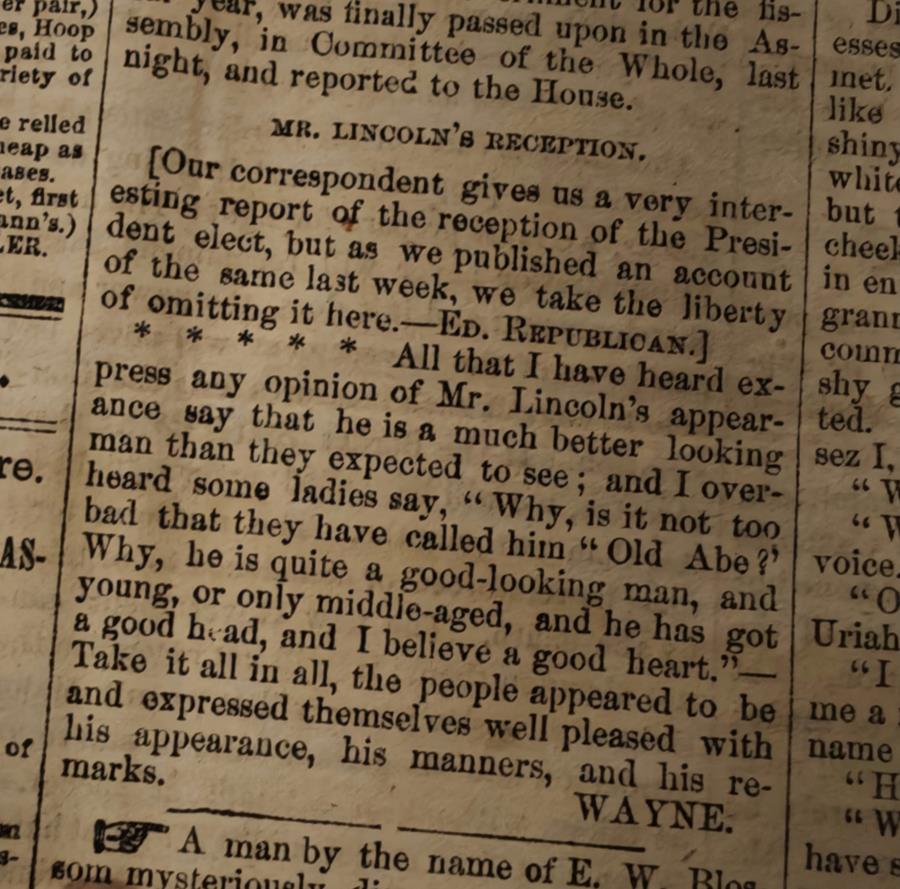
« All that I have heard express any opinion of Mr. Lincoln’s appearance say that he is a much better looking man than they expected to see; and I overheard some ladies say, “Why, is it not too bad that they have called him ‘Old Abe’? Why, he is quite a good-looking man, and young, or only middle-aged, and he has got a good head, and I believe a good heart.” — Take it all in all, the people appeared to be and expressed themselves well pleased with his appearance, his manners, and his remarks. »
(signed: Wayne (pseudonym), The Lyons Republican, 29 February 1861)
Public Safety Building 7376 State Route 31, Ste 100 Lyons, NY 14489-9172
Phone: 315.946.5470
Email: Historian@WayneCountyNY.gov
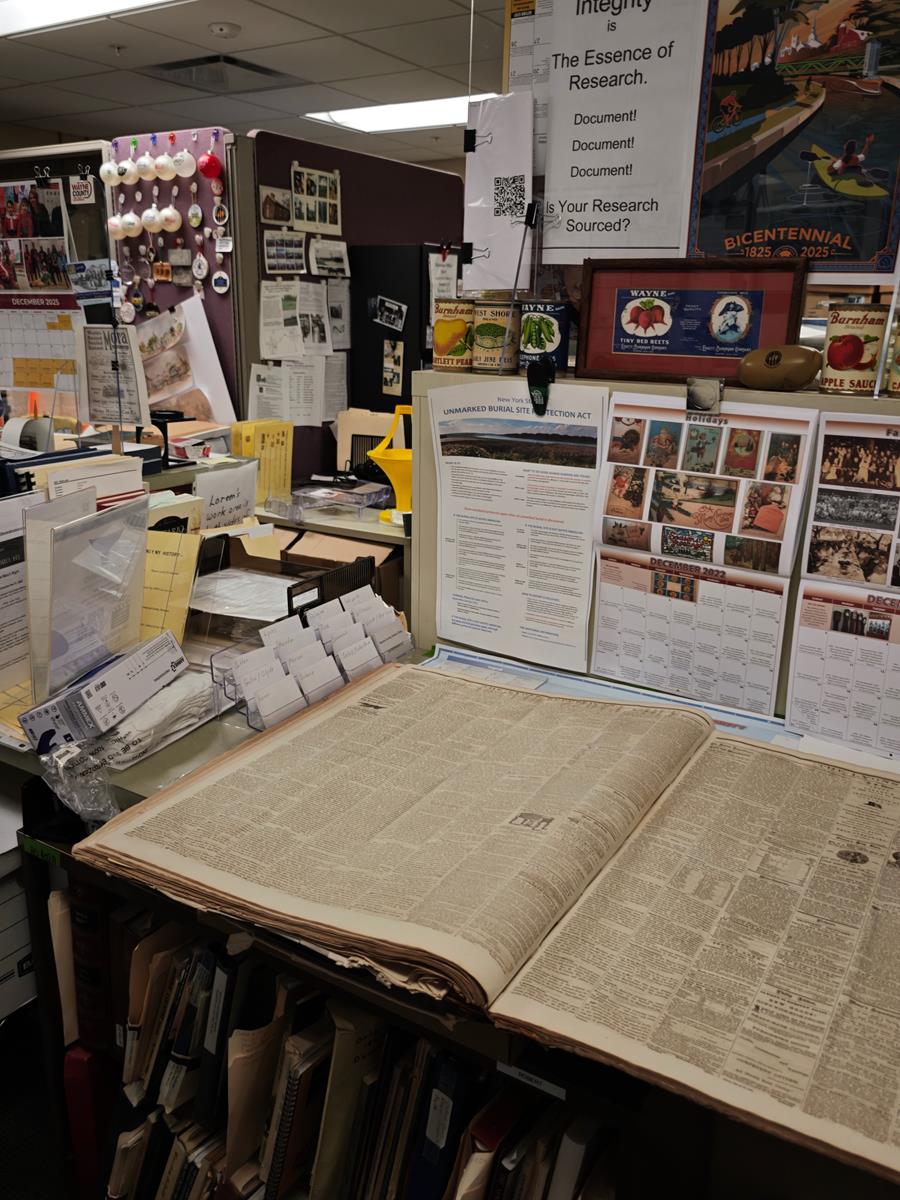
You can contact Jane Milem for inquiries and insights related to historical research. Please note the « Essence of Research » statement displayed on the wall.
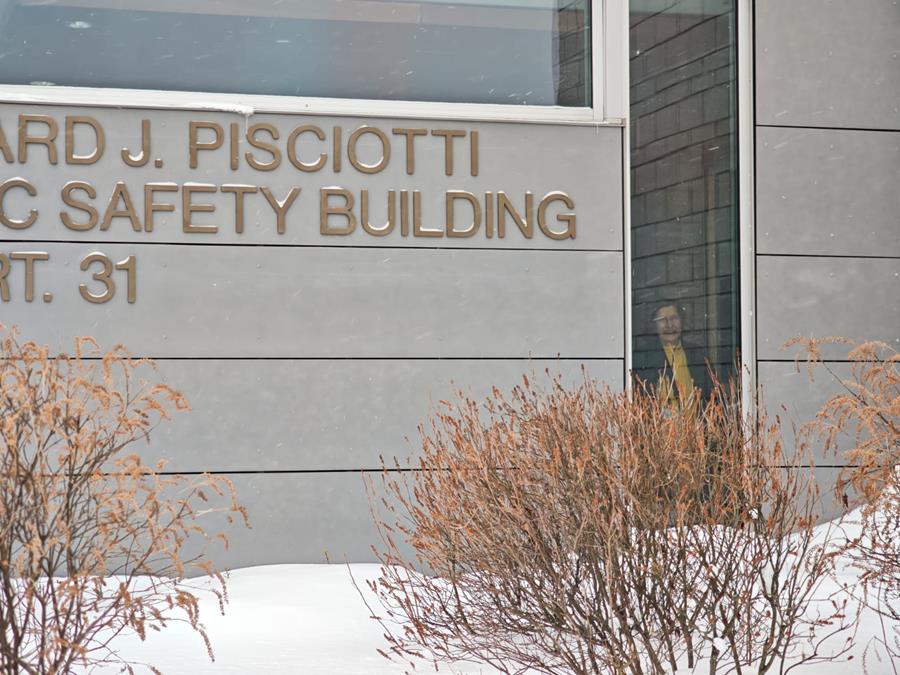
Mrs Jane Milem, Wayne County NY Historian, looking outside the Public Safety Building, 26 January 2026
You will find this article in Italian in issue two of the journal, PARTITA DOPPIA.
PARTITA DOPPIA is a small hand-made seasonal journal of art, photography, and architecture.
It also opens a series of investigative photo stories, structured like detective inquiries. The first of these appears as a feuilleton in this inaugural issue, and future numbers will continue this line of research and narration.
PARTITA DOPPIA – Journal of art, photography and architecture
ISSN 3103-5183
Support – Subscriptions
Subscription “D” for Digital
Receive the journal in advance as a PDF (5–7 issues per year).
Contribution: €14
Subscription “C” for Carta (Paper)
Receive the journal both as a PDF and in a printed edition
(shipping costs not included; free pickup in Senigallia).
(5–7 issues per year). Suggested contribution: €55
Subscription “S” for Support or Surprises
Limited edition for 20 subscribers: each copy includes original documents, loose sheets, photographs, lithographs and other inserts
(shipping costs not included; free pickup in Senigallia).
(5–7 issues per year). Contribution: €140
Single copies – city of Senigallia and surroundings
Single copies available for residents and visitors in Senigallia.
Suggested contribution: €10 per issue
Modalità di pagamento / Payment method
1. PayPal
Inviare il pagamento a: consigned@plantureux.it
Causale/Reference: Abbonamento PARTITA DOPPIA + tipo (D/C/S)
2. Bonifico bancario / Bank transfer
IBAN: IT15N3609201600128076437797
Intestatario/Account holder: Consigned it di Serge Plantureux
Causale/Reference: Abbonamento PARTITA DOPPIA + nome/Name
Fatturazione e spese PayPal
Se è necessaria una fattura, vi preghiamo di privilegiare il pagamento tramite bonifico bancario. If an invoice is required, please pay by bank transfer.
Per i pagamenti tramite PayPal è richiesto un supplemento del 5% per coprire le commissioni, oppure è possibile selezionare l’opzione « Amici e familiari” (quando disponibile). For payments via PayPal, a 5% surcharge is required to cover fees, or you can select the « Friends and Family » option (when available).
La Fotografia è la più bella delle collezioni …
Senigallia, città della fotografia, ospitera nuovi spazi dedicato alla ricerca e promozione della fotografia.
Atelier 41 si trova 41 via fratelli Bandiera.
Senigallia diventerà la Città delle collezioni.
Any question : fotografia@atelier41.org
0 Comments
1 Pingback