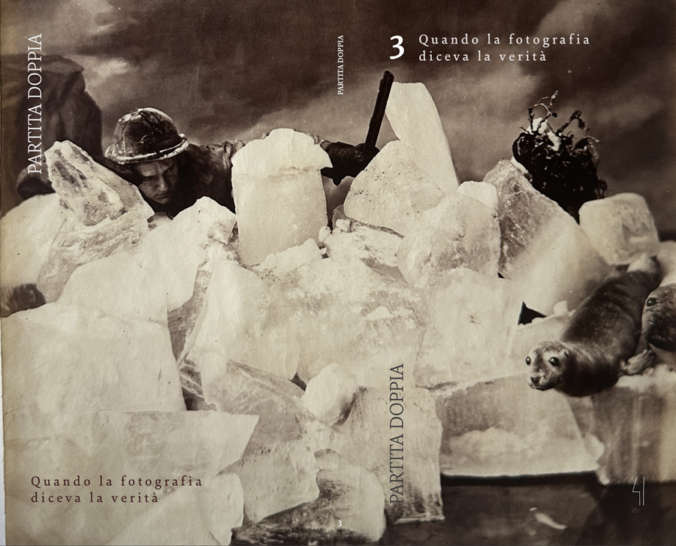
PARTITA DOPPIA-III
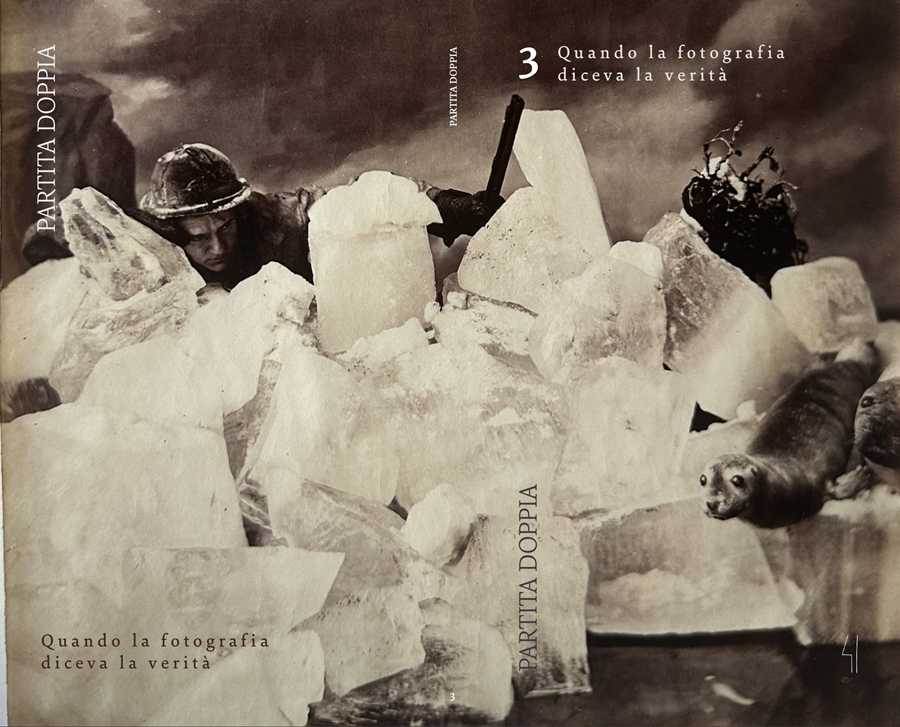
This third issue bears the title « Quando la fotografia diceva la verità ».
This theme—“When Photography Told the Truth”—served as the guiding thread for the internship of this year’s Erasmus students, in 2026.
Richard Avedon said: “All photographs are accurate; none is the truth.”
For seventeen years now, Michele Smargiassi, in his book *An Authentic
Lie: Photography, the True, the False*, has been tracing the history of the two forms of photography, analog and digital, to explain when, where, how, and why photography has always “lied”; and to what extent, how, and why society has believed it.
Commenting on the products of the digital world is no longer our aim.
We want to focus solely on the immense and fascinating realm of
physical photography: on all the material images created during the
150 years spanning from 1839 to 1989. Images often created
through deception and manipulation, which we can seek out, interpret, comment on, and reflect upon.
Because this ocean of physical images represents a solid and
tangible foundation of our human culture.
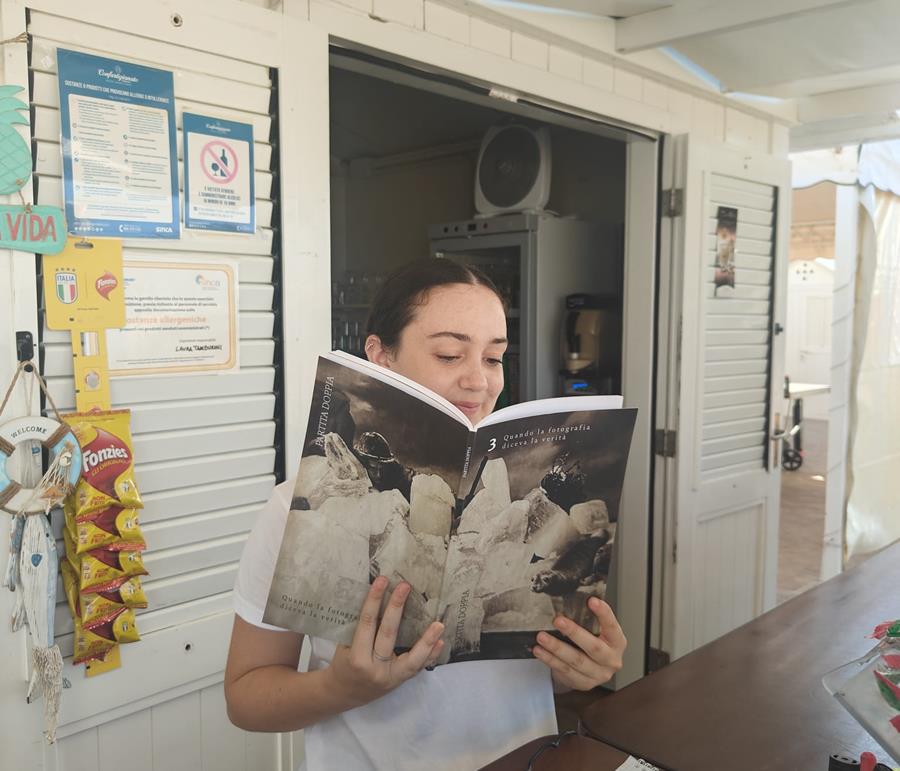
The Italian table of contents reads :
I tre tempi nel collezionare fotografie antiche (La decisione di collezionare fotografia oggi) 6
Rendere visibile l’invisibile Quando i dati diventano immagini 12
Una cartolina da Senigallia: Che rapporto intercorre tra fotografia e verità? 18
La fotografia dice la verità? Analisi materiale di un finto banchetto antropofago 22
La fotografia dice la verità? La stessa scena, letta col metodo della mediologia 24
Andrés Martínez e il Registro delle donne pubbliche nel Secondo Impero Messicano (1865) 28
Visioni doppie – Quando la stereoscopica diceva la verità: L’immagine è perfettamente stabile, ma l’edificio no 42
Feuilleton – Un giorno nella vita di John B. Roberts Terza puntata: A bordo del treno inaugurale 44
Si anuncia una grande indagine italiana per l’estate Un disegno della collezione Mariette 68
After the article The Three Tempos of Collecting Photography, published as precedent email, comes an essay by Lorenzo Ciccarelli : Making the Invisible Visible: When Data Becomes Images.
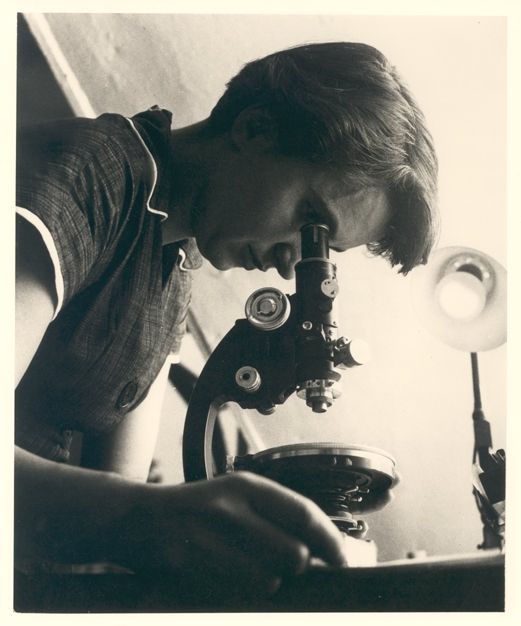
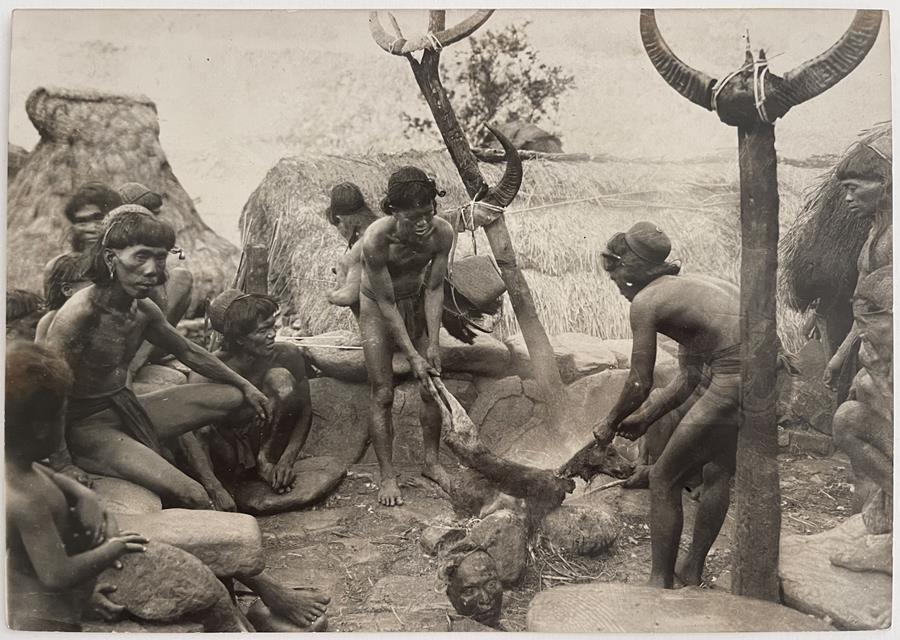
Followed by a « billet » or a postcard by Senigallia neighbour Carlo Tortarolo, and two interns commenting an old scenery of supposed anthropofagism.
Elisabetta Bozzato starts with the object, from the stamp on the front to the back, and lets the image speak for itself while Mahamadi Ilboudo quotes Morton on the “documentary silence” of archives, then creates that silence himself by never looking at the reverse side. That is precisely the point: what can and what cannot mediology alone achieve when confronted with an object? Edwards, Pinney, and Ryan provide the framework for the colonial gaze, but none of them allows us to say that the head is made of papier-mâché.
The diptych takes on its full meaning: she provides the material expertise that cuts to the heart of the matter, while he reflects on the limits of the mediological method when it remains suspended above the object.
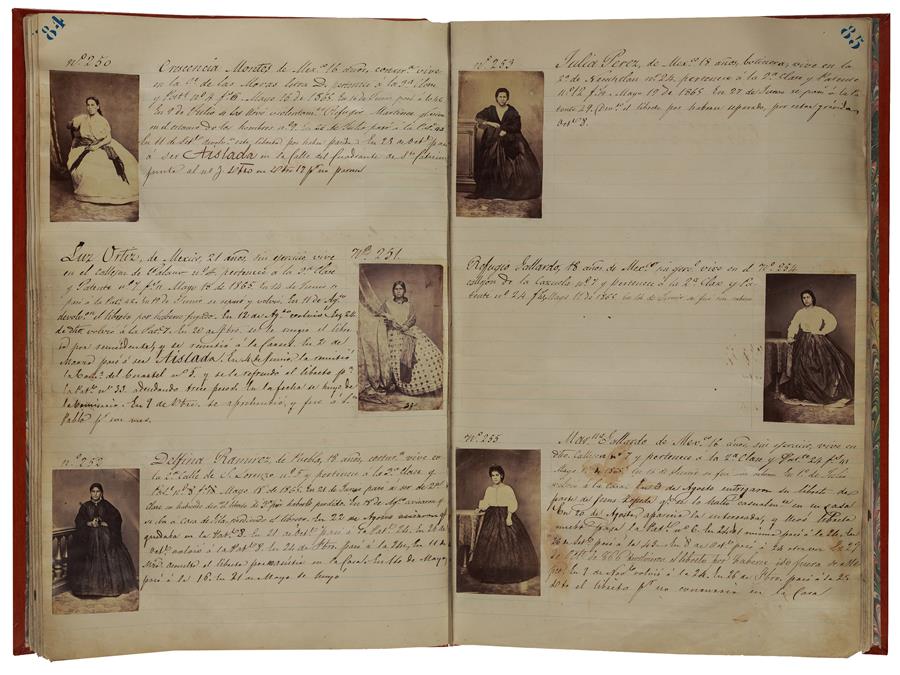
Then a long and well documented article sent from Mexico. Gustavo Amézaga Heiras proposes to identify Andrés Martínez as the photographer of the first Register of Public Women during the Second Mexican Empire, 1865.
We give you an idea with the translation of the first lines : The manuscript volume « Register of Public Women in Accordance with the Regulations Issued by His Majesty the Emperor » (1865),¹ documents two cases that reflect the condition of prostitutes at the height of the Second Mexican Empire and illustrate the harsh realities of prostitution.
The first, dated April 24, 1865, concerns Merced Romero, aged 20, classified as a “second-class prostitute,” who informed the authorities of her decision to abandon the trade. The register noted that the prefect had been notified “so that she might be monitored, that is, to prevent her from continuing to work without paying the mandatory tax.”
The second case concerns Isidra Carrillo, a “third-class prostitute,” who, at age 16,
attempted to leave the profession to live with the French officer Theodore Sapia;
for this reason, an attempt was made to remove her from the Register on July 27, 1865.
According to another entry, “the law was explained to” the foreign soldier,
who attempted to obtain authorization from the police chief so that the
young woman could cease her activities. On October 30 of the same year, it was recorded
that “the exception had had no effect,” so the young woman was forced to continue
working as a prostitute, as shown in the records… »
The issue follows with the continuous sections :
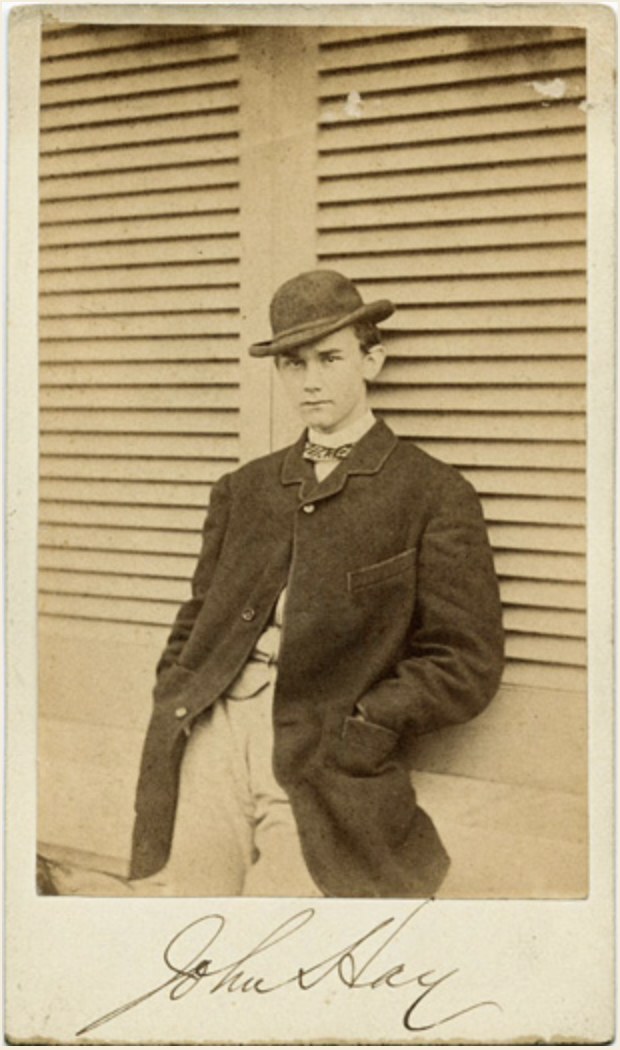
Double Visions – When Stereoscopy Told the Truth: The Image Is Perfectly Still, But the Building Isn’t (“Old Court House, where Daniel Webster made his first Plea for Jury”), page 42 and the Serial – A Day in the Life of John B. Roberts, Part 3: Aboard the Inaugural Train page 44
Last article is a teaser: A major Italian investigation is in the works for the summer, a drawing from the Mariette Collection.
As we go to press with this issue, another project is already underway in the editorial office and it’s hard not to mention it.
An antique drawing has just resurfaced from an old Central European collection. That alone would be enough to pique our curiosity; but there’s more. A handwritten note from that era, penned in archaic French with surprising spelling, establishes its provenance: the sheet is said to come from the legendary sale of the Mariette collection.
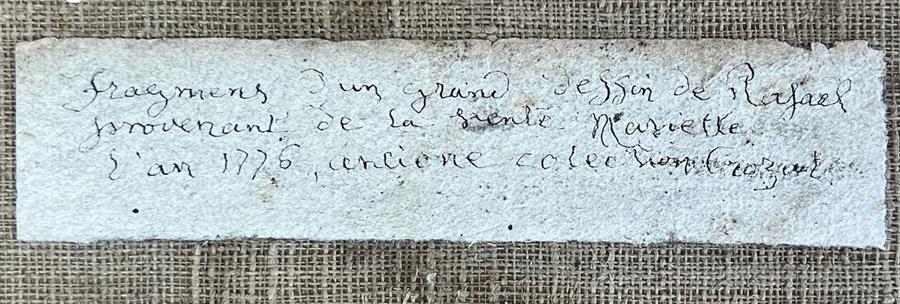
For anyone familiar with the history of antique drawings, that name alone is enough. The Mariette auctions, which lasted an entire winter between 1775 and 1776, remain the provenance that most captivates treasure hunters, art historians, and connoisseurs.
And that’s not all: a significant portion of the oldest Italian Renaissance drawings in the Mariette collection came, in turn, from the Crozat collection. The handwritten note confirms precisely this double provenance: the drawing comes from Mariette, but before that it came from Crozat.
The sheet is very old. We will conduct our investigation on the paper itself: it was marouflé, glued to its backing—, at the end of the 18th century, or perhaps shortly before the sale, at the very moment that label was affixed, which is also perfectly period. This will be the major investigation of the summer.
In the meantime, we wish you a wonderful vacation.
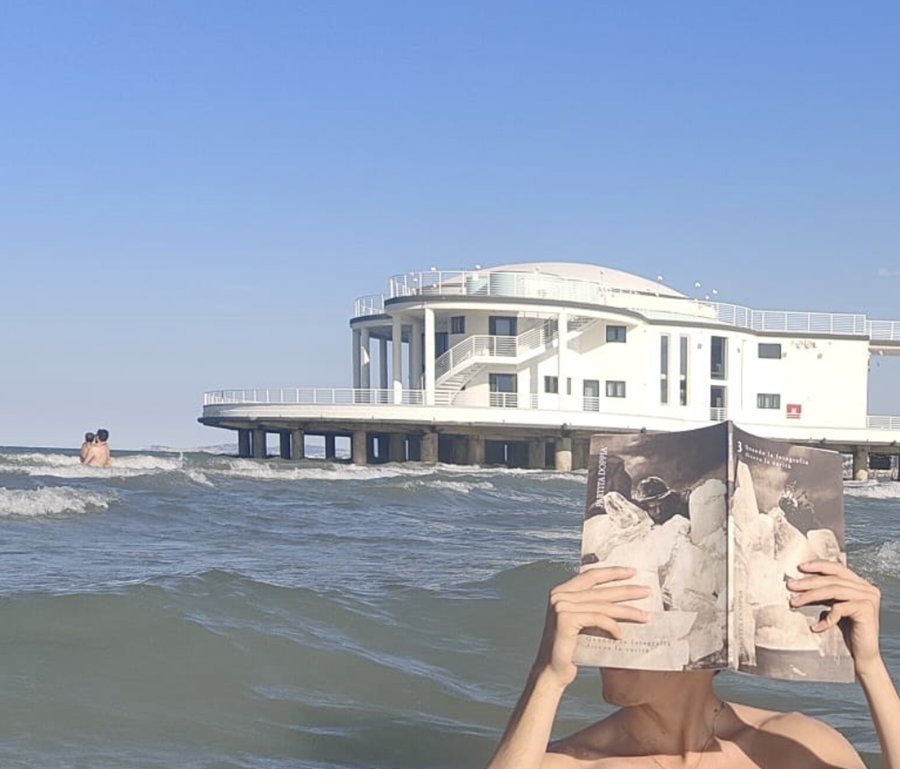
It contains a series of investigative photo stories, written almost like detective inquiries. The first of these appears as a feuilleton in this inaugural issue, and future numbers will continue this line of research and narration.
This magazine is also available as editable text. For automatic translations, you can: copy the text and paste it into DeepL; use the DeepL browser extension to translate the PDF online; or view the digital version on our website: partitadoppia.org.
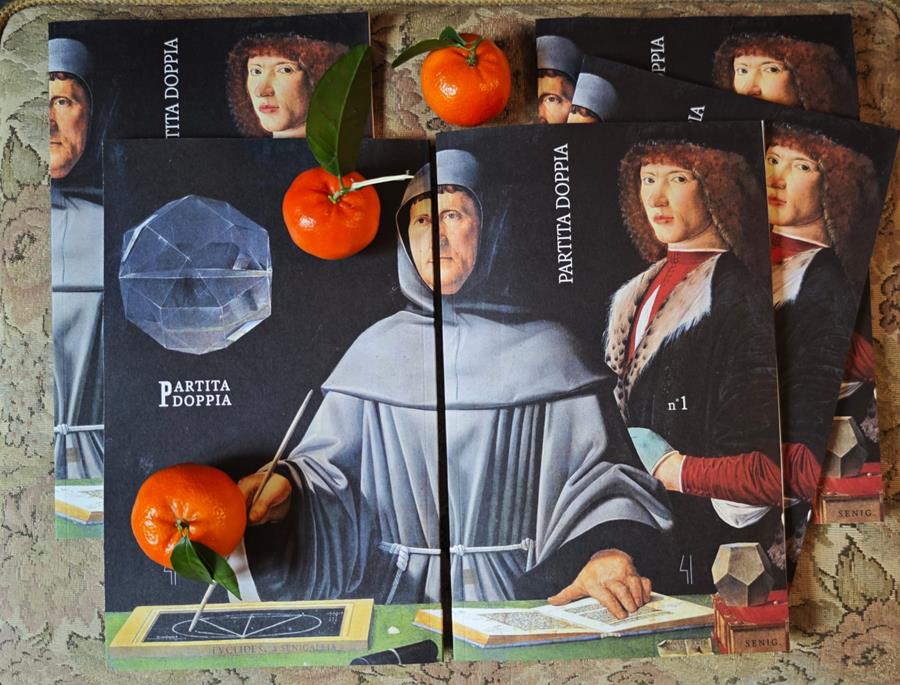
PARTITA DOPPIA – Journal of art, photography and architecture
ISSN 3103-5183
Support – Subscriptions
Subscription “D” for Digital
Receive the journal in advance as a PDF (5–7 issues per year).
Contribution: €14
Subscription “C” for Carta (Paper)
Receive the journal both as a PDF and in a printed edition
(shipping costs not included; free pickup in Senigallia).
(5–7 issues per year). Suggested contribution: €55
Subscription “S” for Support or Surprises
Limited edition for 20 subscribers: each copy includes original documents, loose sheets, photographs, lithographs and other inserts
(shipping costs not included; free pickup in Senigallia).
(5–7 issues per year). Contribution: €140
Single copies – available in city of Senigallia and the surroundings
Suggested contribution: €10 per issue
Modalità di pagamento / Payment method
1. PayPal
Inviare il pagamento a: consigned@plantureux.it
Causale/Reference: Abbonamento PARTITA DOPPIA + tipo (D/C/S)
2. Bonifico bancario / Bank transfer
IBAN: IT15N3609201600128076437797
Intestatario/Account holder: Consigned it di Serge Plantureux
Causale/Reference: Abbonamento PARTITA DOPPIA + nome/Name
Fatturazione e spese PayPal
Se è necessaria una fattura, vi preghiamo di privilegiare il pagamento tramite bonifico bancario. If an invoice is required, please pay by bank transfer.
Per i pagamenti tramite PayPal è richiesto un supplemento del 5% per coprire le commissioni, oppure è possibile selezionare l’opzione « Amici e familiari” (quando disponibile). For payments via PayPal, a 5% surcharge is required to cover fees, or you can select the « Friends and Family » option (when available).
La Fotografia è la più bella delle collezioni …
Senigallia, città della fotografia, ospitera nuovi spazi dedicato alla ricerca e promozione della fotografia.
Atelier 41 si trova 41 via fratelli Bandiera.
Senigallia diventerà la Città delle collezioni.
Any question : fotografia@atelier41.org
Laisser un commentaire