Shepherd 1846, Hanks-Chapman 1858, and the last Half-Plate of 1864
Extract from the monograph The Mystery of the Lost Daguerreotype — Tracing Lincoln’s Image in 1861 (Senigallia, MMXXVI).
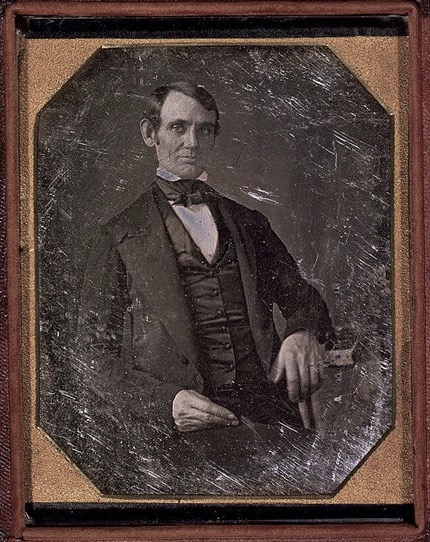
Only One Known Abraham Lincoln Portrait in Daguerreotype
Iconographers agree on only three daguerreotypes of Abraham Lincoln, but only one is an original portrait. We nearly lost the name of its creator entirely. The other two are precious objects intended as gifts, for the daguerreotype was deemed more valuable than a paper print — at least one of them was made at Lincoln’s own request. These are what we call copy daguerreotypes.
Nicholas H. Shepherd — 1846
Quarter-plate daguerreotype, Lincoln Congressman-elect, Springfield, 1846
This unsigned and undated daguerreian portrait depicts Abraham Lincoln elegantly dressed as a Congressman-elect from Illinois in August 1846. It was donated to the Library of Congress in October 1937 by Lincoln’s granddaughter, Mary Lincoln Isham, along with a pairing portrait of Mary Todd Lincoln (Reference O-11).
Robert T. Lincoln, their son, expressed doubt about the portraits’ origin, stating he didn’t believe photographers were present in Springfield — then a small town — in the 1840s. The daguerreotype was formally attributed to Nicholas H. Shepherd by Gibson William Harris, in his November 1903 publication My Recollections of Abraham Lincoln:
«I feel confident I am not mistaken in recognizing the portrait as the work of my friend Shepherd, before whose camera I know Mr Lincoln sat once or oftener. The claim repeatedly made for it of being the earliest portrait of Abraham Lincoln remains, as far as I know, an undisputed fact…»
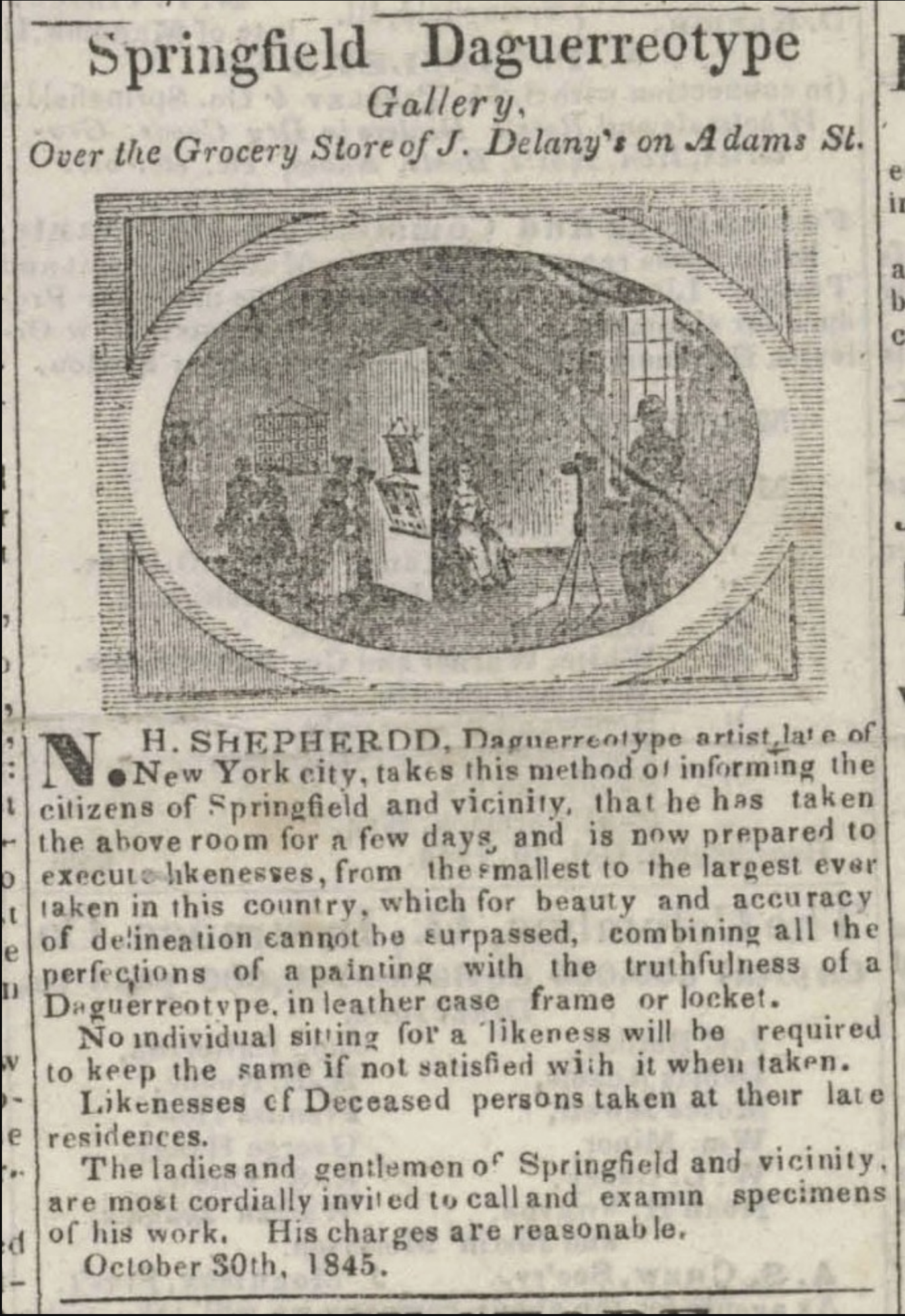
Harris was a law student in Lincoln’s office for eighteen months, and with Shepherd he was roommates during the whole period. Shepherd advertised a daguerreian gallery in Springfield.
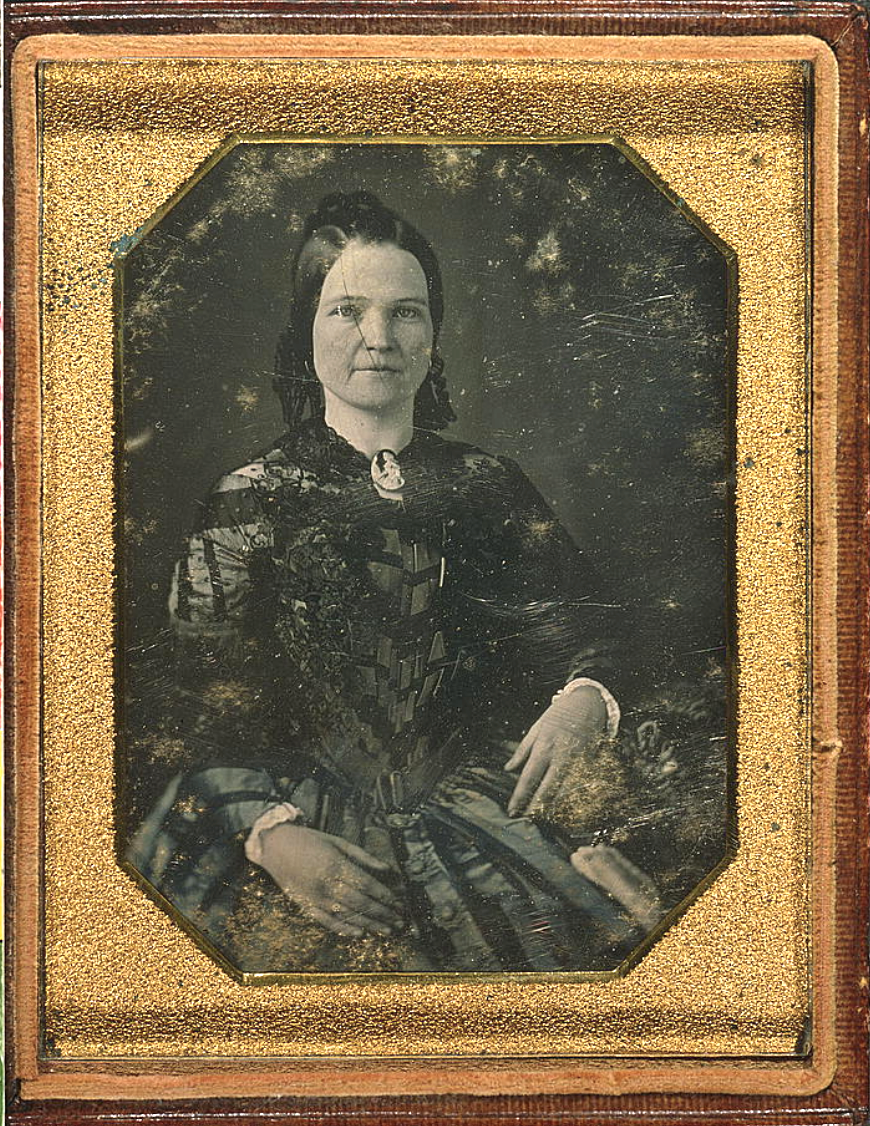
Mary Todd Lincoln cherished these first portraits, saying: «These are my two most precious pictures, taken when we were young and so desperately in love.»
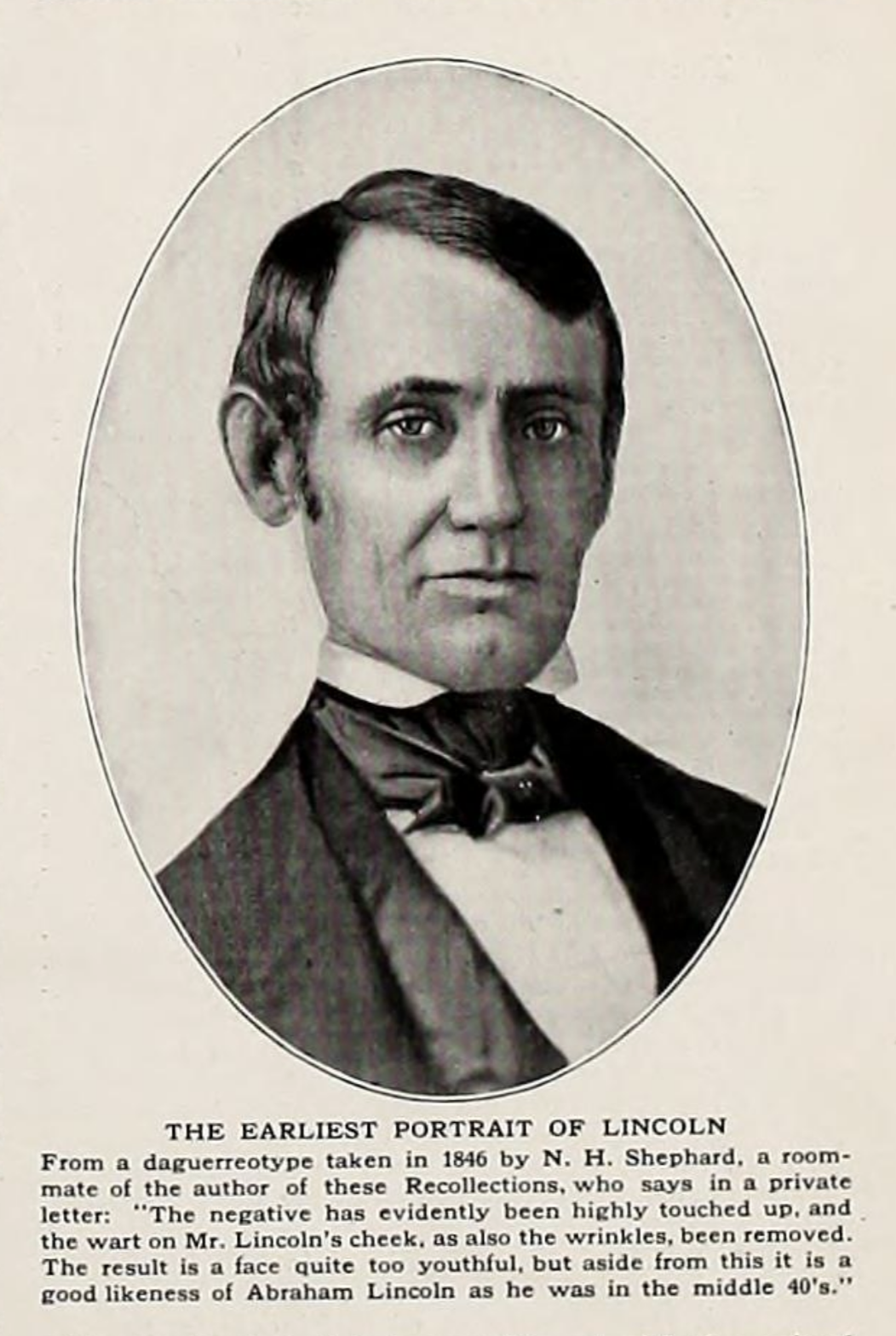
Harris’s 1903 Identification
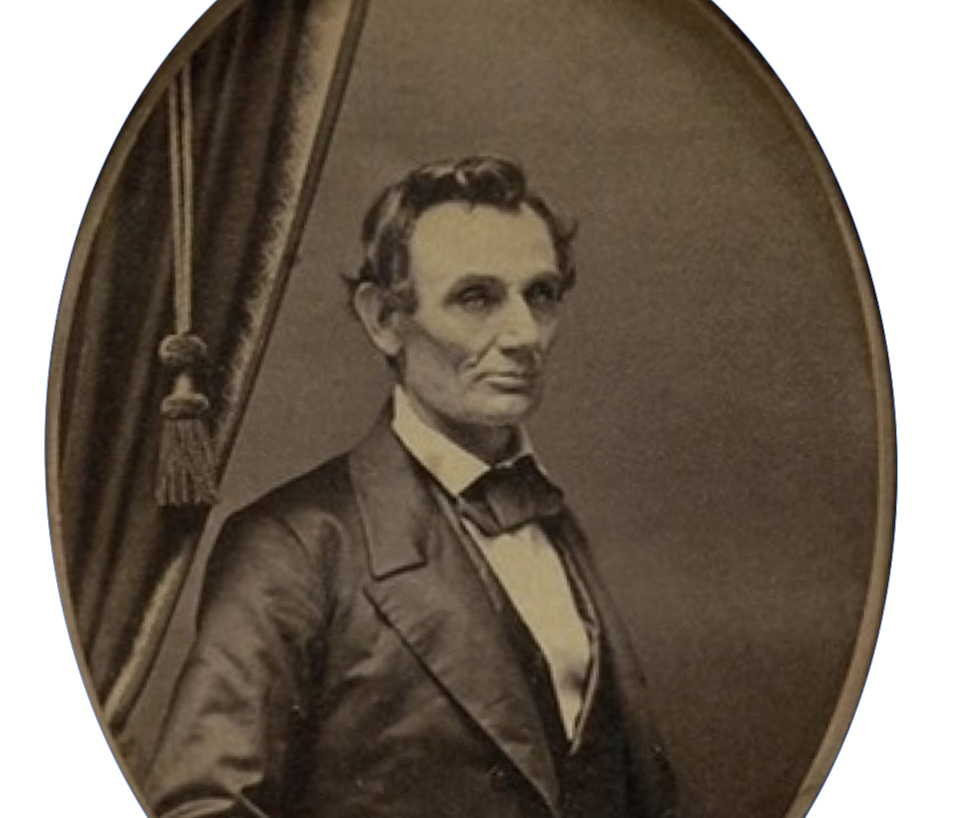
The identification of Shepherd as the maker of the portrait was not made public until 1903, when Gibson William Harris wrote his recollections in Woman’s Home Companion (November 1903, pp. 9–11). Shepherd’s name might have been lost forever if Harris had not written these lines.
Hanks-Chapman Copy-Daguerreotype — 1858
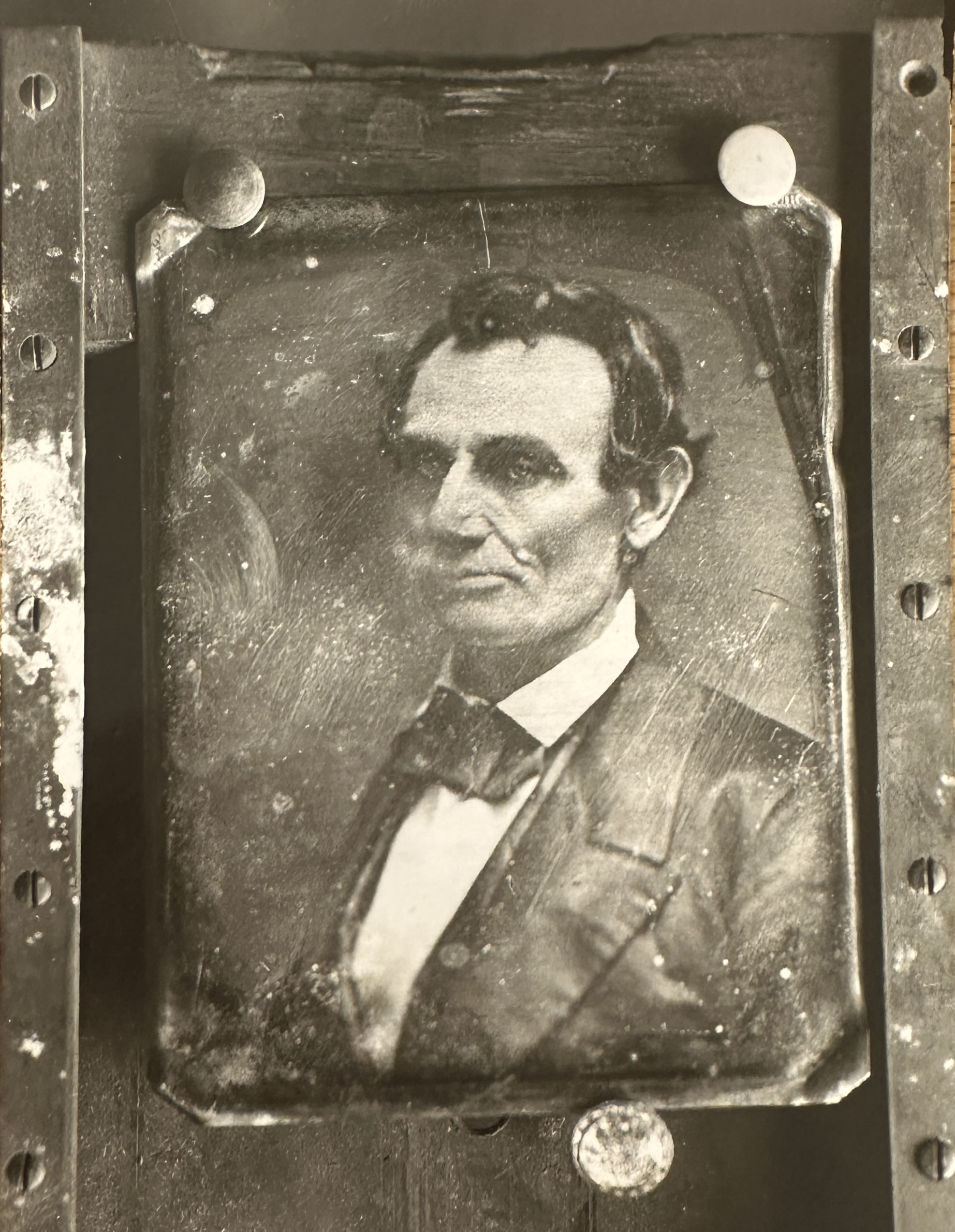
Quarter-plate daguerreotype after an albumen print, September 1858
This copy daguerreotype was created by photographing an albumen print of the 26 September 1858 pose (O-9) attributed by Lloyd Ostendorf to Christopher Smith German (1814–1896).
The photographer likely crafted the copy-daguerreotype himself at Abraham Lincoln’s request, as Lincoln gave the daguerreotype to Harriet Chapman, daughter of his cousin Dennis Hanks, with a note saying «this is not a very good-looking picture, but it’s the best that could be produced from the poor subject.» We can deduce from this gift that Abraham Lincoln appreciated daguerreotypes.
Harriet’s son, R. N. Chapman, shared the photograph’s story with Lincoln biographer Ida M. Tarbell. She published a retouched version of the image with an account of the Chapman provenance in McClure’s Magazine, January 1896, pp. 118–119. Meserve could access the plate and photograph it out of the case. A silver print is accessible at the Library of Congress (Joseph Verner Reed gift, July 1955).
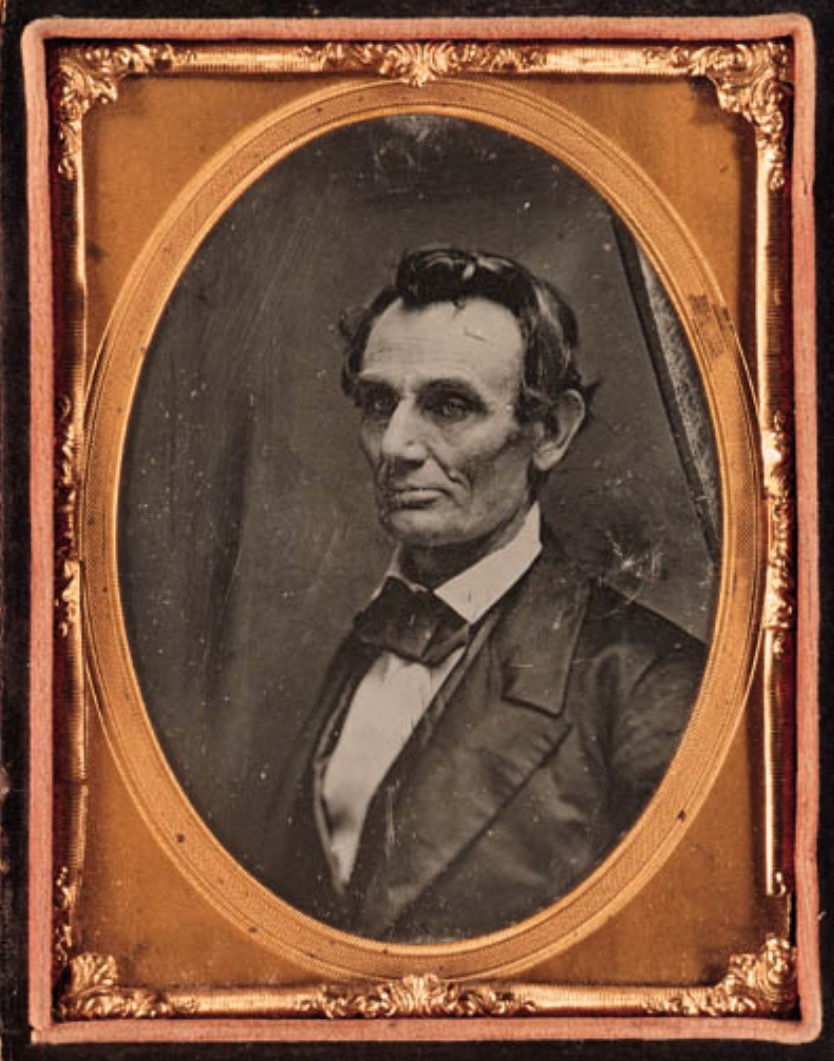
A different copy-daguerreotype was presented to the public at Christie’s auction on 12 May 1999, lot 197. Indeed, the one reproduced in Meserve’s documentation shows a shorter framing in the lower part of the bust.
Half-Plate Copy-Daguerreotype — 1864
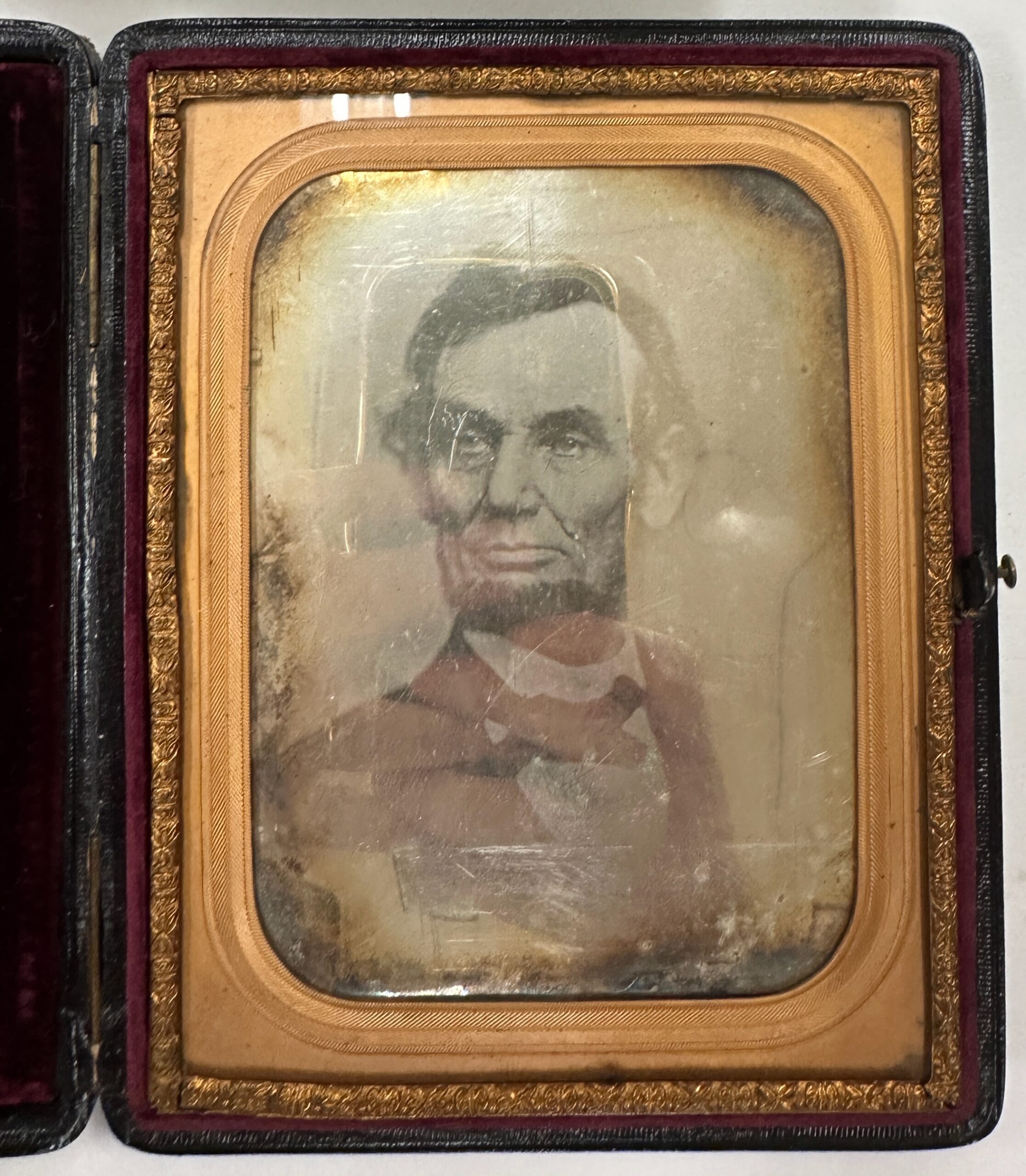
Half-plate copy-daguerreotype, Washington, Brady Gallery, February 1864 (?)
This half-plate is a period copy-daguerreotype of a paper print (now lost) from one of the multiple images taken by Anthony Berger at Brady’s gallery in Washington, DC, on 9 February 1864 (O-91). This date is significant: it was part of a series of photographs taken for artist Francis B. Carpenter’s reference for his painting The First Reading of the Emancipation Proclamation Before the Cabinet.
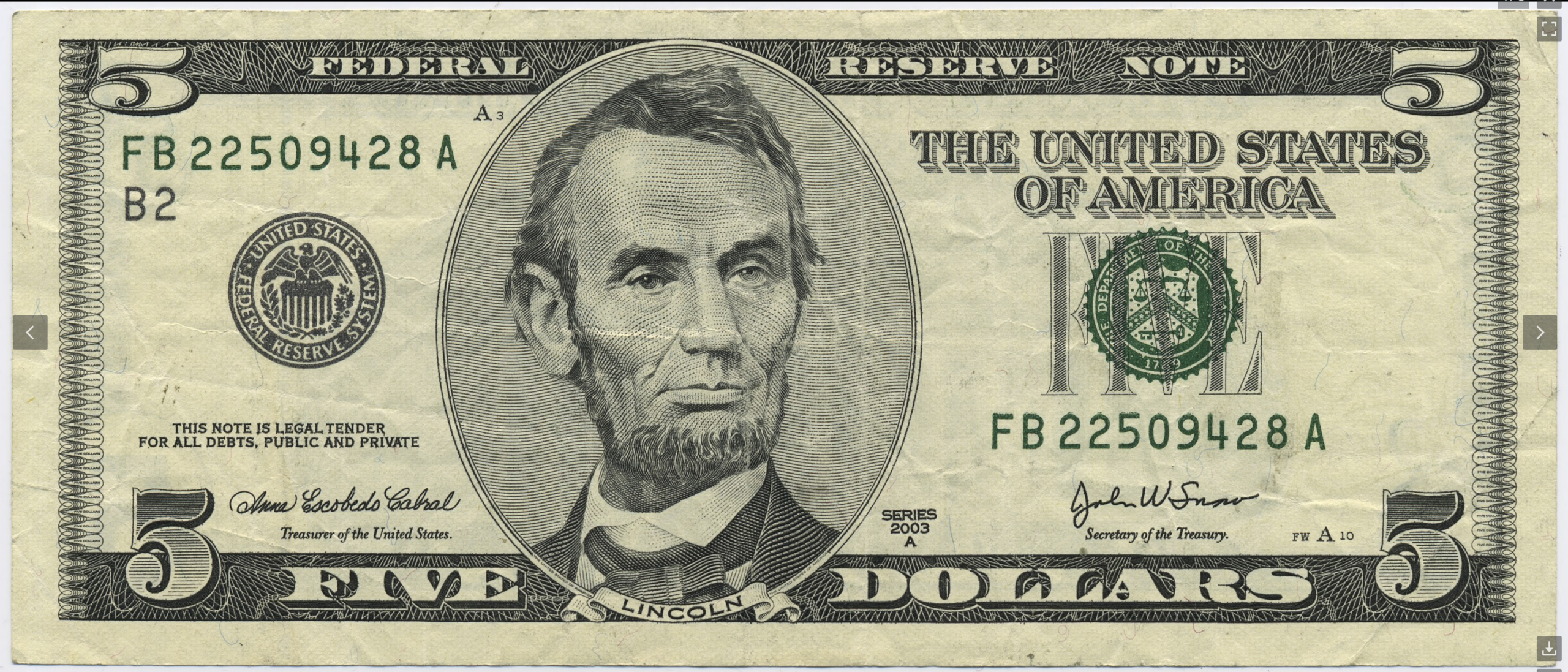
This image has gained additional prominence as the model for the $5 bill since its redesign in 2001.
The daguerreotype should be considered as produced in the same studio. The creation of a half-plate daguerreotype from a paper print in 1864 underscores the extremely rare use of daguerreotype technology at a moment when newer photographic methods were becoming prevalent. Only the most important studios could afford this exceptional technology, as they could produce their own dangerous chemicals, which had disappeared elsewhere from chemist shops and drugstores. The very last dated examples are, in fact, from Southworth and Hawes in Boston and Brady’s studio in Washington.
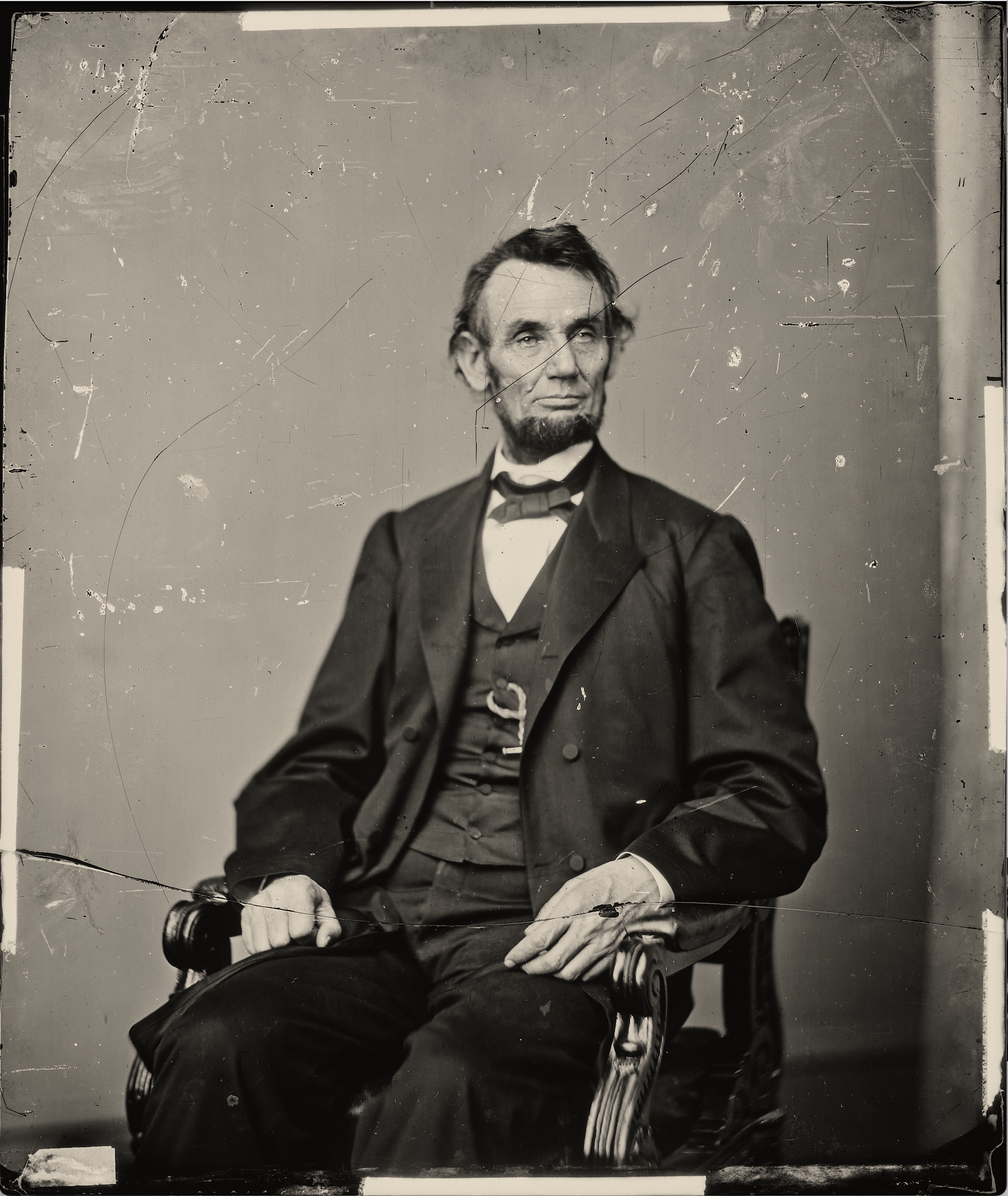
The fragility of the glass plates from that period — along with the rarity of surviving daguerreotypes — reinforces how precious each known specimen is. A single break can destroy an irreplaceable witness.
To be continued — Episode 3: « False Hopes and True Disappointments — Six claimed Lincoln daguerreotypes, 1968 to 2014 ».
Sources & Notes
- Ostendorf, Lloyd. Lincoln’s Photographs: A Complete Album. Dayton, 1998, p. 4–5.
- Harris, Gibson William. « My Recollections of Abraham Lincoln. » Woman’s Home Companion, November 1903, pp. 9–11.
- Ostendorf, Lloyd and Oleksy, Walter, eds. Lincoln’s Unknown Private Life: An Oral History by His Black Housekeeper Mariah Vance, 1850–1860. Mamaroneck, N.Y.: Hastings House Book Publ., 1995.
- Ostendorf, Lloyd and Hamilton, Charles. Lincoln in Photographs: An Album of Every Known Pose. Norman: University of Oklahoma Press, 1963.
- Tarbell, Ida M. McClure’s Magazine, vol. 6, no. 2, January 1896, pp. 118–119.
- Christie’s. « Sale 9082, Lot 197. » New York, 12 May 1999.
- Meserve, Frederick Hill and Sandburg, Carl. The Photographs of Abraham Lincoln. New York: Harcourt, Brace and Company, 1944.
Laisser un commentaire