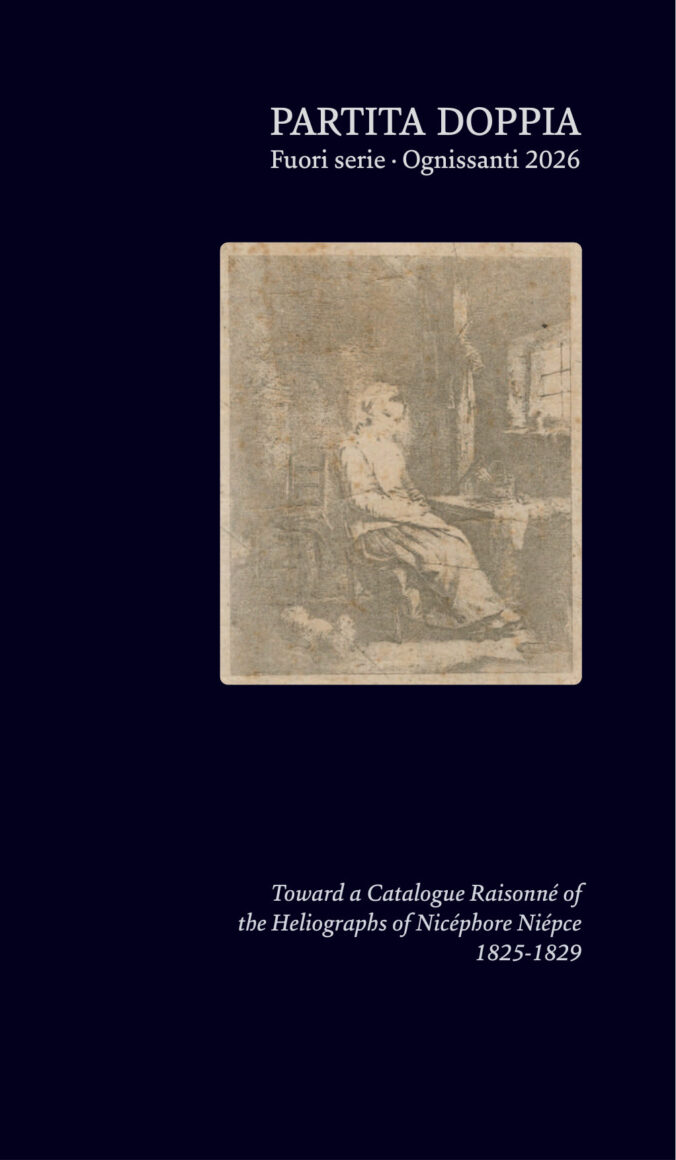
Seven seasons, from the first trials on paper, stone and glass to the silver-plated copper of 1828-1829: a catalogue raisonné that follows Niépce’s heliographs in the order they were made.
Étiquette : Claude Niépce
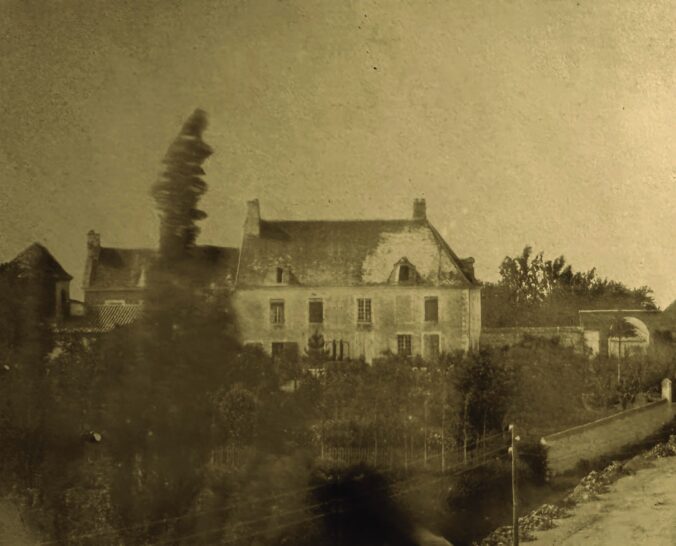
Nothing remains of these years but letters, and perhaps a camera: a stone the lithographer could not see, a view on glass too weak in tone, and a machine in London that swallowed the family money.
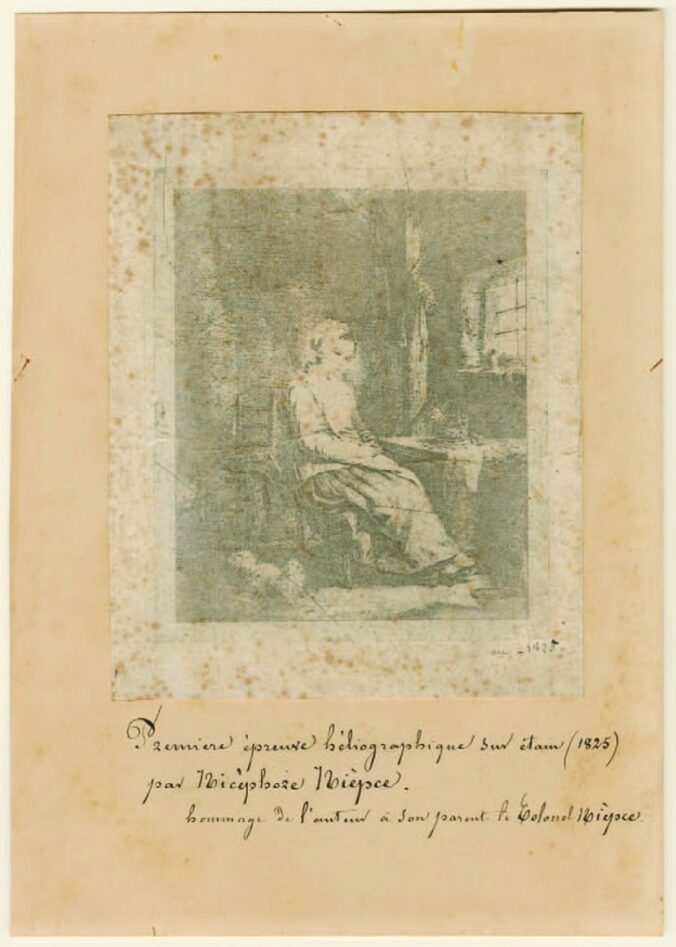
In 1825 Niépce learns to paint with light and etch in turn on copper. Two images survive, the Horse and the Jeune Fille, the first heliographs printed and shown to the world.
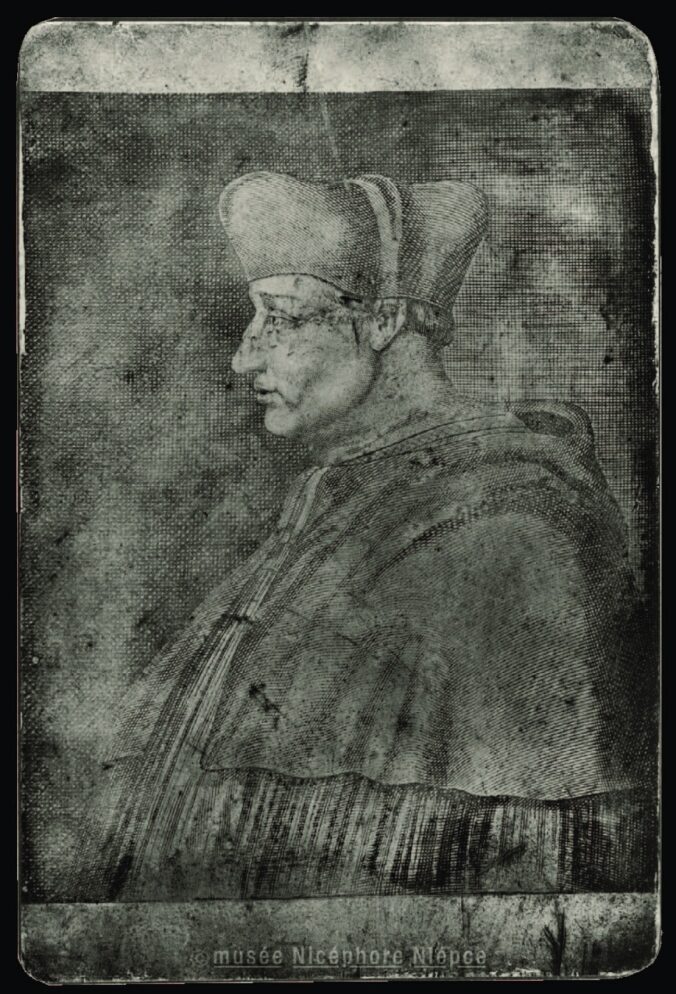
A cousin’s parcel of engravings, August 1826: a prisoner, Erasmus, a cardinal, a ruin near Fréjus, an old jurist. The Cardinal d’Amboise, on nearly pure tin, is the first to succeed.
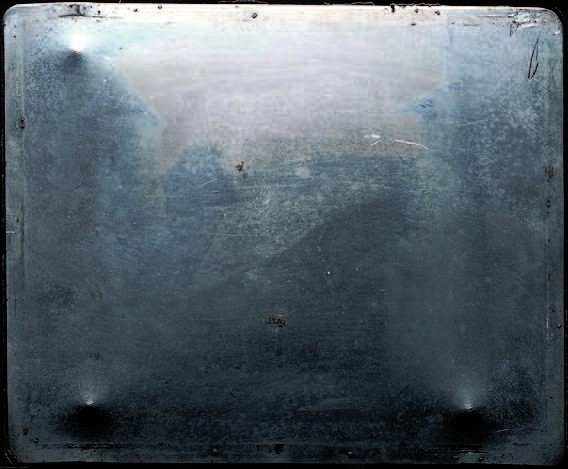
Summer 1827: three views from nature in two months. One survives, the View from the Window at Le Gras, made like the copies of prints: bitumen on tin, never etched, seen by reflection.