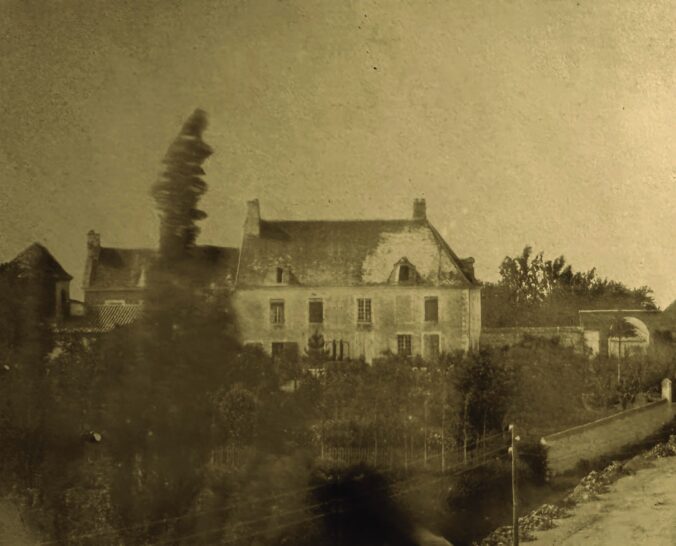
Nothing remains of these years but letters, and perhaps a camera: a stone the lithographer could not see, a view on glass too weak in tone, and a machine in London that swallowed the family money.
Étiquette : Michael S. Sachs
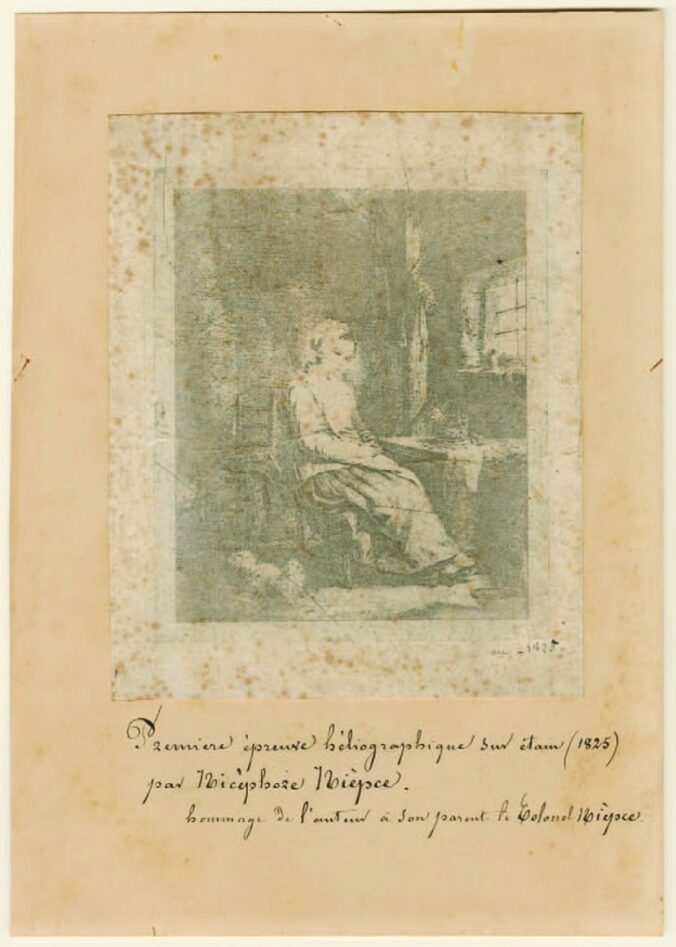
In 1825 Niépce learns to paint with light and etch in turn on copper. Two images survive, the Horse and the Jeune Fille, the first heliographs printed and shown to the world.
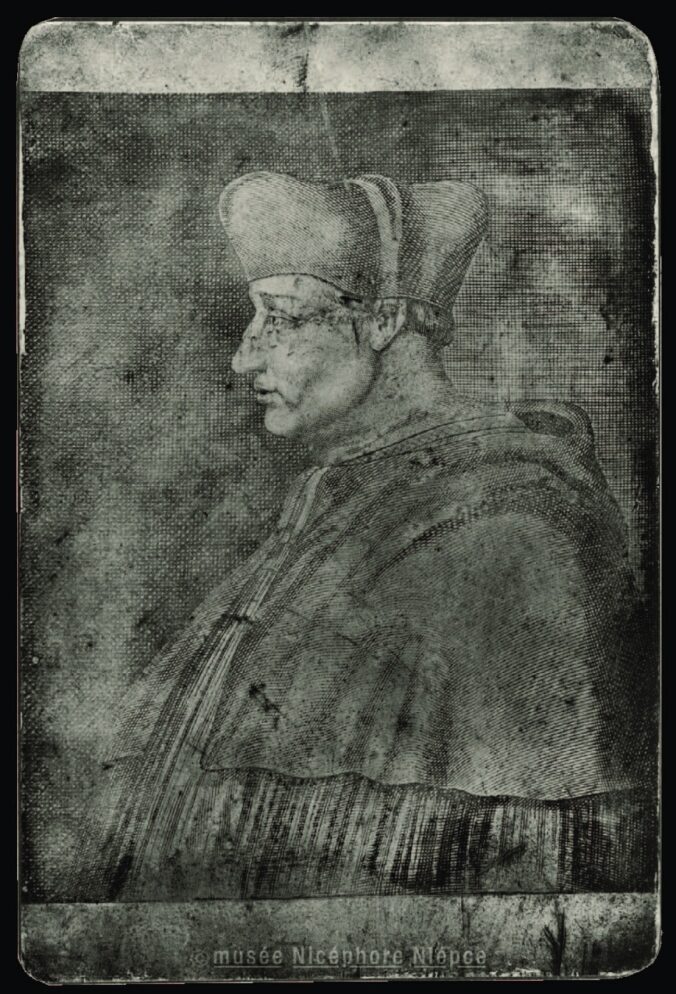
A cousin’s parcel of engravings, August 1826: a prisoner, Erasmus, a cardinal, a ruin near Fréjus, an old jurist. The Cardinal d’Amboise, on nearly pure tin, is the first to succeed.
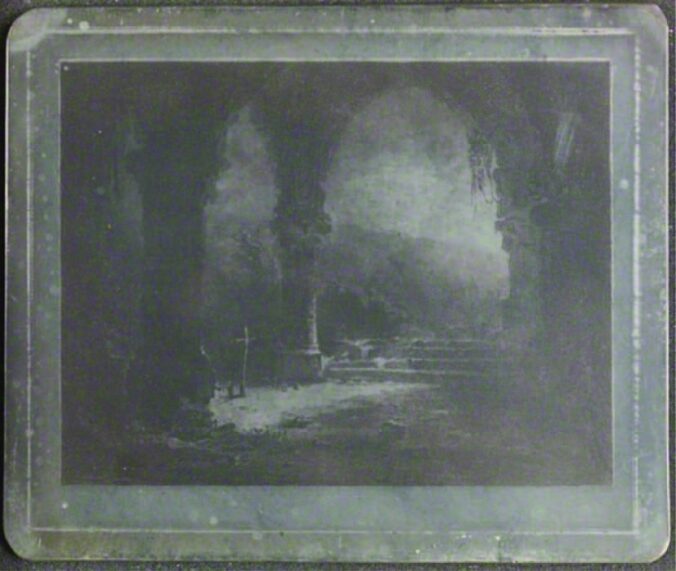
Lemaître’s parcel, March 1827: eight prints for 13 francs. After Daguerre’s severe verdict, Niépce gives up acid and leaves the image in the bitumen, to be seen and not printed.