Navigating Time and Space; Cataloging Lincoln’s Photographic Portraits
Extract from the monograph The Mystery of the Lost Daguerreotype — Tracing Lincoln’s Image in 1861 (Senigallia, MMXXVI).
An Inquiry into Method — Navigating Time and Space
Digital technologies and artificial intelligence have transformed methods for identifying portraits, art, and ancient documents. While they offer new opportunities, they also introduce complexities. Paradoxically, it is challenging to determine whether this process has become easier or more difficult; it is simply different. While we have gained time through access to new resources, we have also lost time due to increased doubt and skepticism. As we venture into new realms of knowledge, we often find that our shared vocabulary is shrinking. We share less common ground with our contemporaries, and specialized fields like historical photography have developed technical languages that can be unintelligible even to related disciplines such as art history.
The more people adhere to a particular historical formulation, the more difficult it becomes to question or even discuss how it became established.
Abraham Lincoln is the human being whose photographic image has been collected for the longest time. He was the first subject of antique photograph collections, with the oldest catalogue dating back to 1903 — decades before photograph collecting became popular. This was about 60 years before pioneers began collecting historical photographs, and 80 years before it became widespread.
Proposing to identify a previously unknown and unpublished daguerreotype of Abraham Lincoln is a formidable challenge. After years of preparation and research, we present our findings not as definitive assertions, but as a proposal for the reader’s consideration. To ensure a balanced approach, we have incorporated diverse viewpoints, objections, and questions from various correspondents. The resulting dossier, comprising seventeen parts, aims to provide readers with comprehensive information to form their own conclusions.
Structure of the Dossier
The first part is this introductory text.
The second part highlights the Herculean — or perhaps we should say Lincolnian — task undertaken by the first iconographers. These intrepid scholars attempted to create a catalogue raisonné of Abraham Lincoln’s portraits and related documentation. By 1915, their efforts had already produced a 28-volume work on the subject.
The subsequent section states that iconographers agree on only three daguerreotypes, with only one being an original portrait. We nearly lost the name of its creator entirely. The other two are precious objects intended as gifts, as they were more valuable than paper prints; at least one of them was created at Lincoln’s request. These are what we call copy daguerreotypes.
In the fourth part, we describe six examples of collectors or researchers who believed they had found a daguerreotype representing Lincoln. Despite failing to convince others, they persisted, sometimes to the detriment of their health. These cases are interesting and valuable, as they prompt us to reflect on the dangers and pitfalls that can arise in reasoning.
The fifth part introduces the object of research by describing the conditions of its discovery. In the sixth part, we explain why everyone was initially convinced that it was simply someone resembling Abraham Lincoln. Herein lies the first unanimity.
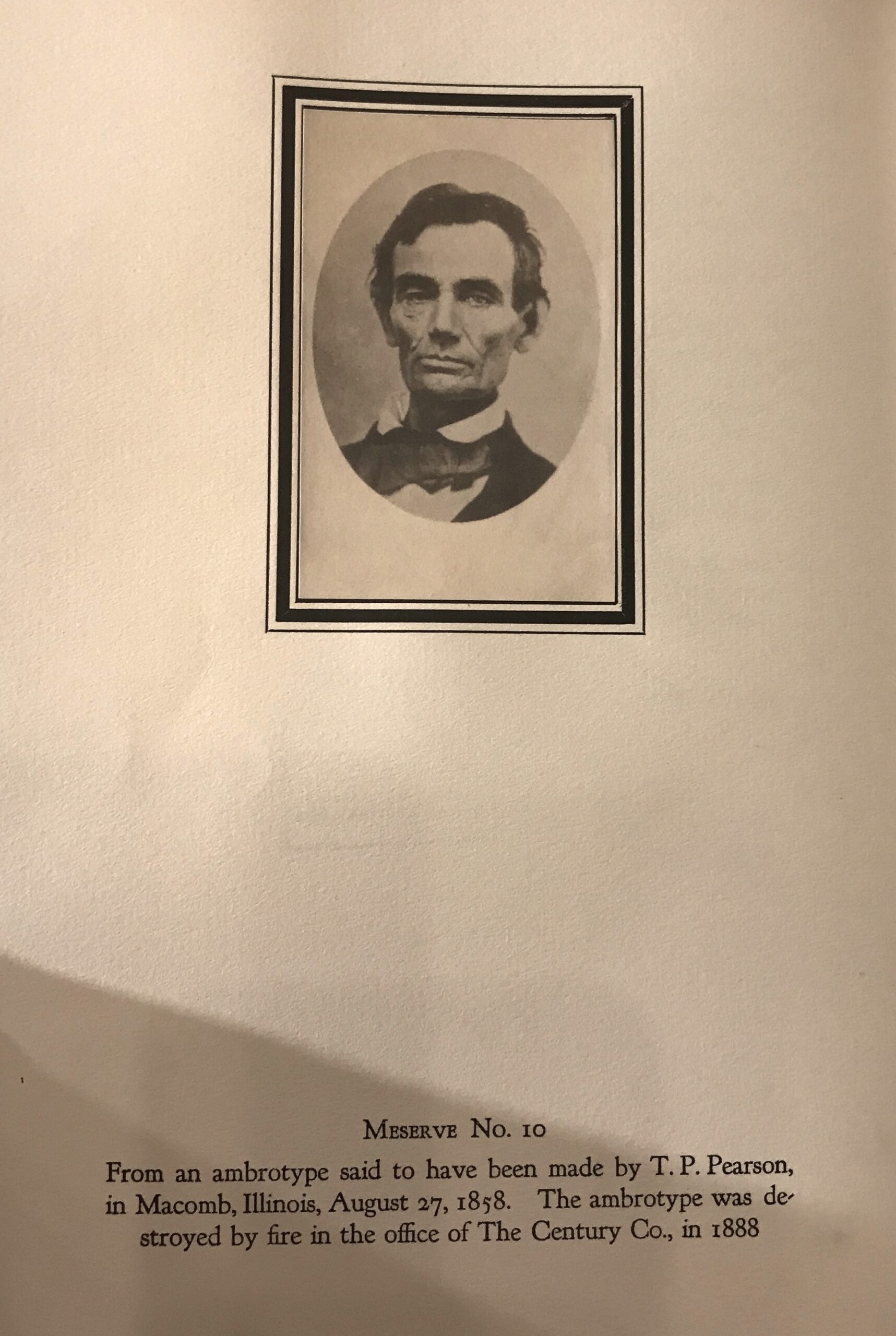
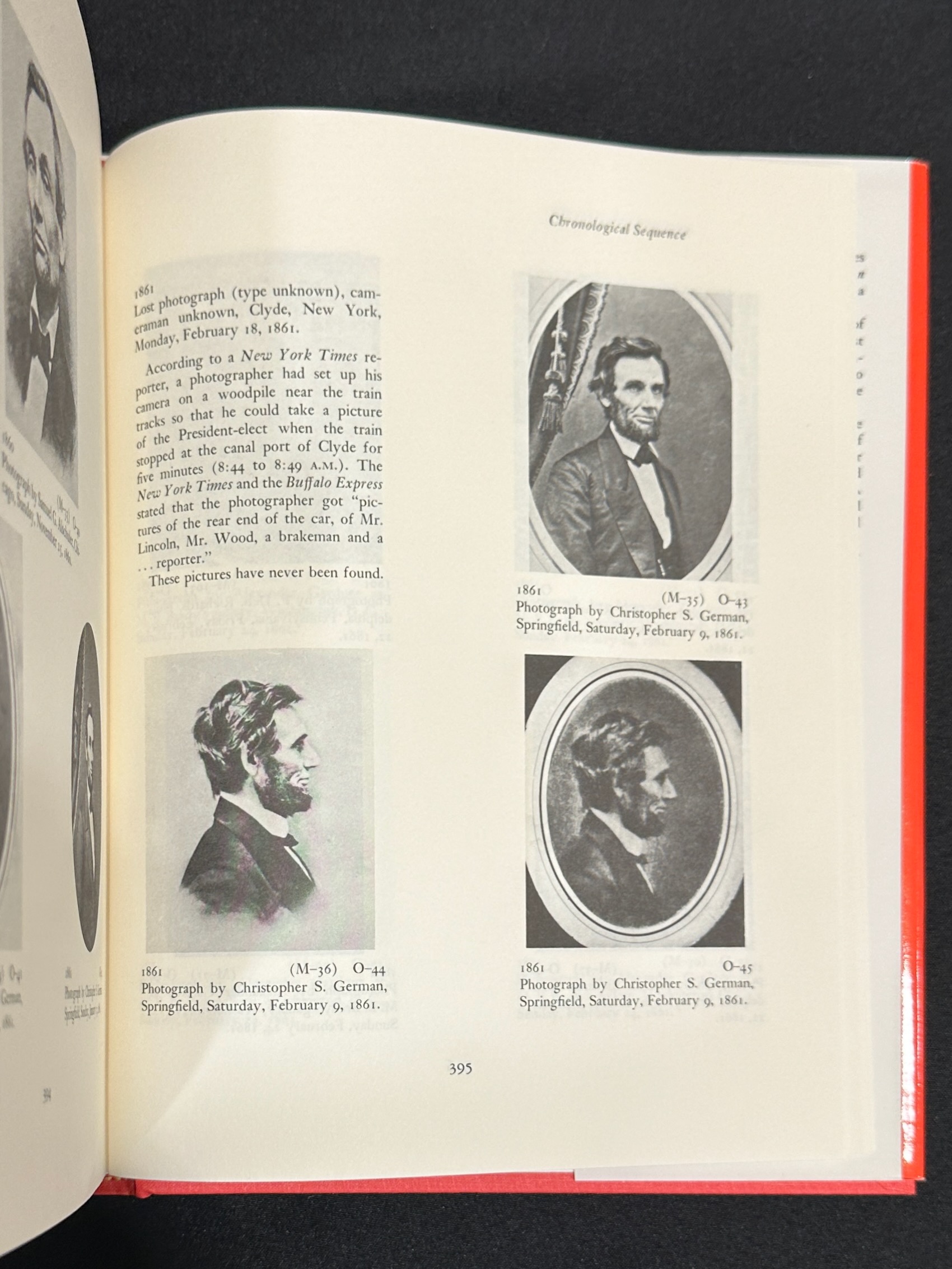
The important point is that the daguerreotype process disappeared just as Lincoln began growing his beard. Fortuitously, the most recent iconographer meticulously mentioned the possible existence of Lincoln portraits that have disappeared or not yet been found. Not only does Lloyd Ostendorf mention the existence of a lost portrait, but he also specifies the location and date. Additional research suggests that it is a daguerreotype.
This allows us to address the subsequent parts of this study, parts seven to twelve. Abraham Lincoln was traveling aboard his inaugural train. We sought to gather as much information as possible about this train, which changed in form and composition over the course of the 12-day journey. Our investigation aimed to identify the passengers and determine whether they had made any comments. Journalists were also present, and several described the presence of a photographer at a very precise moment, 8:48 AM. We conducted inquiries in the small village, meeting local historians and collecting both oral traditions and traces that remain vivid in collective memory, as well as written records spanning 160 years. It is a rare occasion to address a case with such incredibly precise spatio-temporal coordinates when starting an investigation.
After compiling these testimonies, we conducted a thorough examination of the daguerreotype itself to search for clues, analysing various aspects of the image and its physical characteristics, such as the leather case, brass frame, unframed plate, significance of the sixth-plate format, and the tarnish.
The fourteenth section focuses on the subject’s attire and surroundings, examining visible shadows and the empty-looking background for additional clues. In part fifteen, we examined the physiognomy of the figure, scrutinising every detail that might allow us to either support or abandon this modest hypothesis, burdened with such significant responsibility.
All this allows for the proposed reconstruction of the scene (part sixteen).
Cataloging Lincoln’s Photographic Portraits
The quest for a comprehensive Lincoln portrait catalogue, with the search for undiscovered photographs of Abraham Lincoln, has been an ongoing effort by historians and collectors for over a century. Here is a chronological overview of the key figures in this quest.
Frederick Hill Meserve (1865–1962)
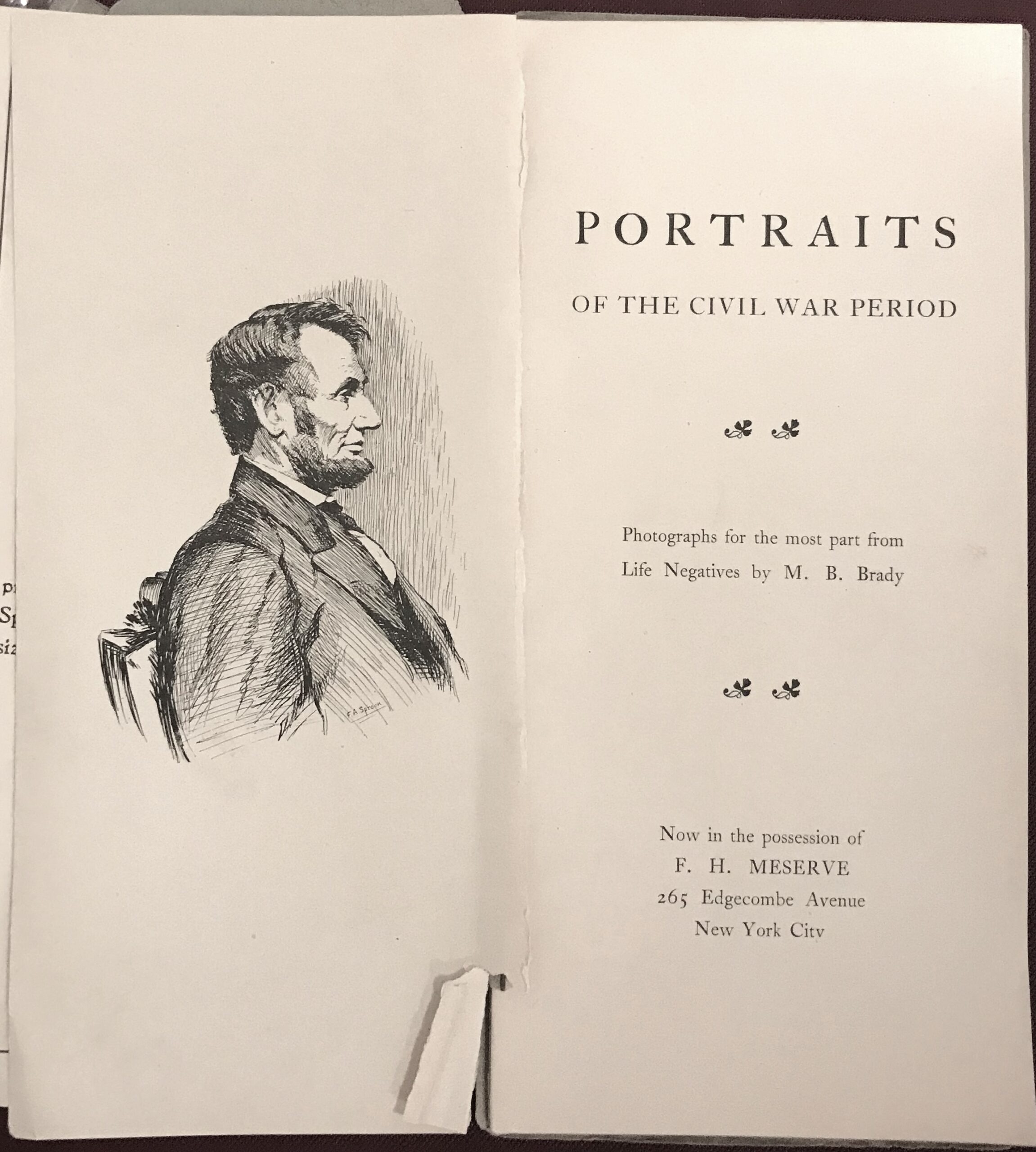
Frederick Hill Meserve was a prominent collector and historian of Civil War era photographs, with a particular focus on Abraham Lincoln. He amassed an extensive collection of original Lincoln photographs until publishing The Photographs of Abraham Lincoln with historian Carl Sandburg in 1944.
No photographic history has been studied with more patient passion than American president Abraham Lincoln’s portraits. Meserve, the first Lincoln iconographer, was the son of a Civil War soldier who was wounded at the battle of Antietam and kept a diary of his entire time in the war. While illustrating that diary through collecting photography, Meserve became a pioneer and leader for collectors of 19th-century American photography.
In the late 19th century, the war-weary nation lost interest in images from that era. Many glass negatives were thought to be worthless; the emulsion was washed off, and many were used to build greenhouses. Meserve bought the Brady negatives in boxes from a firm called Anthony & Co in Hoboken, circa 1901.
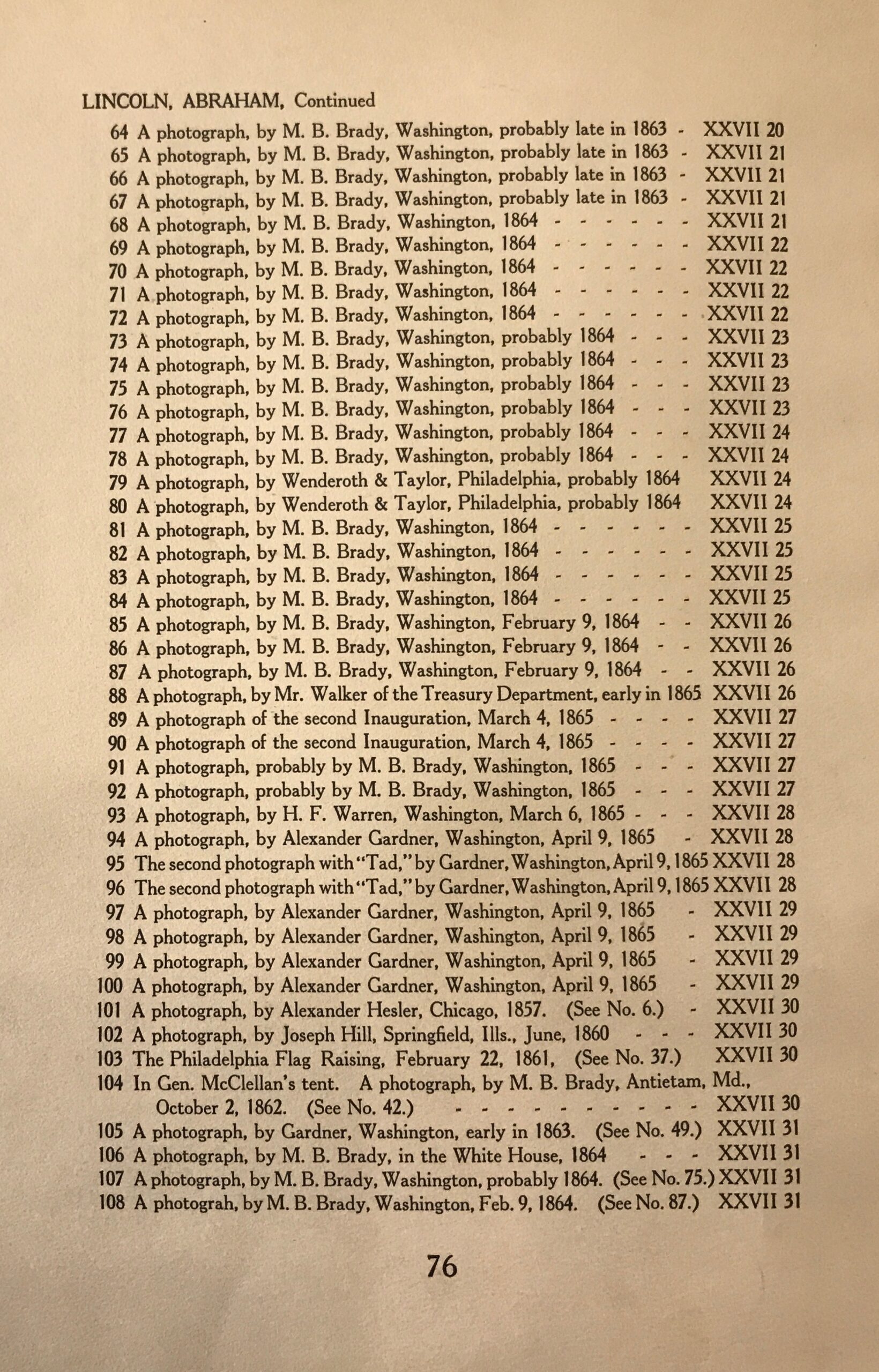
Meserve’s pioneering photographic compilation — first published as a list in 1903 — received attention. After producing 100 copies of an album with 100 Lincoln portraits in 1911, four sets of 28 albums with silver prints from Brady’s glass plates were printed for subscribers in 1912.
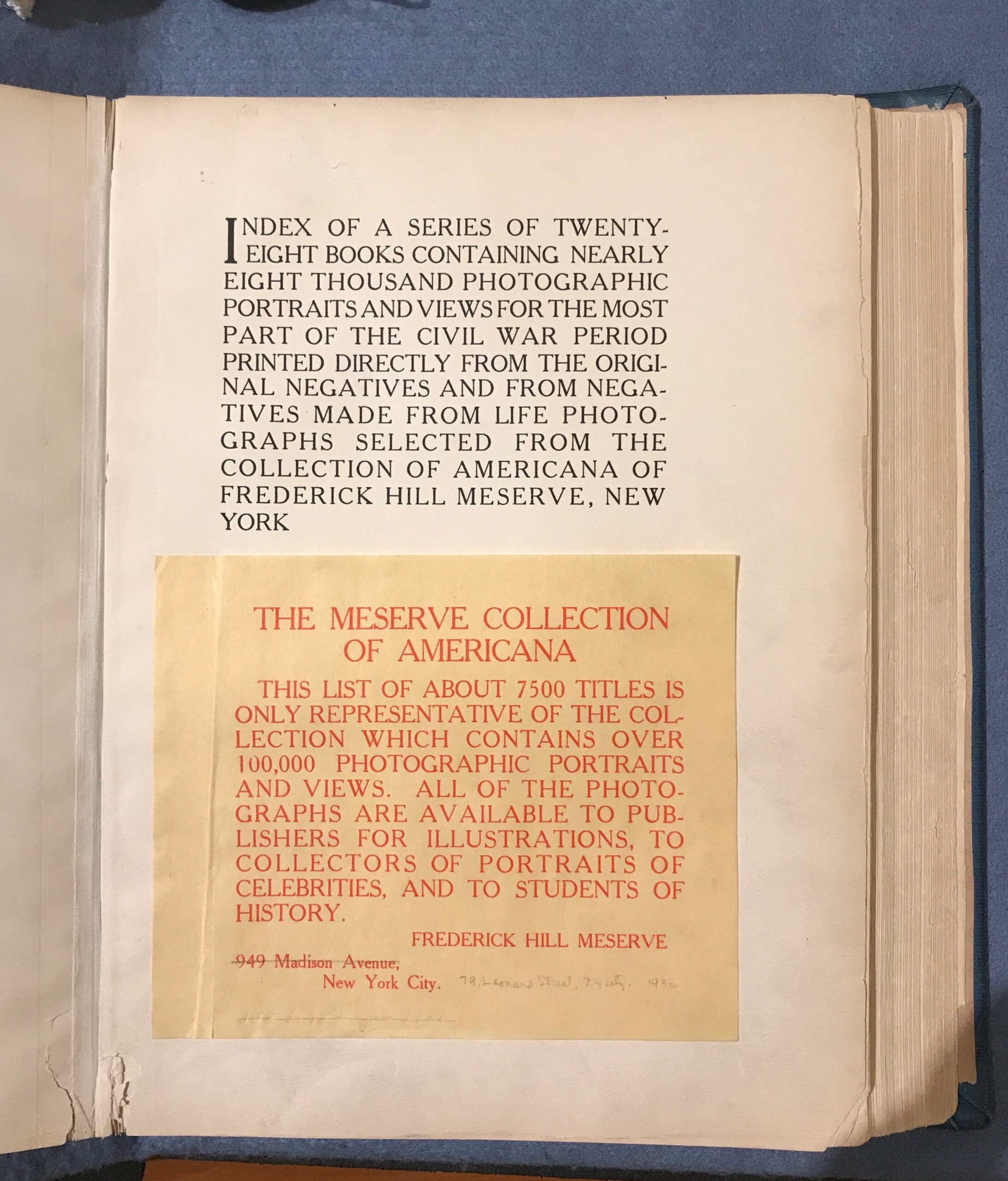
On October 4, 1941, during the presentation of his photographs to Lincoln Memorial University, Dr. Meserve gave a detailed address, « The Photographs of Abraham Lincoln and the Romance of their Collection »:
«At the beginning of this century, the people who had known Lincoln, or had even seen him, were fast disappearing… It was then that a group of serious men were collecting many books which had already been written about him… The buying competition of the individuals of this limited group and their imitators put high prices on items which were already scarce. When, in addition to the general collection of Americana, I began my own researches in the more narrow field of the life photographs of Lincoln, these collectors of the books were my allies and earnest helpers: Judge Daniel Fish of Minneapolis, Major William H. Lambert, Judd Stewart of Plainfield, New Jersey, Benjamin Oakleaf of Moline, Wisconsin — they were my eyes and ears in my search for the photographic portraits of Lincoln…»
Winfred Porter Truesdell (1880–1939)
The first attempt to publish a catalogue raisonné of Abraham Lincoln portraits was made by Winfred Porter Truesdell, an internationally known art publisher who lived in the Village of Champlain, New York. He amassed a collection of thousands of bookplates, lithographs and photographs and published many books related to printing between the years 1903 and 1933. His best-known publication was an art magazine called The Print Connoisseur, which he printed between 1920 and 1932. It is likely that many people today have never heard of Truesdell. He is certainly Champlain’s unknown art publisher.
Truesdell was considered an authority on George Washington, Abraham Lincoln and the Civil War, and often gave talks on these subjects. Truesdell spent many years collecting Abraham Lincoln lithographs. In 1916, he planned to publish all of the portraits and engravings of Abraham Lincoln. He was in discussions with Frederick Hill Meserve to use prints of Lincoln photographs for his upcoming book. In 1911, Meserve had published his authoritative book on all of the Lincoln photographs known to exist. Truesdell wanted to print a similar book, and Meserve offered him 112 prints from his exclusive negatives.
In 1918, Hugh McLellan, semi-retired from the architectural business in N.Y.C., had moved back to Champlain to settle his father Charles Woodberry McLellan’s estate. Truesdell was interested in McLellan’s Lincoln collection and visited Champlain several times to see it. Over the next five years he helped McLellan catalog the collection, arranged meetings with buyers and auction houses in N.Y.C. and kept abreast of similar auctions from the other Big Five. In 1922, Hugh McLellan suggested to Truesdell that he move to Champlain and establish his own press. Truesdell quickly realised that it would be cheaper to live in Champlain than in New York City. He was permanently in Champlain by Christmas of 1923.
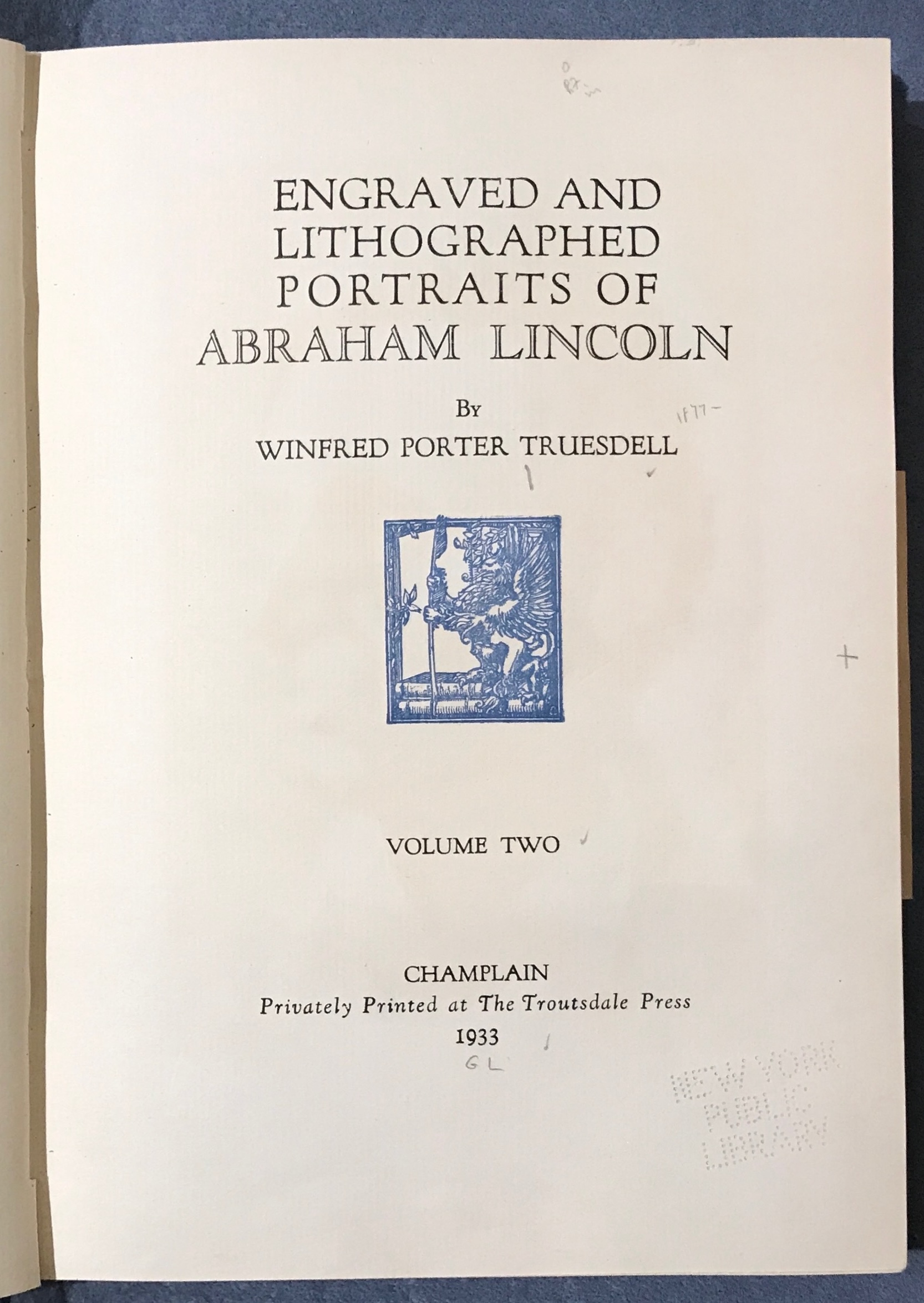
In 1920, Truesdell had printed an announcement for the upcoming book, but it wouldn’t be until 1933 before he printed Volume 2 of the planned four-volume series — Engraved and Lithographed Portraits of Abraham Lincoln, privately printed at the Troutsdale Press, 1933:
«For many years collectors of prints and other Lincolniana have been greatly handicapped by the lack of a proper list on which to base and identify their portraits. The present volume enumerates and describes in detail all the known engravings, etchings, lithographs and wood engravings of Lincoln. The preparation of this check list has engaged the author’s attention for many years, and every print described has been examined by him personally. In addition to his own collection, he has had the courteous privilege of examining all the larger collections of the Country, including those of the late Major W. H. Lambert, the late Mr. Charles W. McLellan, Mr. H. McTheil Bland, Mr. Judd Stewart, Mr. W. C. Crane, and others…»
Volume 2 contains 31 plates listed in the index, with over 80 images of Lincoln, with a frontispiece original woodcut in five colours, engraved by Harry Cimino, after Photograph No. 26. Several of the plates are from the author’s own collection. The preface explains the cataloguing system and that this volume, Volume 2, is being presented before Volume 1, out of a planned four volumes.
Truesdell died before printing the other three volumes. In March 1942, Dr. Louis A. Warren, Director of the Lincoln National Life Foundation, visited Champlain and met Hugh McLellan and Edythe Truesdell. He purchased Truesdell’s Lincoln and Civil War collection for the foundation.
«The compilation by Winfred Porter Truesdell was so rare it was by then far more expensive than most of the prints it depicted — and so incomplete that all that had ever been issued was, curiously and inexplicably, Volume 2.» (Harold Holzer)
Lloyd Ostendorf (1921–2000)
«The second generation of Lincoln historians — Lloyd Ostendorf’s Lincoln in Photographs: An Album of Every Known Pose (with Charles Hamilton, 1963) and Stefan Lorant’s Lincoln: A Picture Story of His Life (1969) — elevated the study of Lincoln images… Their research and scholarship helped elevate the Lincoln image into a serious study.» (Harold Holzer)
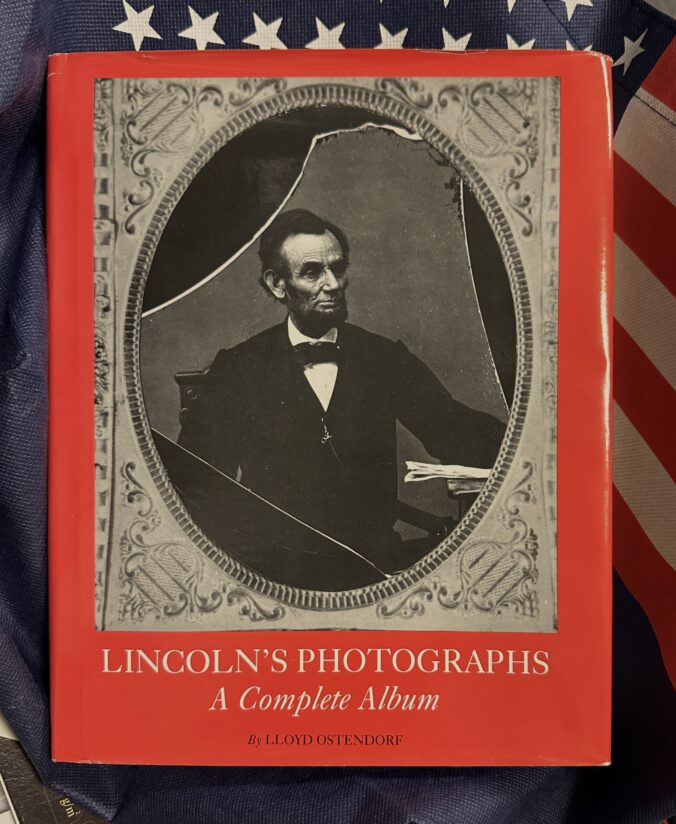
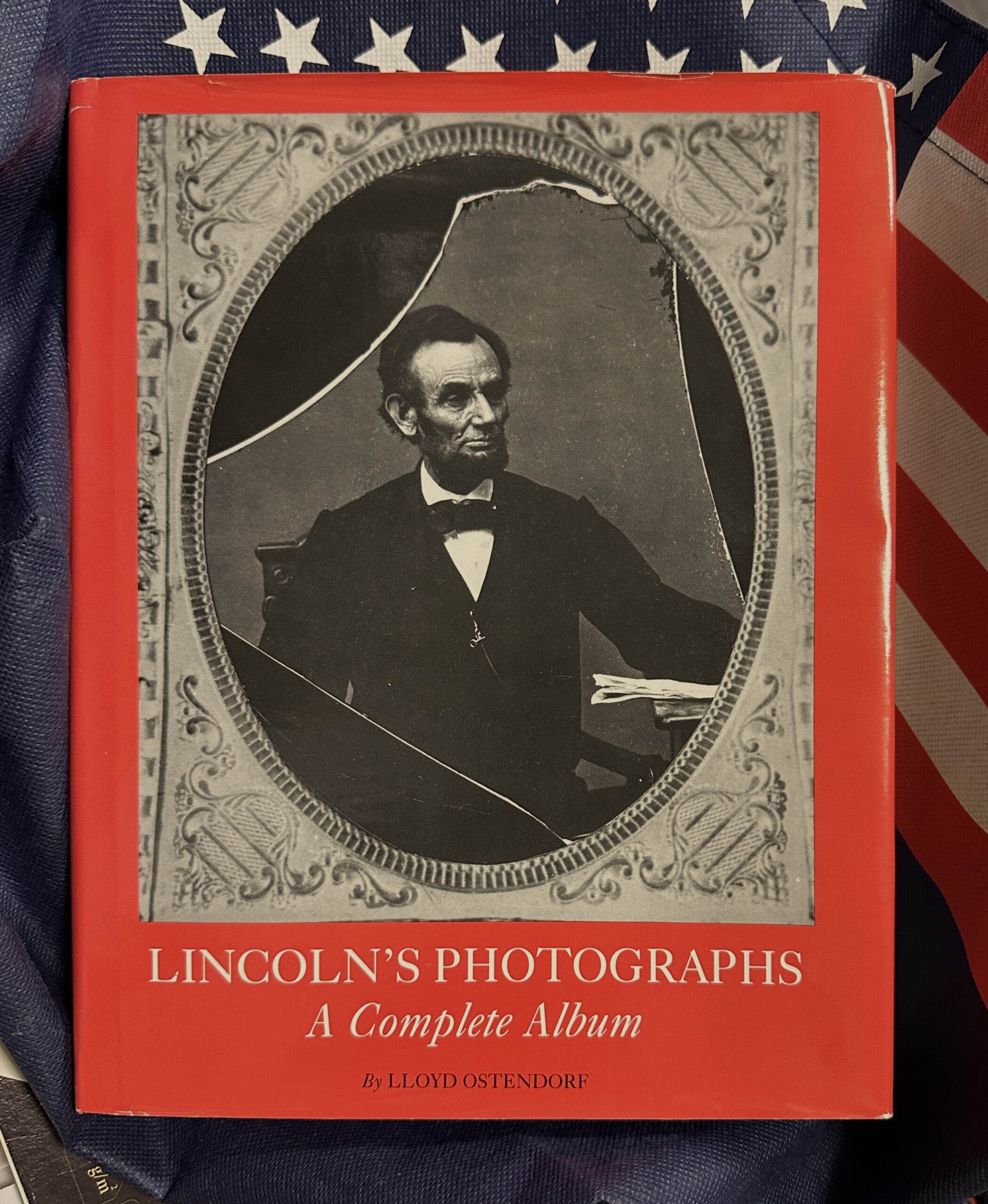
Ostendorf’s numbering of Lincoln photographic portraits became the preferred system, and the Album of Every Known Pose includes doubtful portraits and possibly lost portraits — including the 1861 Clyde long-lost daguerreotype, on page 373.
An artist, photographer, and Lincoln historian, Lloyd Ostendorf was born in Dayton in 1921. A gifted child artist, he became fascinated with Abraham Lincoln’s face on a penny which his mother had given him. When Lloyd entered Stivers in 1935, he fell under the tutelage of an equally gifted art teacher, Martha Schauer, who helped him develop his talent. His teachers tried in vain to get Lloyd to draw subjects other than Abraham Lincoln. Upon graduation, Lloyd attended the school of art at the Dayton Art Institute. After the war, he took a job as a commercial artist for the Journal Herald, and in 1950 he became a self-employed commercial artist, producing religious art, greeting cards, portraits, and innumerable pencil sketches of Lincoln.
Lloyd collected and owned the largest collection of Lincoln pictures and memorabilia in the United States. He wrote two biographical books about Lincoln (both illustrated by the artist), created two books of illustrations about Lincoln, and edited and illustrated another biography of his beloved Lincoln. Even in his other hobby — boating — Lloyd carried over his love of Lincoln by naming his steamboat replica Abraham Lincoln.
The Chicago Lincoln is a statue of a standing, beardless Abraham Lincoln in Lincoln Square, Chicago. The statue was designed by Lloyd Ostendorf for a city contest and modelled by sculptor Avard Fairbanks, and erected on October 16, 1956.
Today a mural, Lincoln’s Visit to Clyde, memorialises the stop by Lincoln’s Inaugural Train in Clyde on 18 February 1861 — the only stop the train made between Rochester and Syracuse. It depicts president-elect Lincoln speaking to an immense crowd, which had gathered at the depot on Monday 18 February 1861. The mural is the artwork of Robert Gillespie of Penn Yan, New York, after Lloyd Ostendorf’s indications, and is located on the east wall of the Express Lane Car Wash, standing near the original passengers depot.
Ostendorf’s third, augmented and corrected edition, 1998, is still unchallenged. This report uses the Ostendorf updated nomenclature.
To be continued — Episode 2: « The Only Known Lincoln Portrait in Daguerreotype — Shepherd 1846, Hanks-Chapman 1858, and the last Half-Plate of 1864 ».
Sources & Notes
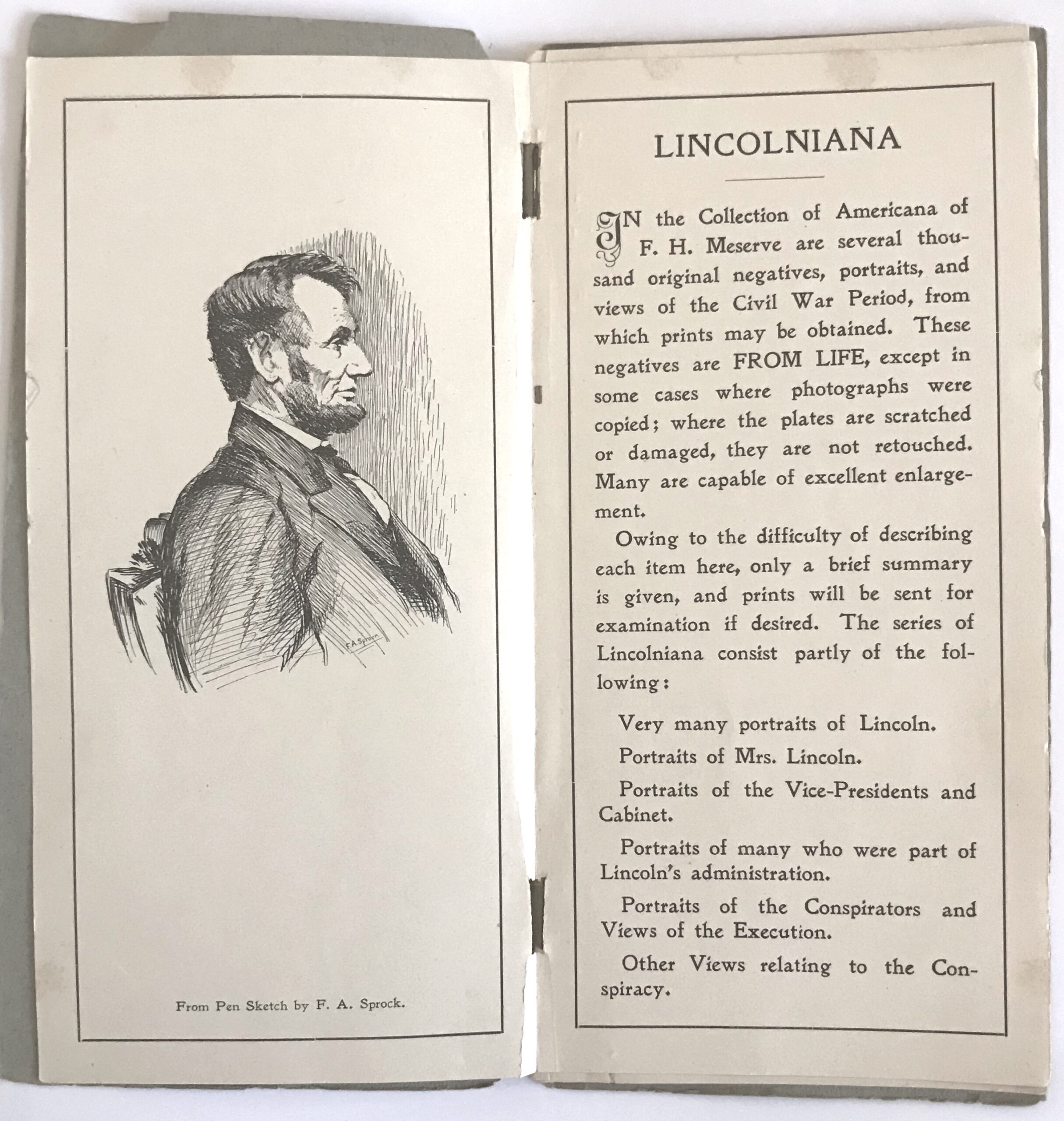
- Meserve, Frederick Hill. Lincolniana, Portraits of the Civil War Period. 1903.
- Meserve, Frederick Hill. Historical Portraits and Lincolniana: Index of a Part of the Collection of Americana of F. H. Meserve. 1915.
- Meserve, Frederick Hill and Sandburg, Carl. The Photographs of Abraham Lincoln. New York: Harcourt, Brace and Company, 1944.
- Meserve, Frederick Hill. « The Photographs of Abraham Lincoln and the Romance of their Collection. » Address given at Lincoln Memorial University, 4 October 1941.
- Truesdell, Winfred Porter. Engraved and Lithographed Portraits of Abraham Lincoln. Troutsdale Press, 1933.
- Holzer, Harold, Gabor S. Boritt and Mark E. Neely Jr. The Lincoln Visual Image: Abraham Lincoln and the Popular Print. New York: Charles Scribner’s Sons, 1984.
- Ostendorf, Lloyd and Hamilton, Charles. Lincoln in Photographs: An Album of Every Known Pose. Norman: University of Oklahoma Press, 1963.
- Ostendorf, Lloyd. Lincoln’s Photographs: A Complete Album. Dayton, 1998.
- Gillespie, Robert. Lincoln’s Visit to Clyde Mural. Clyde, New York, 2009.
- Apraxine, Pierre. L’Image à venir, Mémoires d’un collectionneur, introduction by Maria Morris Hambourg. Paris: Éditions Courtes et Longues, Jean Poderos, 2024.
Laisser un commentaire