From Shepherd 1846 to Second Term — A Photographic Tour-de-Force
Extract from the monograph The Mystery of the Lost Daguerreotype — Tracing Lincoln’s Image in 1861 (Senigallia, MMXXVI).
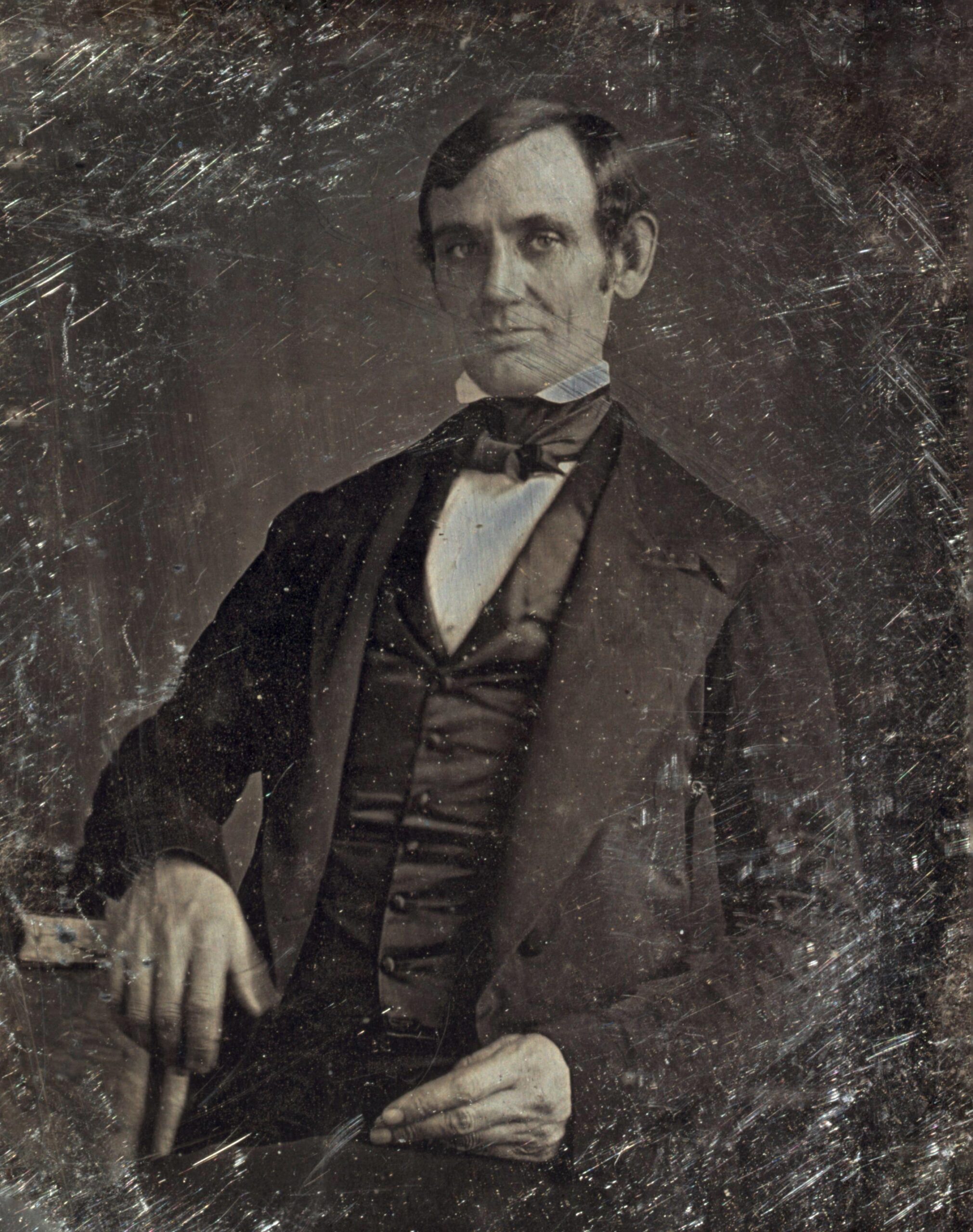
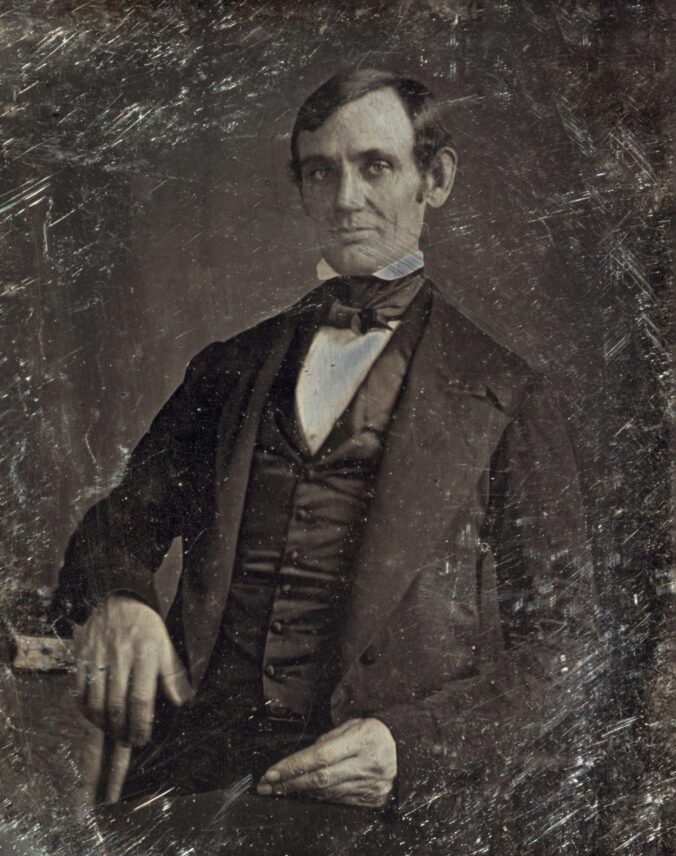
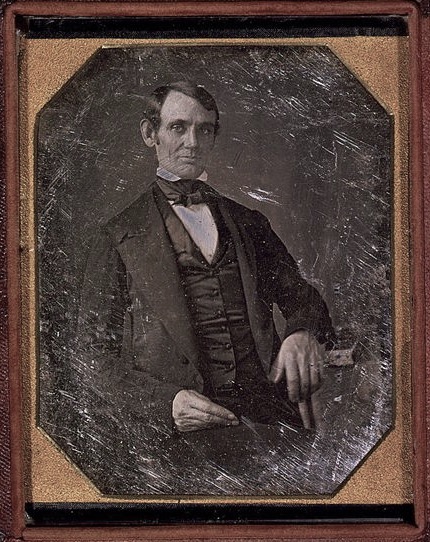
Nicholas H. Shepherd — Abraham Lincoln, elected Representative
Springfield, Illinois, 1846. Daguerreotype (O-1).
Lincoln’s first recorded portrait was taken after his election to Congress, at age 37. Gibson Harris, a law student who worked in Lincoln’s office from 1845 to 1847, was a friend and roommate of Nicholas H. Shepherd, the daguerreotypist. Harris recognized the 1846 daguerreotype as Shepherd’s work and noted that Lincoln sat for this portrait on one or more occasions, with Mrs. Lincoln. This marked Lincoln’s first encounter with the daguerreotype process.
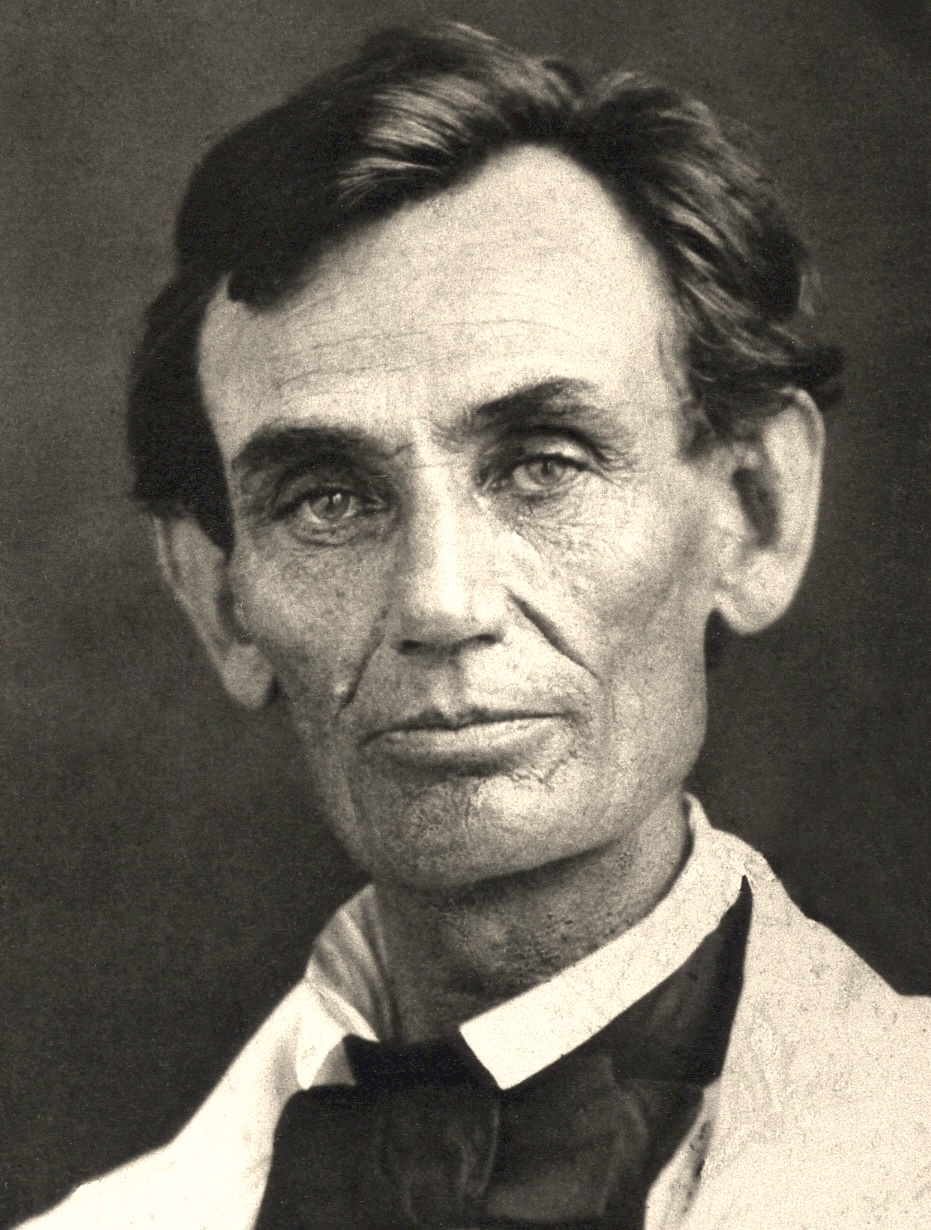
Abraham Byers — Senatorial Candidate
Beardstown, Illinois, 7 May 1858. Ambrotype, University of Nebraska (O-5).
«Here is Lincoln as he appeared in court on the day he won his most famous case. Defending Duff Armstrong against a murder-at-midnight charge, Lincoln produced an old almanac to show that the state’s witness could not have seen Armstrong kill the victim because there was no moonlight. After the acquittal, Lincoln was stopped in the street by Abraham Byers, an eighteen-year-old amateur photographer who had acquired his gallery in settlement of a debt.»
Recalled Byers:
«Lincoln was attending court and boarded at the National Hotel… after dinner he stepped out on the street ahead of me. I caught up with him, as I went to my rooms, and said to him: — « Mr. Lincoln, I want you to go upstairs with me to my gallery; I wish to take an ambrotype of you. » — He cast his eyes down on his old holland linen suit which had no semblance of starch in it, and said: — « These clothes are dirty and unfit for a picture. » — But I insisted and he finally went with me.»
When Byers took his picture in his People’s Ambrotype Gallery at 24 North Water Street in Beardstown, he used the process of ambrotyping, a collodion or wet-glass plate which, when developed and dried, could be used as a negative to produce an unlimited number of duplicate pictures on paper, or could become a positive likeness when mounted against a dark background.
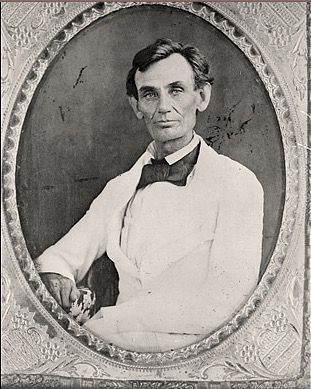
Samuel G. Alschuler — Abraham Lincoln wearing a Borrowed Coat
Urbana, Illinois, 25 May 1858. Albumen print of the lost ambrotype (O-4).
Abraham Lincoln was to become the nominated senatorial candidate for the Republican party. Judge J. O. Cunningham, who was present when the picture was taken, wrote:
«One morning I was in the gallery of Mr. Alschuler, when Mr. Lincoln came into the room and said he had been informed that he (Alschuler) wished him to sit for a picture. Alschuler said he had sent such a message to Mr. Lincoln, but he could not take the picture in that coat (referring to a linen duster in which Mr. Lincoln was clad), and asked if he had not a dark coat in which he could sit. Mr. Lincoln said he had not; that this was the only coat he had brought with him from his home. Alschuler said he could wear his coat, and gave it to Mr. Lincoln, who pulled off the duster and put on the artist’s coat. Alschuler was a very short man, with short arms, but with a body nearly as large as the body of Mr. Lincoln. The arms of the latter extended through the sleeves of the coat of Alschuler a quarter of a yard, making him quite ludicrous, at which he (Lincoln) laughed immoderately, and sat down for the picture to be taken with an effort at being sober enough for the occasion. The lips in the picture show this.»
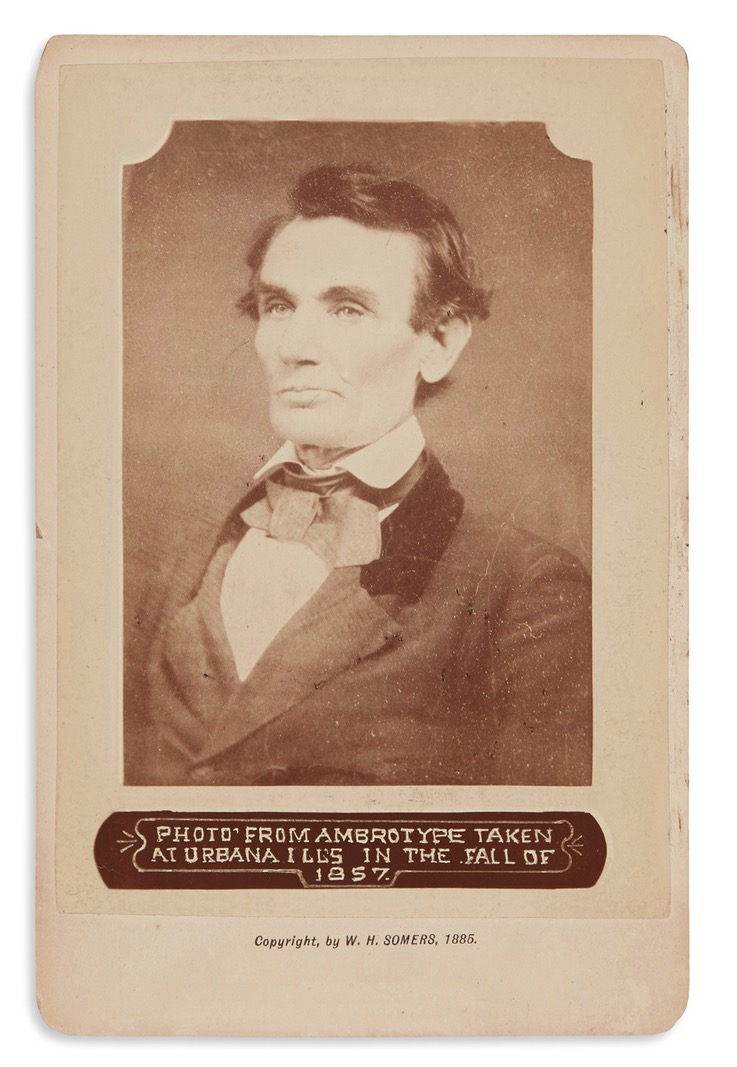
Alschuler took another portrait of Lincoln two years later, which was the first to show Lincoln with a beard (O-40). The coat-borrowing incident reveals Lincoln’s unpretentious nature and willingness to laugh at himself, traits that endeared him to many voters.
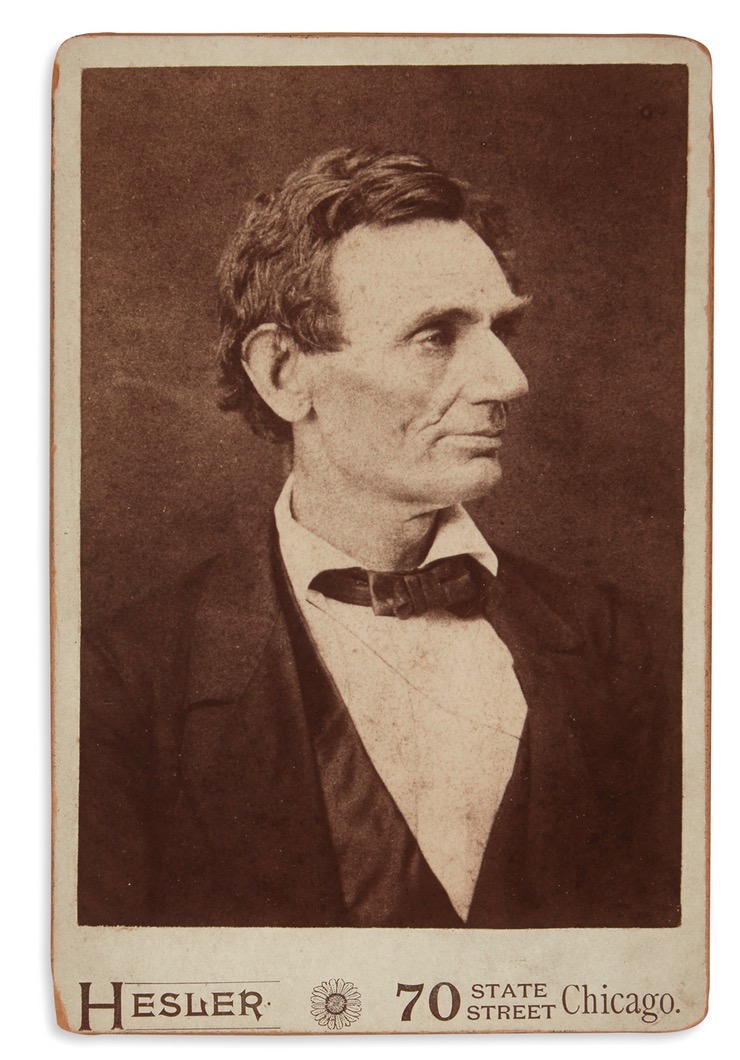
William Painter Pearson — Senatorial Candidate
Macomb, Illinois, 26 August 1858. Copy-albumen print of an ambrotype (O-8).
From a photograph loaned by W. J. Franklin of Macomb, Illinois, and taken in 1866 from an ambrotype made in 1858 in Macomb, later destroyed in a fire at the Century Magazine building in 1888.
This portrait also figures in the collection in the Lincoln Home at Springfield, Illinois, with the following inscription (J. C. Power, custodian of the Lincoln monument in Springfield, quoted in The Early Life of Abraham Lincoln by Ida M. Tarbell and J. McCan Davis, 1896):
«This likeness of Abraham Lincoln is a faithful copy of an original ambrotype, now in possession of James K. Magie. It was taken August 25, 1858, by Mr. T. P. Pierson, at Macomb, in this State, and is believed to be of anterior date to any other likeness of Mr. Lincoln ever brought before the public. Mr. Magie happened to remain over night at Macomb, at the same hotel with Mr. Lincoln, and the next morning took a walk about town, and upon Mr. Magie’s invitation they stepped into Mr. Pierson’s establishment, and the ambrotype of which this is a copy was the result. Mr. Lincoln, upon entering, looked at the camera as though he was unfamiliar with such an instrument, and then remarked: « Well, do you want to take a shot at me with that thing? » He was shown to a glass, where he was told to « fix up, » but declined, saying it would not be much of a likeness if he fixed up any.»
Pearson was 29 years old when he joined up on June 18, 1862. He was five feet, eight and a half inches tall with black hair. He was married and his occupation was artist. Pearson died December 1864 in a tragic accident at the age of 31, while riding in a funeral procession.
William Judkins Thompson — Senatorial Candidate
Monmouth, Illinois, 11 October 1858. Half plate ambrotype (Smithsonian National Portrait Gallery, O-11).
The « Great Debates of 1858 » were a series of seven debates between Abraham Lincoln, the Republican candidate for the United States Senate from Illinois, and incumbent Senator Stephen Douglas, the Democratic Party candidate. Two days before the sixth debate with Senator Stephen A. Douglas at Quincy, Illinois, Mr. Lincoln spoke for three hours at Monmouth. The portrait dates from this moment.
Several days later, the humorist Petroleum V. Nasby (David R. Locke) met Lincoln at Quincy, recording:
«I never saw a more thoughtful face. I never saw a more dignified face. I never saw so sad a face.»
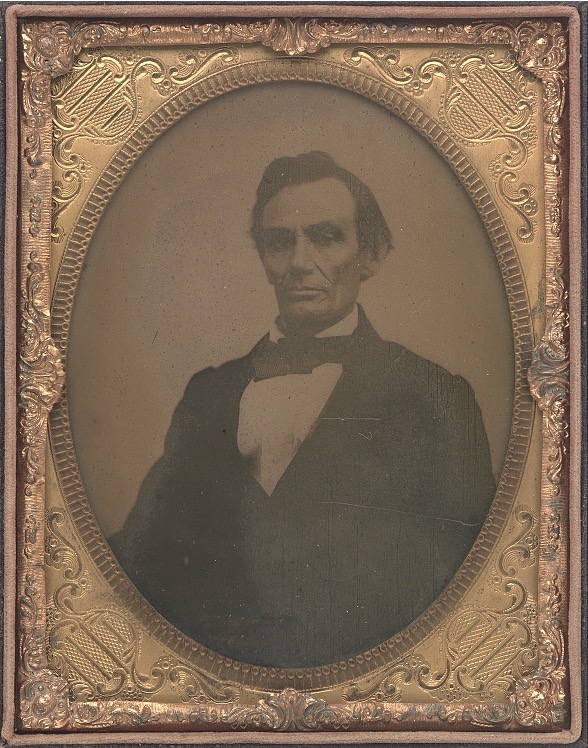
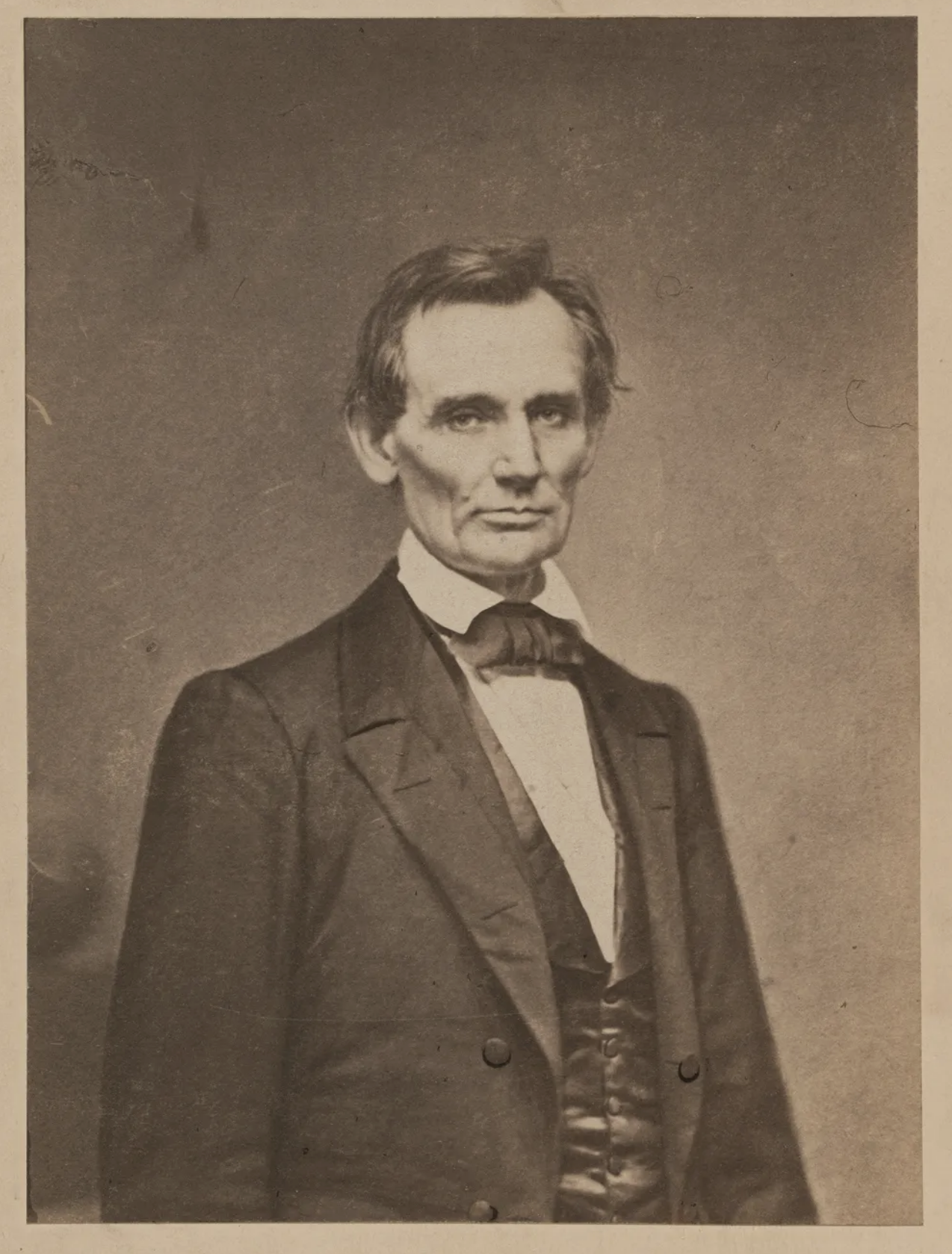
Mathew Brady — Cooper Union Portrait
New York, 27 February 1860. Albumen print (Smithsonian National Portrait Gallery, O-17).
The portrait was taken on the morning of February 27, 1860, just hours before Lincoln delivered his famous Cooper Union speech. This speech and portrait are often credited with significantly boosting Lincoln’s political career, with Lincoln himself reportedly saying: «Brady and the Cooper Union speech made me president of the United States.»
Harold Holzer observed:
«Had Abraham Lincoln failed at his do-or-die debut in New York, he would never have won his party’s presidential nomination three months later, not to mention election to the White House that November. Such was the impact of a triumph in the nation’s media capital… Abraham Lincoln did triumph in New York. He delivered a learned, witty, and exquisitely reasoned address that electrified his elite audience and, more important, reverberated in newspapers and pamphlets alike until it reached tens of thousands of Republican voters across the North. He had arrived at Cooper Union a politician with more defeats than victories, but he departed politically reborn… At the Cooper Union, Lincoln became more than a regional curiosity. He became a national leader.»
Alice George notes in Smithsonian Magazine (12 June 2024):
«The February 1860 image appeared on Lincoln’s campaign pins, making him the first presidential candidate to use a photographic image in a far-reaching way to boost his campaign, allowing Americans to look straight into his eyes.»
Chicago Studio (photographer to be identified) — Candidate for Republican Nominee
Chicago, Illinois, between 31 March and 4 April 1860. Albumen print (Library of Congress, unique).
This rare photograph captures Abraham Lincoln just before he secured the Republican nomination for president. Taken in early April 1860 in Chicago, it shows Lincoln with a youthful and almost cheerful expression, contrasting with many of his more somber portraits.
Lloyd Ostendorf (O-18) notes:
«Bright lighting softens his features. This photograph by an unknown cameraman was posed in Chicago a few days before Lincoln returned to Springfield on April 5, 1860. The negative was sent to M. C. Tuttle in St. Paul for use in printing campaign portraits. It arrived broken. Lincoln presented the only surviving print to William C. Bane, from whom it passed to Bane’s neighbor, the present owner, Gilbert L. Ross of Lake Geneva, Wisconsin. Lincoln’s features seem youthful and almost happy. William H. Herndon, the law partner who knew him in all his moods, noted that there were times when « it appeared as if Lincoln’s soul was fresh from its creator. »»
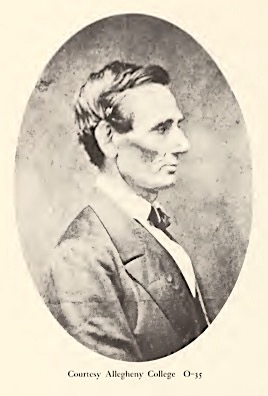
We compare this image with O-35, possibly from the same sitting. There are not many Chicago photographers linked to Abraham Lincoln in 1860, except Alexander Hesler.
Alexander Hesler — Candidate for Republican Nominee
Springfield, Illinois, 3 June 1860. Platinum print, printed circa 1880 by George B. Ayers (O-26).
Alexander Hesler, a noted commercial photographer based in Chicago, arranged two portrait sessions with Lincoln, in 1858 and 1860. The images from their first session displayed the presidential candidate with disordered and messy hair. During the subsequent election campaign, the Republican National Committee grew concerned that Lincoln might appear unkempt compared to his opponent, Stephen A. Douglas. Hesler therefore produced this more dapper and well-groomed representation of the candidate at the second sitting.
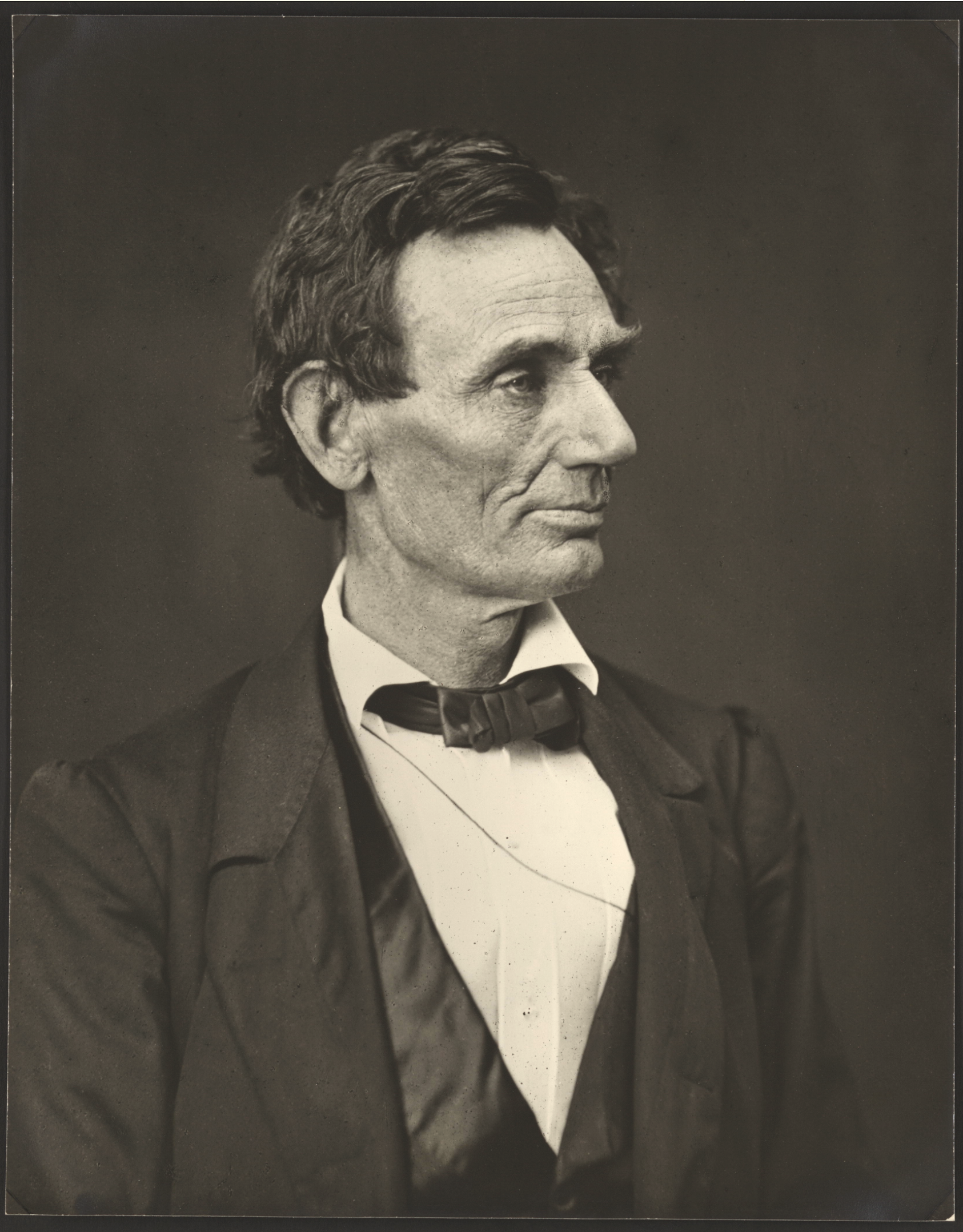
Lincoln himself appreciated Hesler’s work, reportedly saying: «That looks better and expresses me better than any I have ever seen; if it pleases the people I am satisfied.» His law partner, William H. Herndon, noted the portrait’s ability to capture Lincoln’s essence: «There is the peculiar curve of the lower lip, the lone mole on the right cheek, and a pose of the head so essentially Lincolnian; no other artist has ever caught it.»
George Peter Alexander Healy — Last Portrait before Growing Whiskers
Springfield, Illinois, ca. 10 November 1860. Oil on Canvas (National Gallery of Art, former Corcoran Gallery).
This significant portrait by George Peter Alexander Healy captures Abraham Lincoln at a pivotal moment in his life, just after his election as President. Commissioned by Chicago businessman and philanthropist Thomas B. Bryan in 1860, the painting was intended to be part of Bryan’s « National Gallery » in the Bryan Music Hall in Chicago.
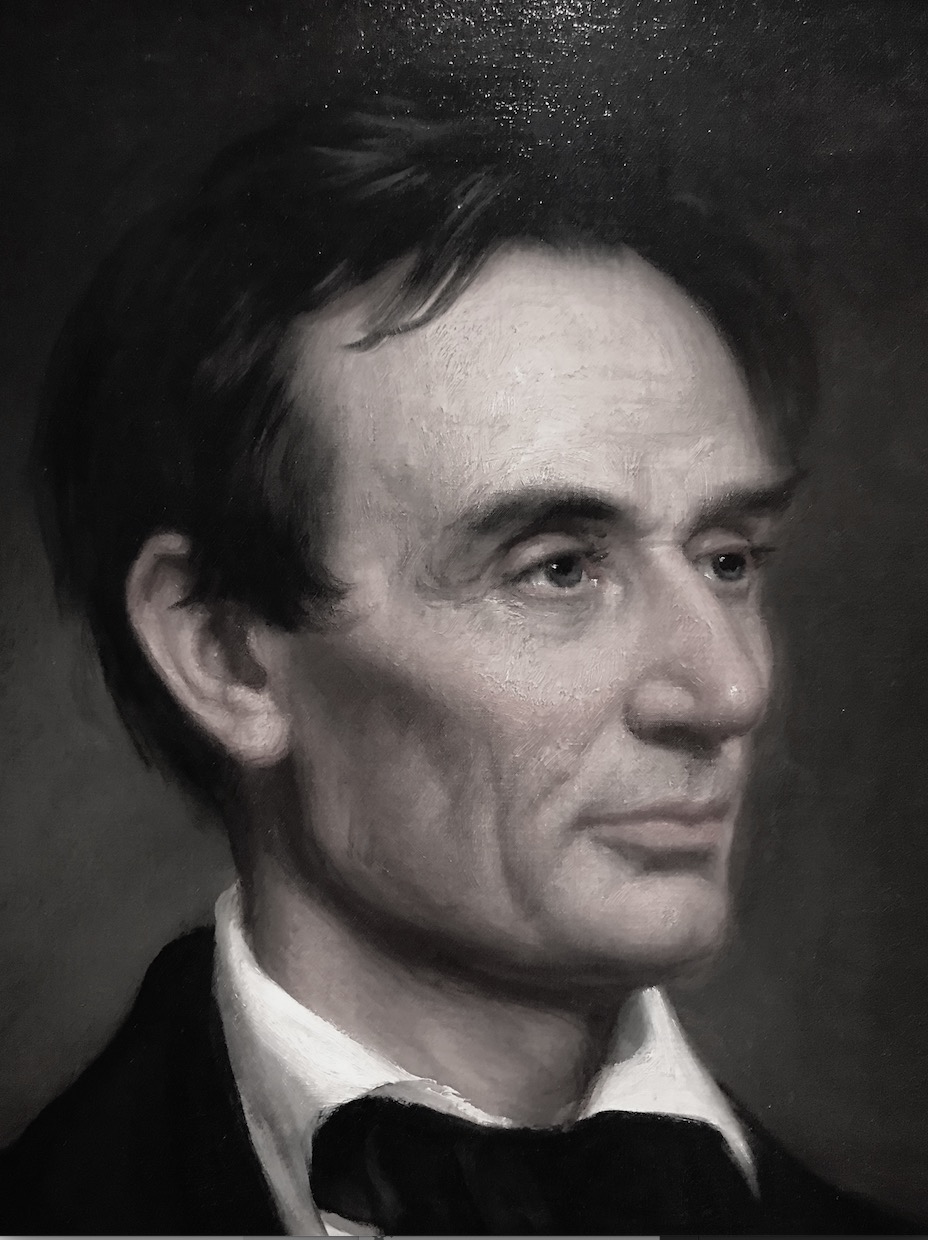
The portrait was created during a transformative period for Lincoln. The lines on his forehead and jowls, along with dark circles beneath his eyes, subtly hint at the demands of the election campaign and the weight of his impending presidency. Yet, as noted by Duncan Phillips, the painting also conveys a sense of Lincoln’s famous humor and the «surprise, the honor, and the vision of supreme opportunity» that came with his election. This portrait is significant as the last painted depiction of Lincoln without a beard.
Samuel G. Alschuler — First Portrait of the President-Elect Growing Whiskers
Chicago, Illinois, 25 November 1860. Original lost; gelatin silver print of a carte-de-visite print of a retouched albumen print from the lost original negative (Library of Congress, O-40).
The first whiskers sprout. Picturing the President-elect with a half-beard, this unique portrait was preserved by Henry C. Whitney, a youthful attorney who had traveled the Illinois circuit with Lincoln. Some thirty years later it turned up in the files of Chicago photographer C. D. Mosher, and was saved from destruction by Herbert Wells Fay, a custodian of the Lincoln tomb.
Adam Goodheart writes in The New York Times (24 November 2010):
«A few days afterward, Alschuler, a Jewish immigrant from Bavaria (now Germany), sent the portrait to his sitter as « a small token of my esteem. » Lincoln does not seem to have liked it, or even saved it; it was never reproduced, and the sole surviving copy only turned up 30 years later in the files of another Chicago photographer. But Lincoln’s decision inaugurated what might be called the Bearded Age in the nation’s political history: for the next half century, only one man would be elected president without benefit of facial hair… Lincoln, with Whitmanesque nonchalance, wears his tie loose and his low, soft collar slightly open. The difference looks negligible to modern eyes, but in a 19th-century context, it was like changing out of a business suit and into a polo shirt.»
Christopher S. German — Abraham Lincoln President-elect
Springfield, Illinois, 13 January 1861. Several mounted and dedicated albumen prints (O-43).
Thomas D. Jones, a sculptor, accompanied Lincoln to a local photographer, Christopher Smith German, «to pose him for some pictures he desired to present to a very dear friend.» It is considered the first photograph of Lincoln showing him with a full beard. The President-elect personally signed it «A. Lincoln, Springfield, Ill. January 26, 1861».
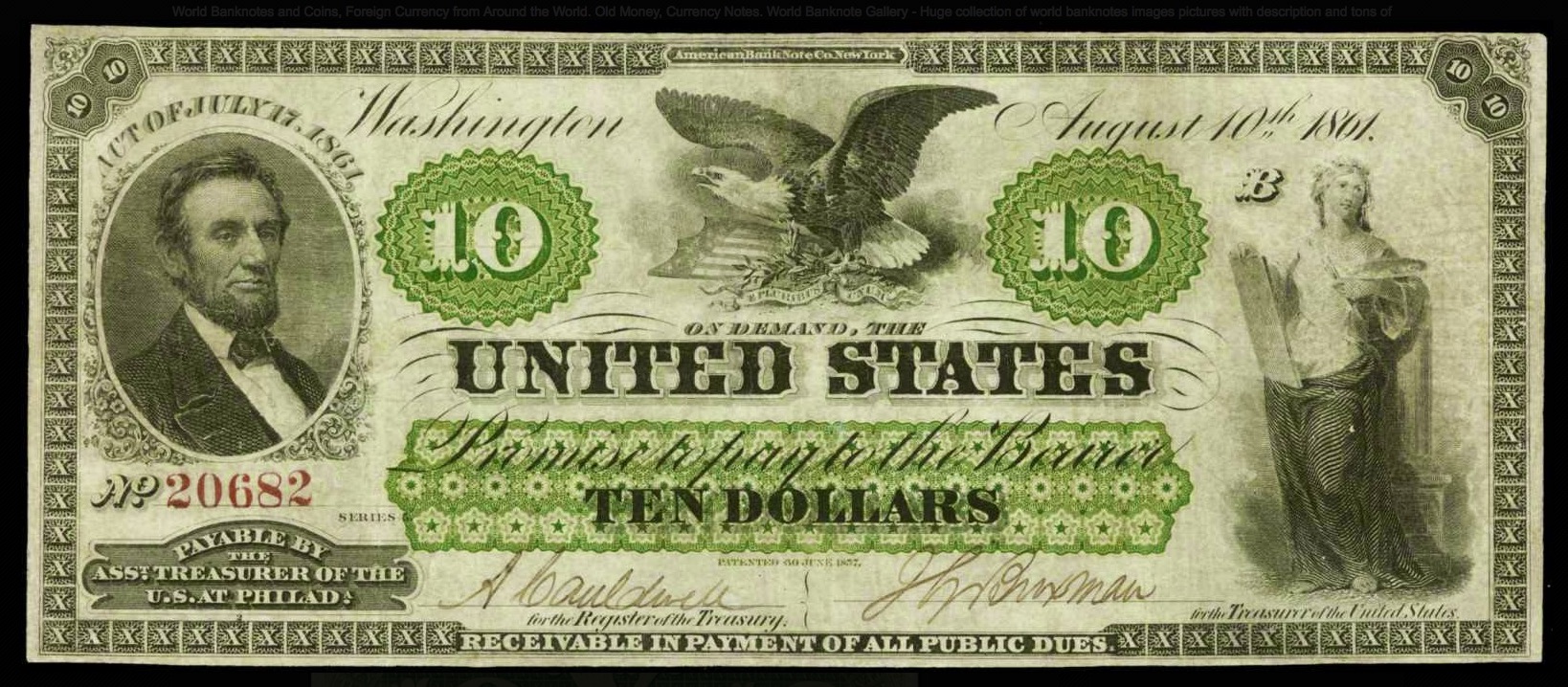
«Goggle-eyed and well fed is Lincoln after his face was worked over by an artist…» (Ostendorf)
The portrait for the original ten-dollar greenback was engraved from this photograph by Frederick Girsch.
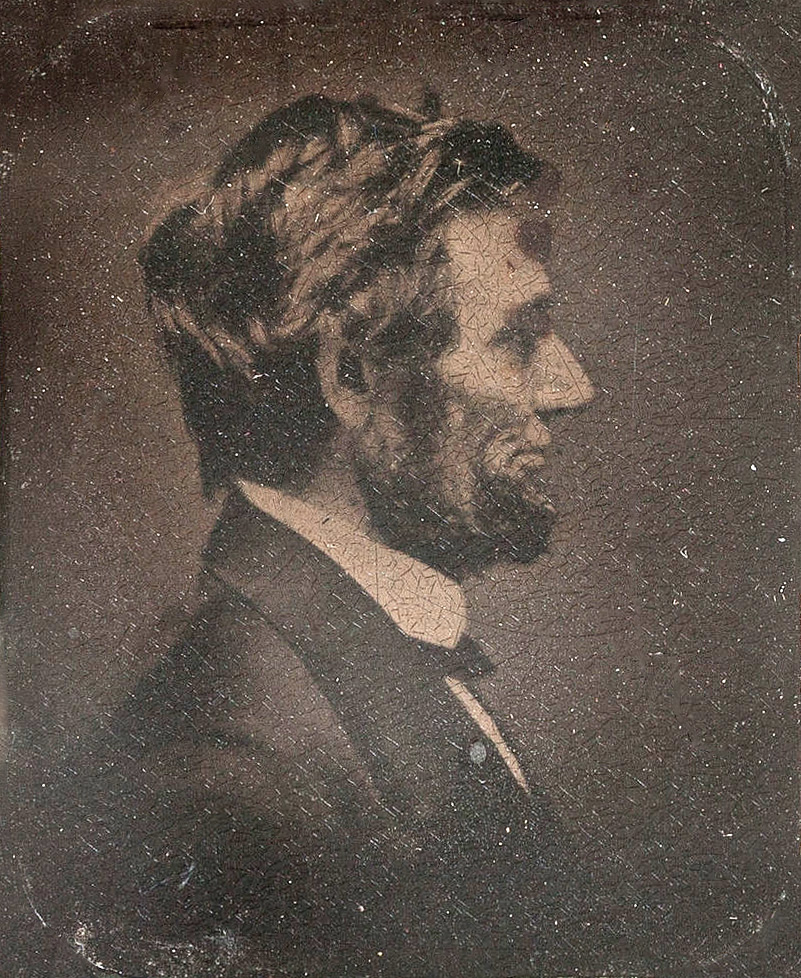
Christopher S. German — President-Elect with Growing Whiskers
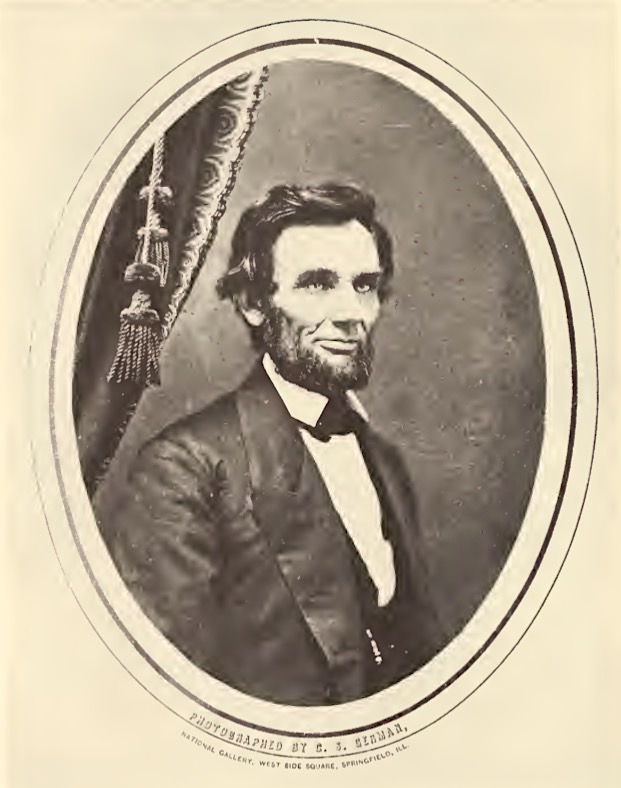
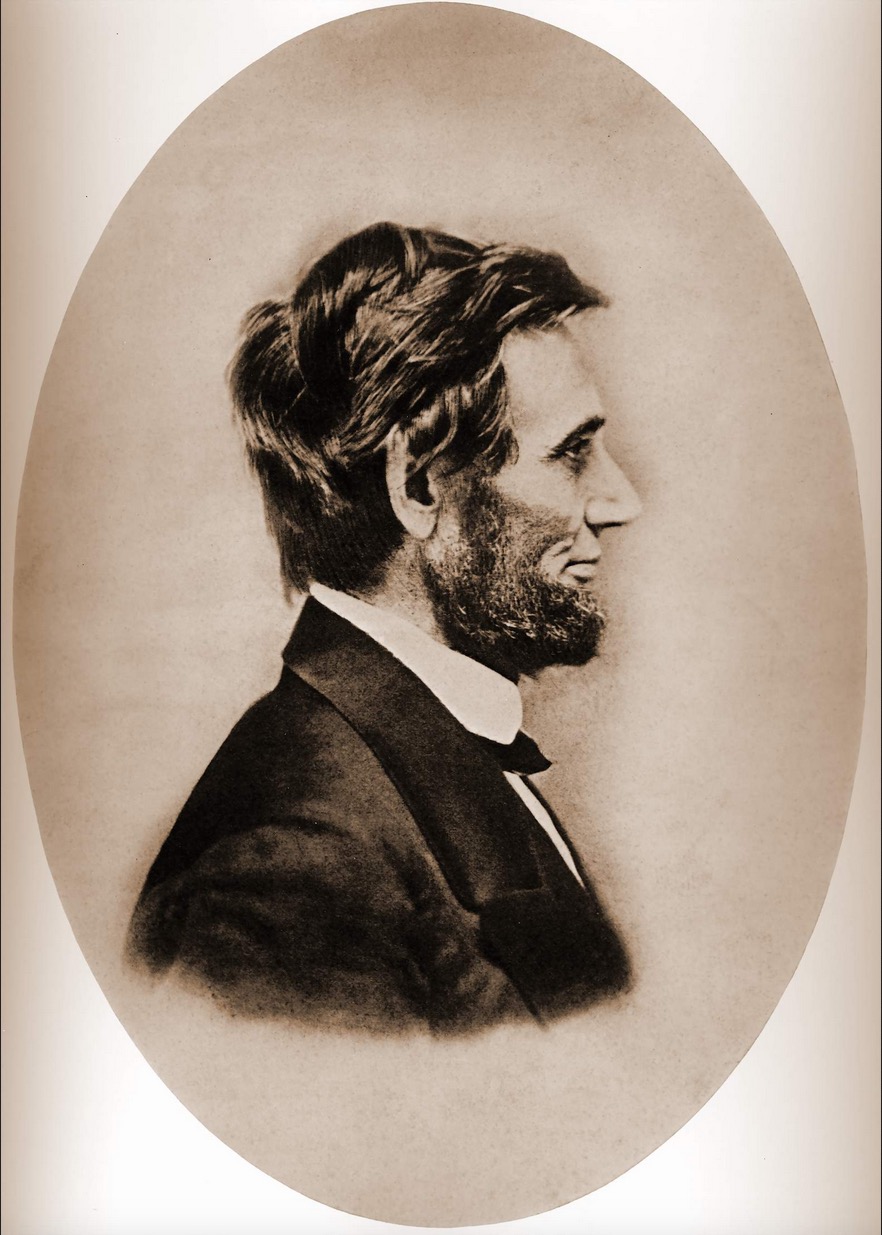
Springfield, Illinois, 9 February 1861. Albumen print on captioned mount (Library of Congress, O-45).
This pre-inaugural trip portrait is one of the last photographs taken of Lincoln in Springfield and shows his transformation from the clean-shaven candidate to the bearded president-elect. It captures Lincoln at a pivotal moment, just before he departed for Washington D.C. to assume the presidency. German’s studio, known as the « National Gallery, » was located on the West Side Square in Springfield, Illinois. This sitting produced multiple important images of Lincoln, including a unique profile view that, according to Ostendorf, «reveals the back of Lincoln’s head more than perhaps any other portrait.»
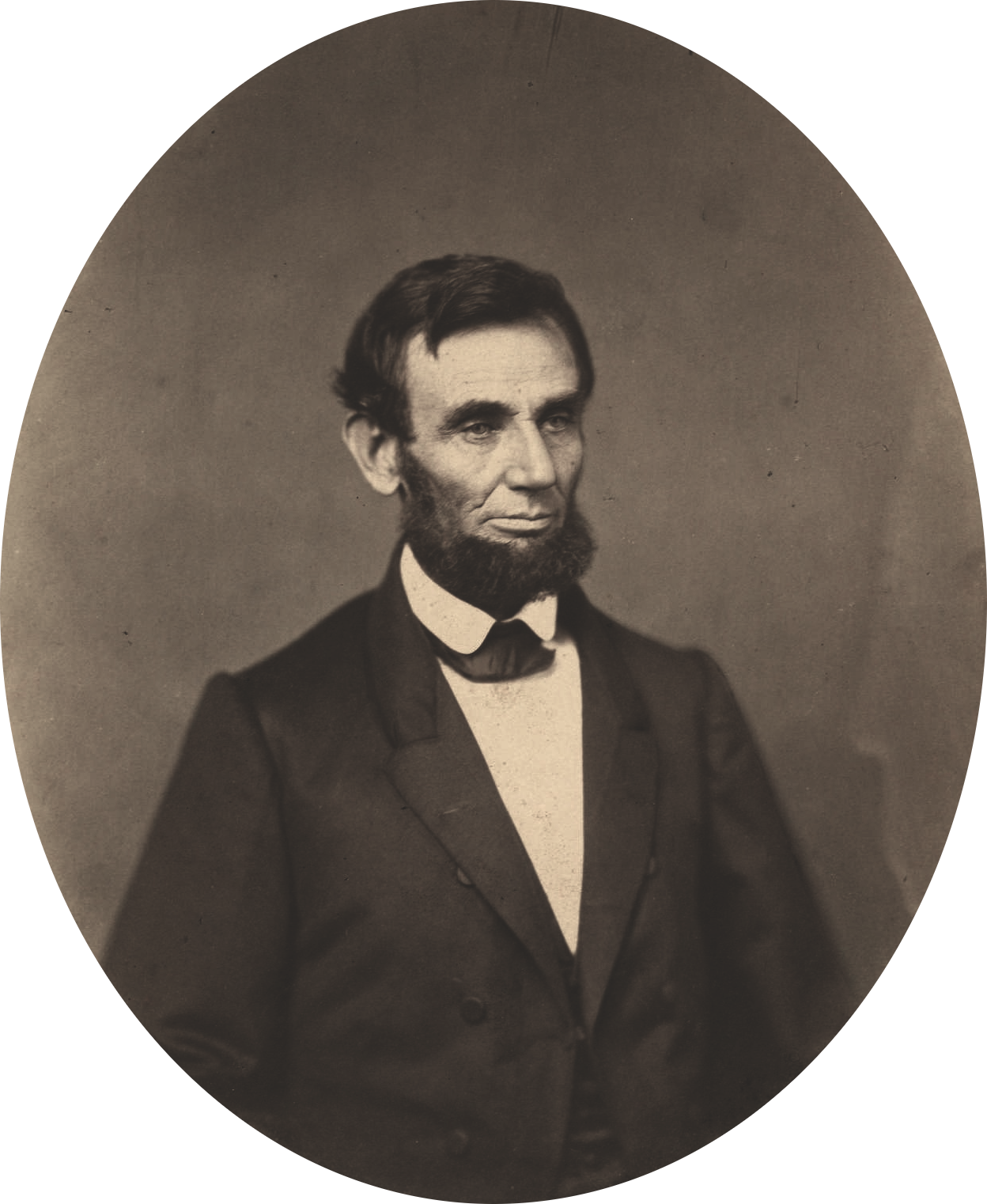
Subject Daguerreotype — John B. Roberts (?)
Clyde, Wayne Co, NY, 18 February 1861 (?). Sixth plate daguerreotype.
This subject daguerreotype, possibly the missing Clyde daguerreotype mentioned in several period newspapers and by local historians, is intriguing but requires further verification and confirmation. If authentic, it would provide a unique glimpse of Lincoln during his transformative journey to Washington D.C.
Lincoln’s inaugural train journey began on February 11, 1861, from Springfield, Illinois, and lasted about 12 days, arriving in Washington D.C. on February 23. The train passed through Clyde, New York, on February 18, 1861, as part of this journey.
The inclusion of this subject daguerreotype in Lincoln’s photographic timeline, at the spot created by iconographers for the lost Clyde portrait, should be considered only for more acute comparison and reasoning. If genuine, it would fill a significant gap in Lincoln’s photographic record. Nine days would separate this portrait from the preceding one by German in Springfield, and six more until the next one in Washington by Gardner.
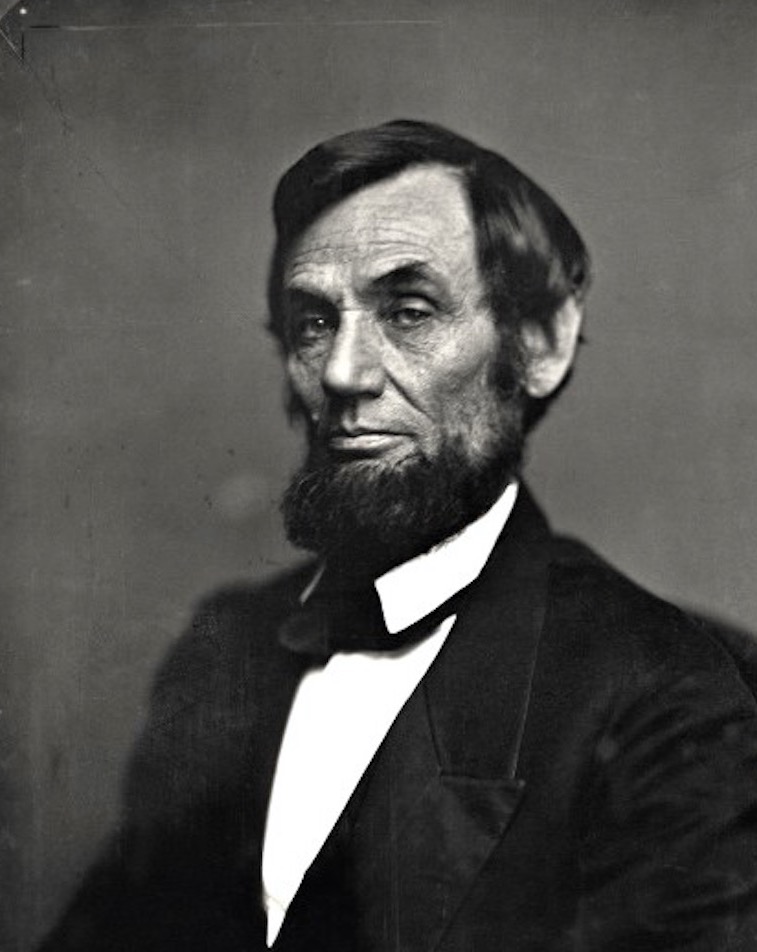
Alexander Gardner — Arrival in Washington
Mathew Brady’s gallery in Washington, 24 February 1861. Albumen print and silver copy-print (O-53).
The newly elected president first sat for a photograph in Washington, D.C., on February 24, 1861, just after his arrival in the capital and several days before his inauguration. Lincoln went to Mathew Brady’s Washington studio where photographer Alexander Gardner took five photographs of the president-elect, including O-52C and O-53.
Lincoln’s appearance in these portraits may reflect the stress and fatigue of the last days of his journey to Washington. The strain of the impending presidency and the secretive nature of his arrival in Washington likely contributed to his worn appearance. According to Allan Pinkerton’s account, Lincoln was informed of potential assassination plots during his journey:
«I cannot believe there is a plot to murder me. I should go on to Washington as I had planned, and I cannot show the white feather.»
Washington Studio — First Presidential Portrait
Washington, D.C., March-April 1861. Salt paper print (Smithsonian National Portrait Gallery, O-60).
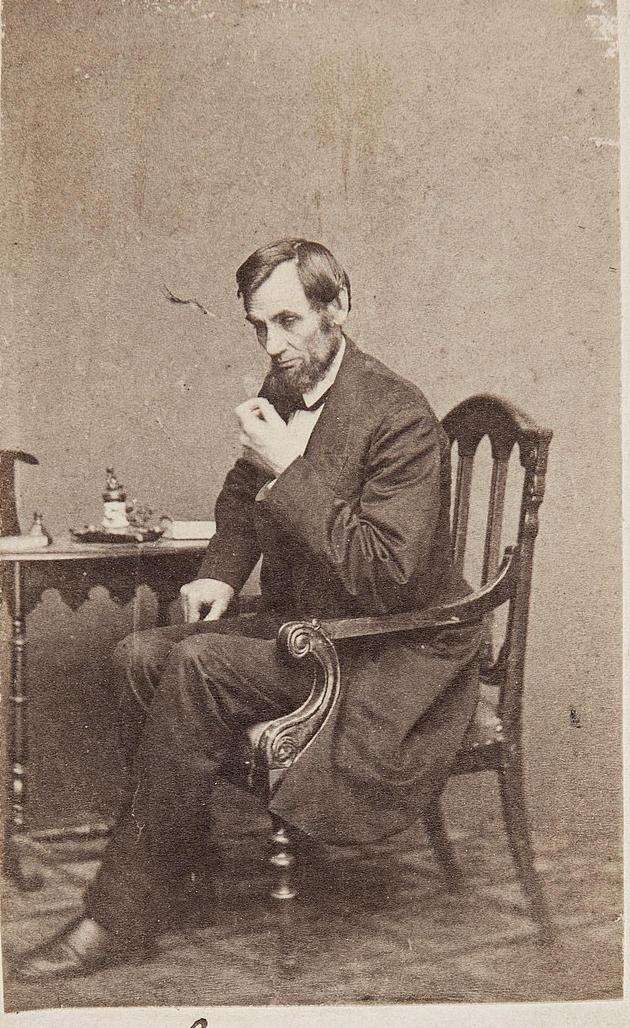
The first photographic image of the new president. The few known examples carry imprints of several different photographers: C. D. Fredericks & Co. of New York; W. L. Germon and James E. McLees, both of Philadelphia. Given that Lincoln was staying in Washington during this period, it’s likely that the New York and Philadelphia studios mentioned were distributors of the « official » portrait rather than the original photographers.
Lincoln presented a salt paper print of this portrait to Fanny Speed, wife of his close friend Joshua Speed, during a White House dinner on Thanksgiving Day, November 28, 1861. According to the White House Historical Association:
«He was the first president to be photographed extensively and is thought to have sat for as many as thirty-six photographers on sixty-six occasions.»
Alexander Gardner — Antietam Outdoor Portraits
Antietam, Maryland, 3 October 1862. Late 1890 albumen prints (O-62, O-66).
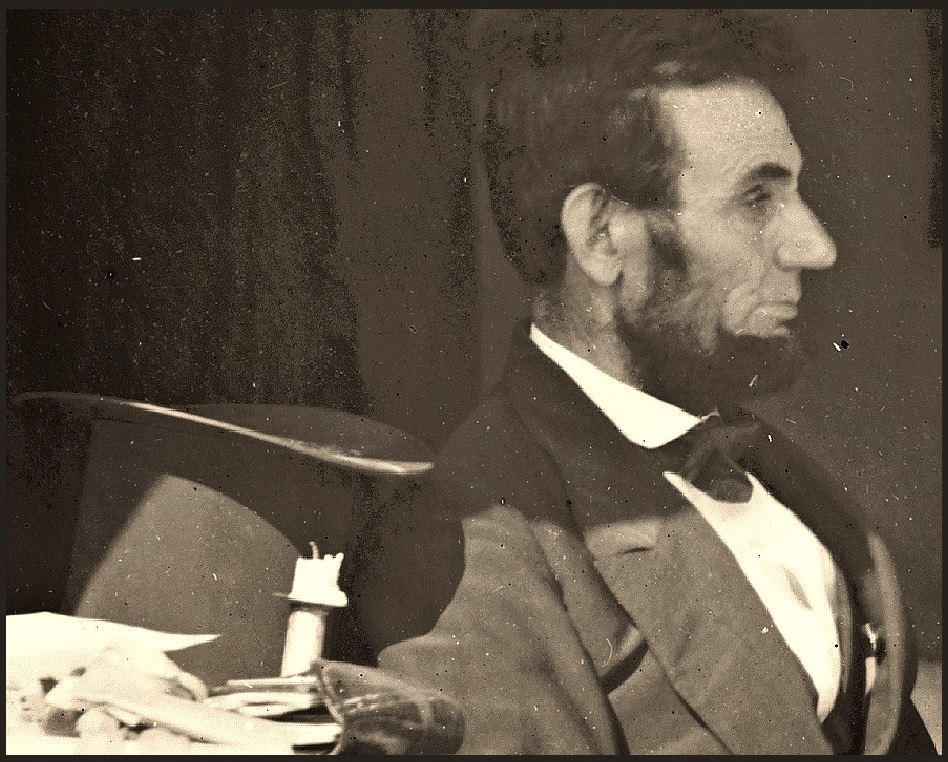
This series of outdoor portraits captures President Abraham Lincoln visiting General George B. McClellan and his officers at Antietam, Maryland. The photographs were taken by Alexander Gardner on October 3, 1862, just over two weeks after the bloody Battle of Antietam, with a standard stereoscopic or two-lens camera. Mathew Brady and his team, including Gardner and Timothy O’Sullivan, made significant contributions to the photographic documentation of the Civil War.
Colonel Robert L. Wilson observed:
«When standing straight and letting his arms fall down his sides, his fingers would touch a point lower on his legs, nearly three inches, than was usual with other persons.»
Alexander Gardner — « Gettysburg Portrait »
Washington, 8 November 1863. Large matte collodion print (O-77).
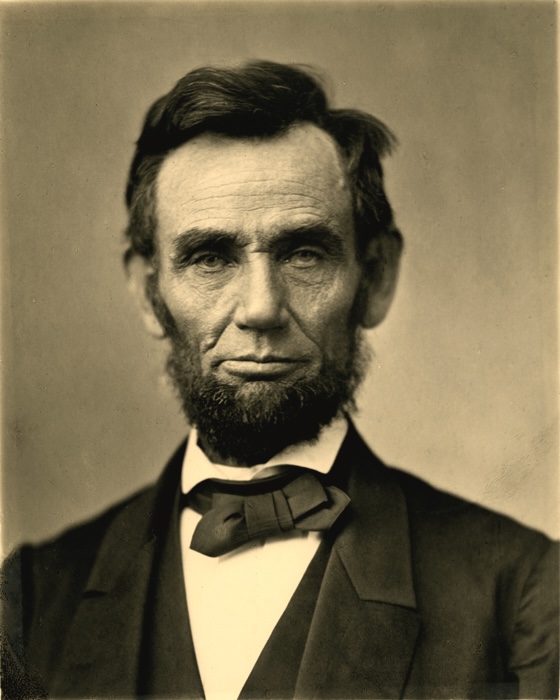
Sometimes referred to as the « Gettysburg portrait. » Scholars and enthusiasts alike believe this portrait of Abraham Lincoln, taken on November 8, 1863, eleven days before his famed Gettysburg Address, to be the best photograph of him ever taken. Lincoln’s character was notoriously difficult to capture in pictures.
Gardner’s innovative close-up portrait style contrasted with the typical full-length portraits of the era, allowing him to capture the expressive contours of Lincoln’s face and his penetrating gaze more effectively. Recent research suggests that Gardner was Lincoln’s favorite photographer. This portrait session likely occurred after Lincoln had seen Gardner’s images from Gettysburg, potentially influencing the president’s approach to the Gettysburg Address.
Mathew Brady — President Abraham Lincoln
Washington, 8 January 1864. Albumen print (O-84).
This portrait of Abraham Lincoln was taken by Mathew Brady himself during a multi-pose session on January 8, 1864, in his Washington studio. The session produced five photographs, with this image becoming one of the most iconic representations of the 16th President.
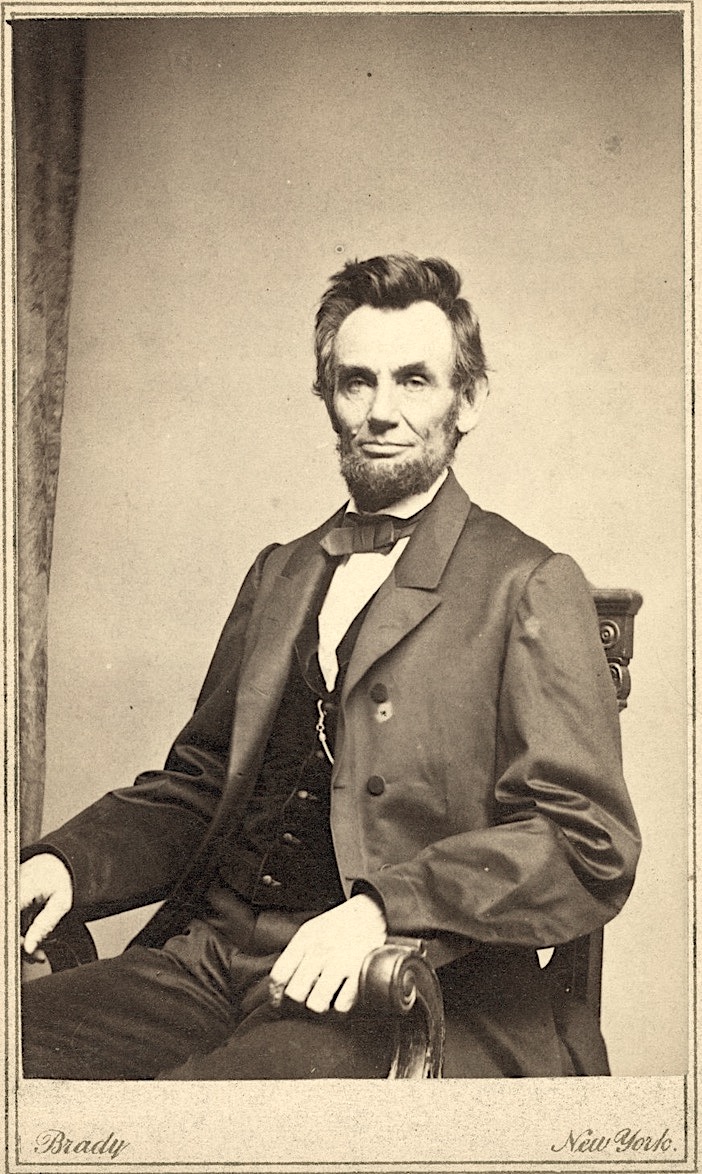
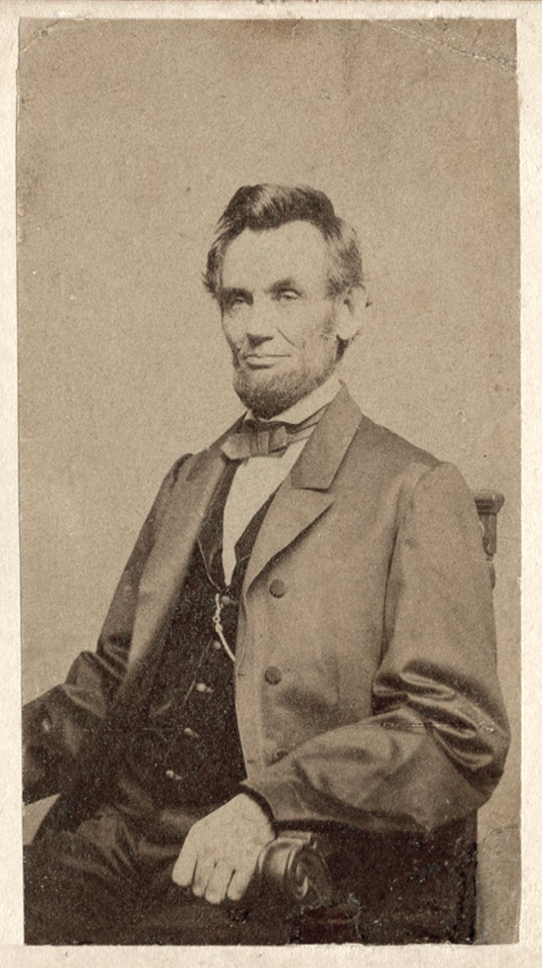
Lincoln visited Brady’s studio on at least three occasions in 1864, but this January 8th sitting yielded particularly significant results. The portrait has become deeply ingrained in American visual culture, serving as the basis for Lincoln’s image on both the penny and the five-dollar bill. Lincoln himself commented:
«I don’t know that I have any favorite portrait of myself; but I have thought that if I looked like any of the likenesses of me that have been taken, I look most like that one.»
Alexander Gardner — Second Term
Washington, D.C., 5 February 1865. Albumen print (O-116).
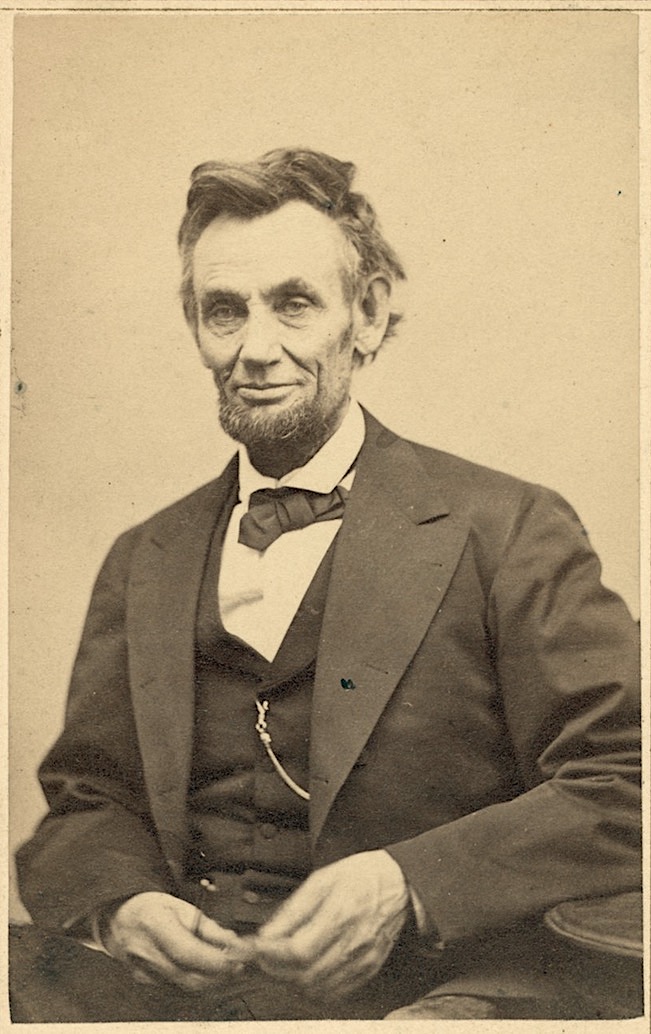
This contemporary albumen print is the only known likeness made from the broken, and soon discarded, original negative created by Alexander Gardner in Washington, D.C. on February 5, 1865. The portrait is significant as it captures Lincoln just weeks before his second inauguration and his assassination.
Previously thought to have been taken in April, research has confirmed the February 5, 1865 date, as recorded in the diary of portrait painter Matthew Wilson, who accompanied Lincoln to the studio. The sitting occurred five days after the momentous passing of the Thirteenth Amendment in the House of Representatives, possibly contributing to Lincoln’s more relaxed demeanor. This series, comprising 14 images, is considered Lincoln’s last formal portrait session.
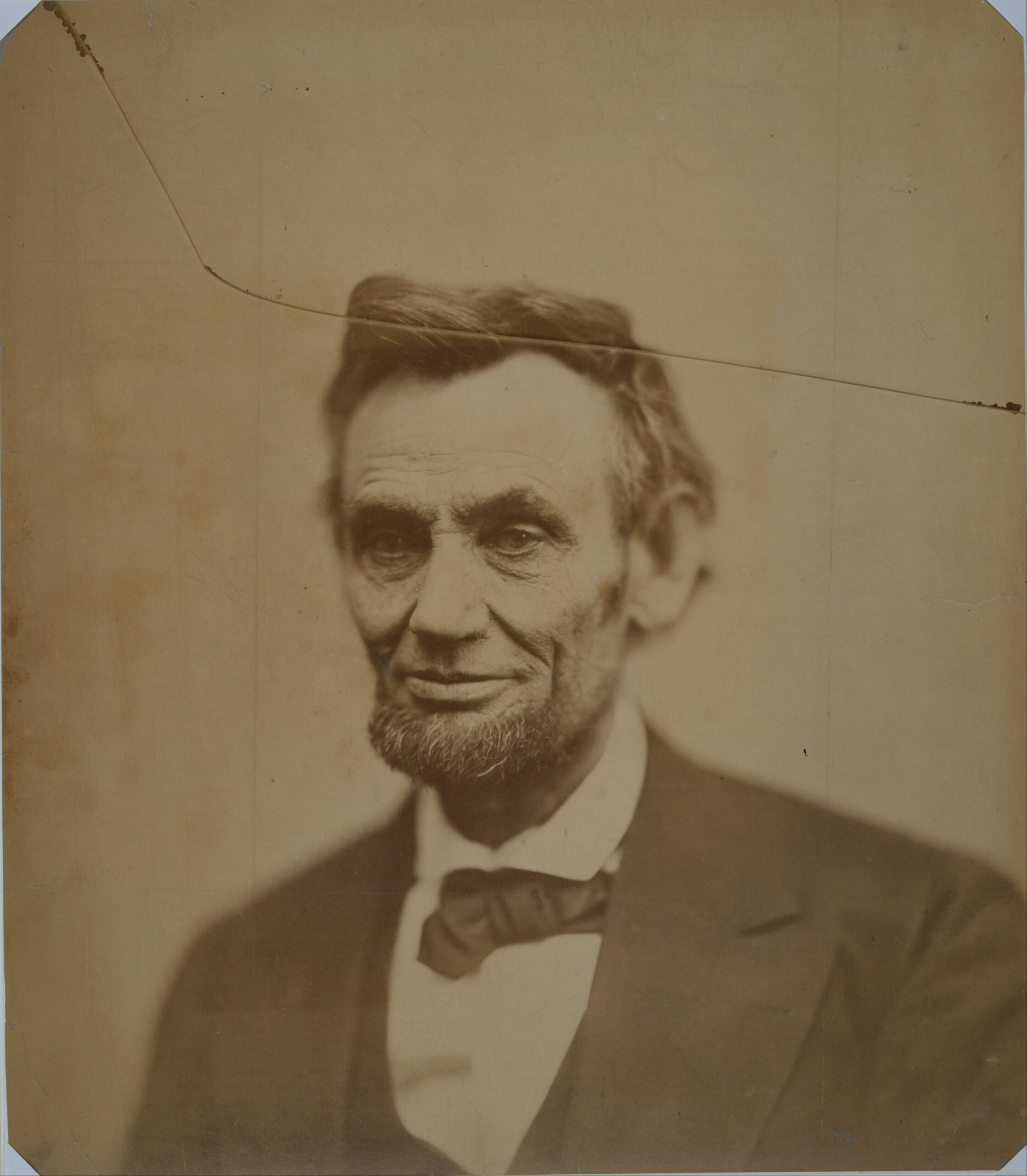
Frank Goodyear, the National Portrait Gallery’s photo curator, notes:
«This is the last formal portrait of Abraham Lincoln before his assassination. I really like it because Lincoln has a hint of a smile. The inauguration is a couple of weeks away; he can understand that the war is coming to an end; and here he permits, for one of the first times during his presidency, a hint of better days tomorrow.»
Various Perspectives of this Discovery
A Photographic Tour-de-force
The daguerreotype process, with its inherent limitations, doesn’t lend itself to improvisation or photographic agility. It requires deliberate, methodical work — more akin to the pace of a rhinoceros than the agility of a squirrel. The operator is constrained by dangerous chemicals, a makeshift laboratory, and a cumbersome chamber, all subject to a strict three-hour timeline: an hour of preparation to ready the plate; one precious hour to use the prepared plate; a final, indispensable hour for development and finishing.
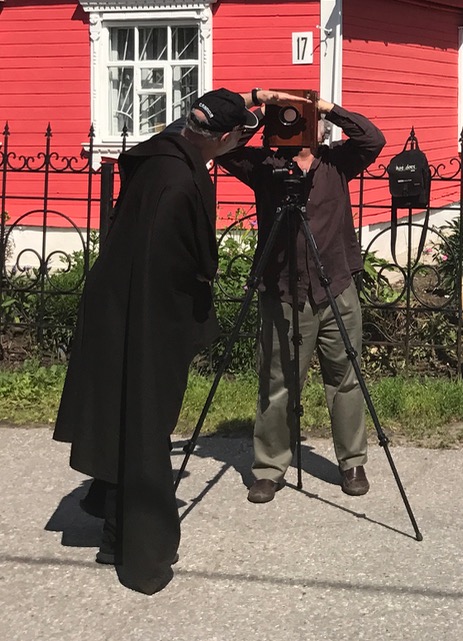
Capturing a portrait of a man on a briefly stopped train would have been a remarkable photographic achievement. Several factors may have contributed to this potential feat: the train’s punctual arrival, crucial for the photographer’s preparation; the photographer’s ingenuity in utilizing the woodpile along the tracks, as reported by Joseph Howard Jr. in the New York Times; possible pre-planning, including a stable platform for the tripod and calculations of the train’s exact stopping position.
Despite any planning, the photographer might have been surprised by Lincoln’s unusual height. Even with the President-elect descending two steps from the platform, he likely still towered over the camera, potentially resulting in an unconventional angle for the portrait.
This image, if authentic, would stand outside the usual conventions of Daguerrian portraiture. As our appreciation for early photography has grown over recent decades, we’ve come to recognize the inventiveness and creativity of the first generation of operators, who overcame significant challenges to produce remarkable images in diverse and difficult conditions.
A Decisive Moment in History
The story of Abraham Lincoln’s brief stop in Clyde became a defining chapter in the village’s history, potentially surpassing even the Erie Canal’s breakthrough in local lore. While the village’s Saxon origins and its development by Augustus of Zeng may fade from memory, the five-minute presidential train stop will remain a cherished local story.
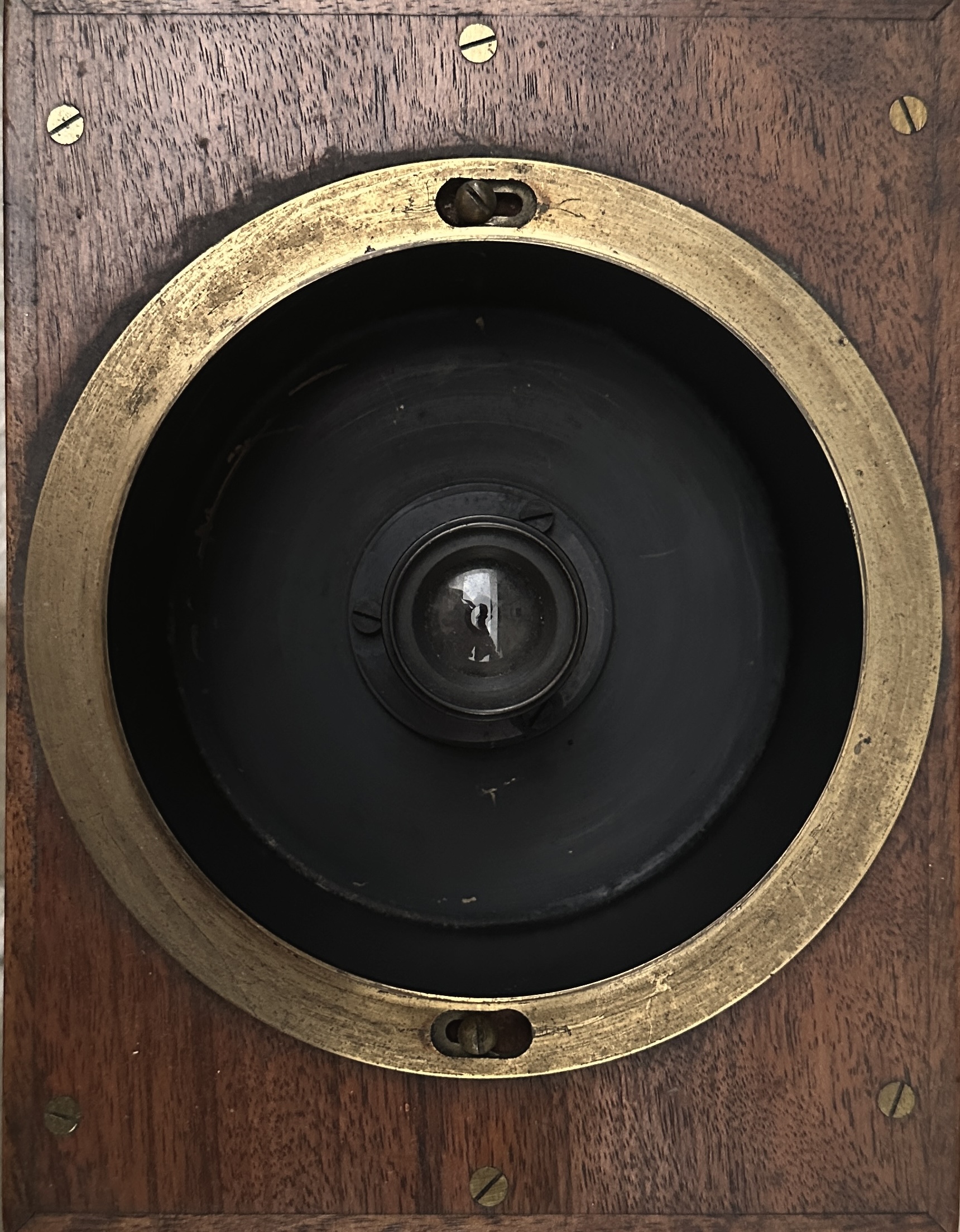
Lincoln’s stop in Clyde may have been influenced by the village’s connection to William Stow, a notable figure in New York State’s economic and political spheres. Stow, the son-in-law of Baron de Zeng, had a reputation for rallying various communities, including Puritans and Quakers, to support Lincoln. Interestingly, Horace Greeley, the influential editor of the New York Tribune, had visited Stow just a month before the election, potentially highlighting Clyde’s political significance. However, Stow’s apparent absence on the morning of Lincoln’s visit might explain the brevity of the President-elect’s initial appearance on the platform. This circumstance may have inadvertently created an opportunity for John Roberts to capture his daguerreian portrait.
John Roberts, the local photographer, faced considerable challenges that day. The extreme cold made the newer collodion glass negative technique impractical. Instead, as neighboring journalist William Tinsley from the Lyons Republican reported, Roberts relied on the daguerreotype process, which was more reliable under harsh conditions but required precision and patience. Roberts’ numbed fingers mishandled the plate during development, resulting in unusual tarnish patterns around the image.
Notably, on the very same day, 18 February 1861, in Montgomery, Alabama, Jefferson Davis took the oath of office to become the Provisional President of the Confederate States of America. Though overshadowed by subsequent events such as the Civil War and threats to Abraham Lincoln’s life, this photographic episode in Clyde offers an intriguing glimpse into American political and photographic history.
This inaugural journey marked several firsts in American history. It may have been one of the earliest instances of a president-elect traveling with reporters, inaugurating a new era of political journalism. Journalists accompanying Lincoln were able to file real-time reports using telegraph lines that paralleled the rail route — a revolutionary development for political reporting at the time.
Lincoln’s Metamorphosis
If authenticated, this daguerreotype could offer a unique lens into Lincoln’s inaugural journey. Created under rushed circumstances and bearing technical imperfections, it may contribute to our understanding of both Lincoln’s evolving public image and the mid-19th-century advancements in photography.
The significance of this potential discovery hinges on careful scholarly examination and interpretation by an engaged audience. Historical accounts suggest that Mary Todd Lincoln played an active role in refining her husband’s public presentation during this journey, shaping his transformation from a humble rail-splitter to a polished statesman.
This brief stop in Clyde offers a unique perspective on Lincoln’s metamorphosis as both a political figure and public icon. Early written accounts often portray him as modest and unkempt — a man of everyday life from a small Western village. In contrast, official photographic portraits present him as a severe yet elegant leader. The discovery of this daguerreotype, if authenticated, raises compelling questions about this transformation. It could serve as a visual bridge between early depictions of Lincoln and the later, groundbreaking formal portraits that solidified his image as a national figure.
We invite readers and researchers to share any relevant insights or evidence regarding this intriguing historical question. Your contributions can further scholarly investigation into the lost daguerreotype and its potential significance. Diverse perspectives and ideas are invaluable, as they enrich our understanding of this complex historical puzzle.
This concludes the feuilleton. The full monograph — The Mystery of the Lost Daguerreotype — Tracing Lincoln’s Image in 1861 — is published in Senigallia, MMXXVI, and includes the F.A.Q. section, selected bibliography, and newspapers index.
Sources & Notes
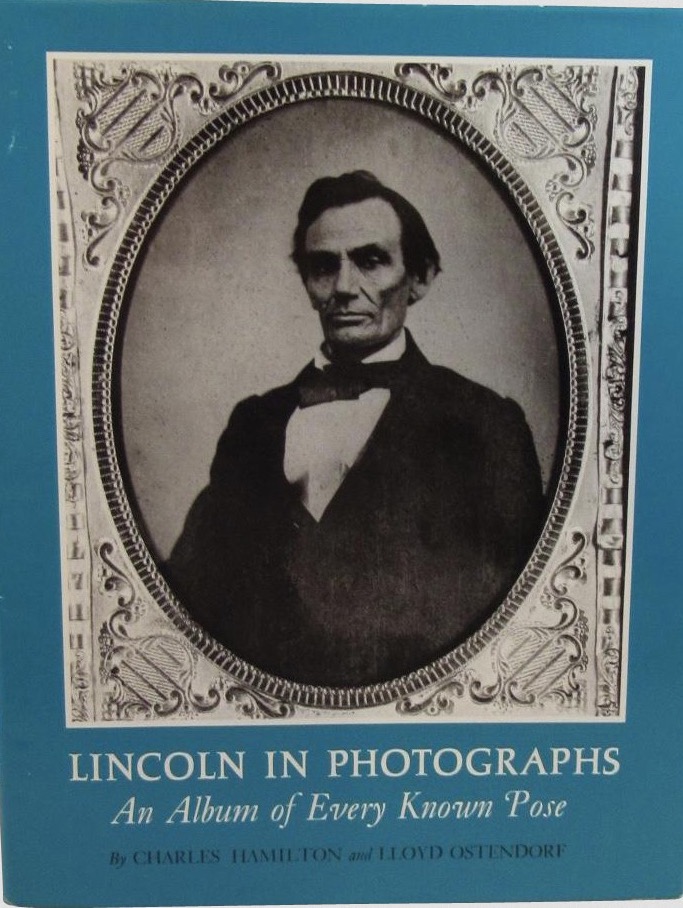
- Ostendorf, Lloyd. Lincoln in Photographs: An Album of Every Known Pose. (co-authored with Charles Hamilton, 1963).
- Holzer, Harold. Lincoln President-Elect: Abraham Lincoln and the Great Secession Winter 1860-1861. Simon & Schuster, 2008.
- Holzer, Harold. Lincoln at Cooper Union: The Speech That Made Abraham Lincoln President. Simon & Schuster, 2004.
- Tarbell, Ida M. and J. McCan Davis. The Early Life of Abraham Lincoln. 1896.
- Meserve, Frederick Hill and Carl Sandburg. The Photographs of Abraham Lincoln. 1944.
- George, Alice. Smithsonian Magazine, 12 June 2024.
- Goodheart, Adam. « Lincoln: A Beard Is Born. » The New York Times, 24 November 2010.
- Herndon, William H. and Jesse W. Weik. Herndon’s Lincoln. Chicago: Belford, Clarke & Company, 1889.
- Wilson, Robert L. Quoted in Lincolniana collections.
- Goodyear, Frank. National Portrait Gallery, Washington.
- Harris, Gibson William. « My Recollections of Abraham Lincoln. » Woman’s Home Companion, November 1903.
- Howard, Joseph Jr. « The Journey of the President Elect. » The New York Times, 19 February 1861.
- Tinsley, William T. Lyons Republican, February 1861.
- Phillips, Duncan. On Healy’s Lincoln portrait. The Phillips Collection.
- White House Historical Association. On Lincoln’s photographic record.
- Pinkerton, Allan. The Spy of the Rebellion. 1883.
Laisser un commentaire