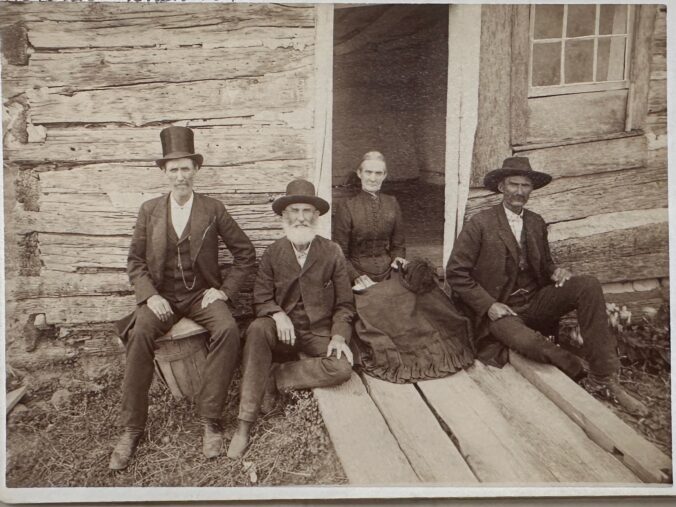
Humble Beginnings, Harris, Rindlaub, Bedell, Pinkerton, Whitman and Brady
Extract from the monograph The Mystery of the Lost Daguerreotype — Tracing Lincoln’s Image in 1861 (Senigallia, MMXXVI).
Lincoln’s Humble Beginnings
Abraham Lincoln’s humble beginnings in a one-room log cabin with a dirt floor in 1809 became a powerful symbol of his rise to the presidency. This narrative of Lincoln as a self-made man was reinforced by the stark contrast between his origins and his later achievements.
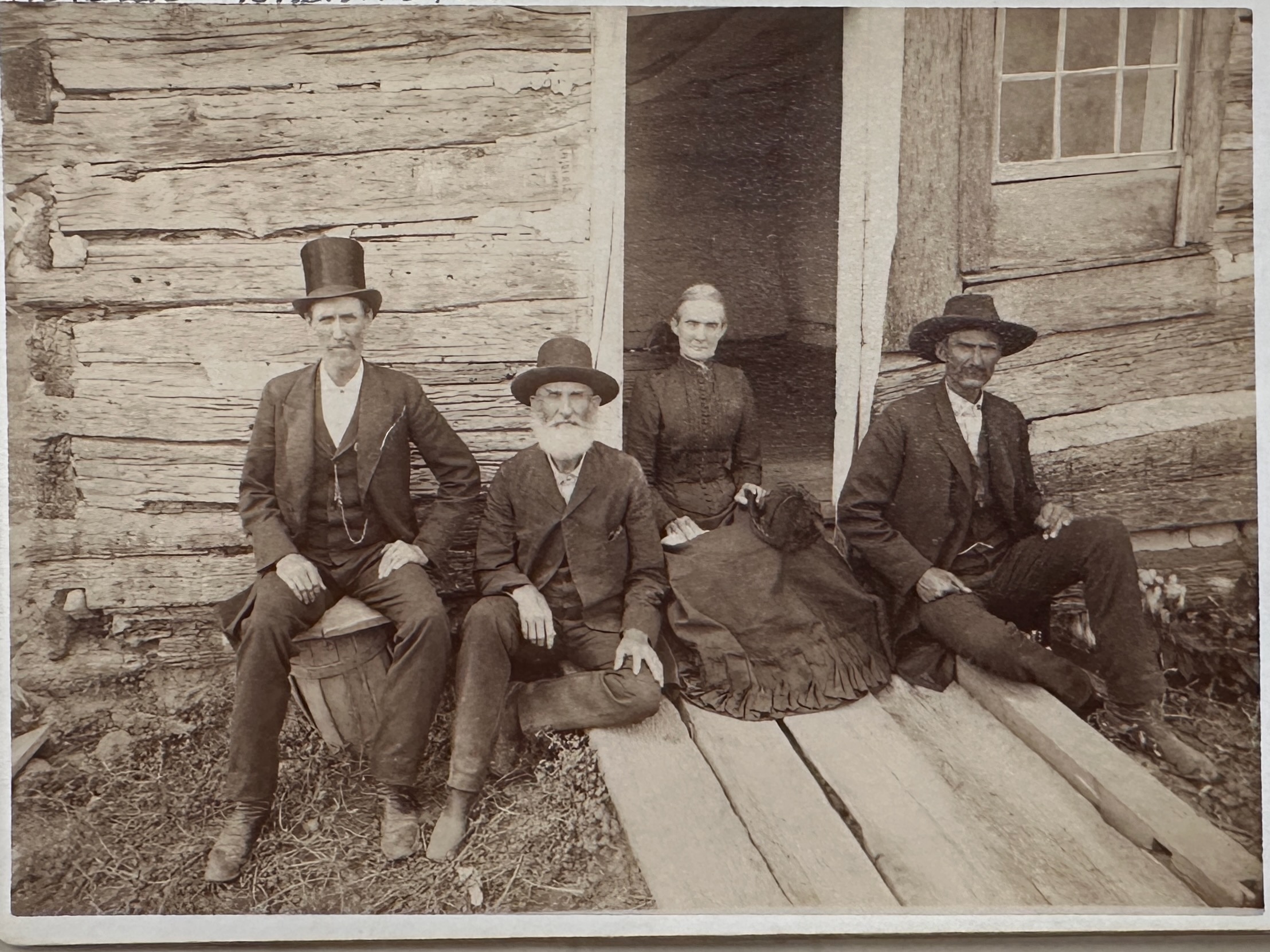
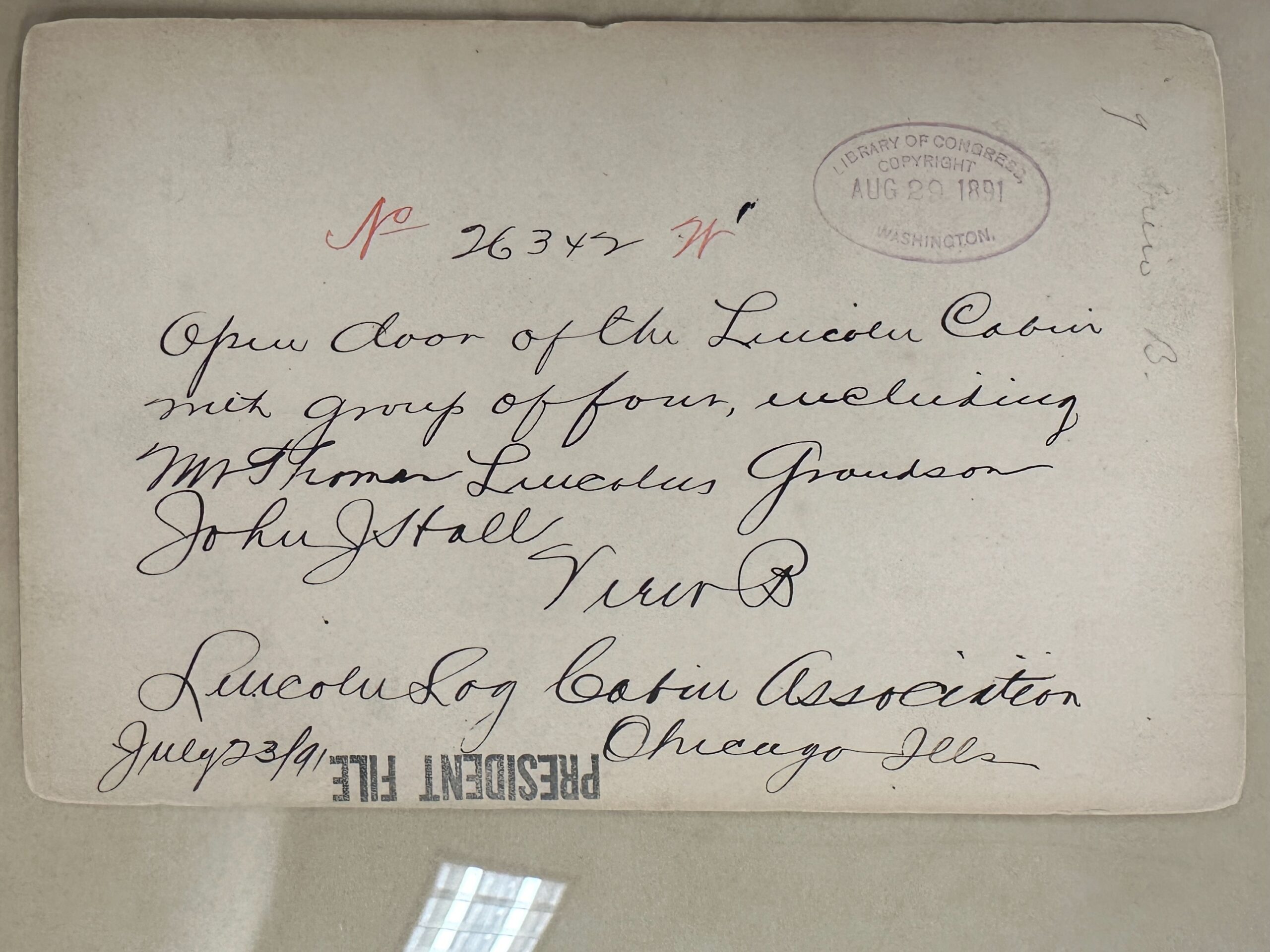
A photograph from 1891 captures a partial view of the Lincoln cabin, featuring Thomas Lincoln’s grandson John J. Hall. This image provides a tangible link to Lincoln’s early life.
Thomas Lincoln, Abraham’s father, moved the family to Illinois in 1830, settling eventually in Coles County. The original log cabin was later disassembled and shipped to the 1893 World’s Columbian Exposition in Chicago. Though the original was lost, an exact replica was built based on the 1891 photographs, and is now open to the public at the Lincoln Log Cabin State Historic Site.
Abraham’s mother could read but not write. She taught her son his first notions, using her printed Bible. She died from milk sickness in 1818. The father left the children to survive alone for six months while on a trip to find a new wife. He returned with Sarah and her three children in 1819.
The relationship between Abraham and his father went very strained. They differed in religious views, with Thomas being a conventional Baptist while Abraham developed as a freethinker. Abraham struck out on his own in 1831 and would rarely return. He was absent from his father’s funeral and reluctant to provide financial assistance.
An 1860 anonymous newspaper article summarizes Lincoln’s background:
«His ancestors, belonging to the society of Friends, originally settled in Bucks county, Pennsylvania, whence they removed to Virginia… Mr. Lincoln, imbued with the wandering proclivities of his ancestry, soon removed to Spencer county, Indiana, where he remained for fourteen years. He here received a limited education. In 1830 our subject removed to Illinois.»
Gibson Harris: A Clerk’s Close-Up View
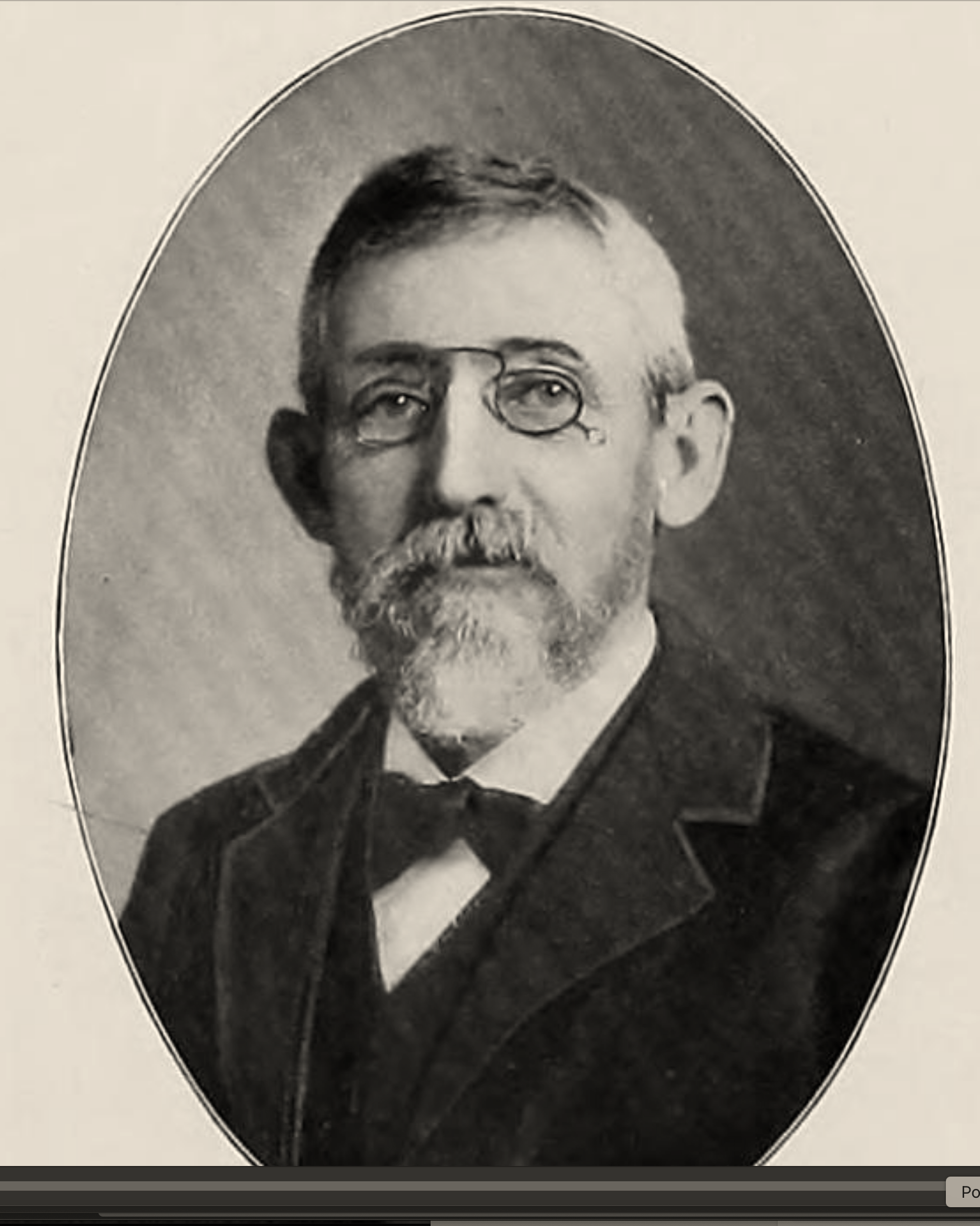
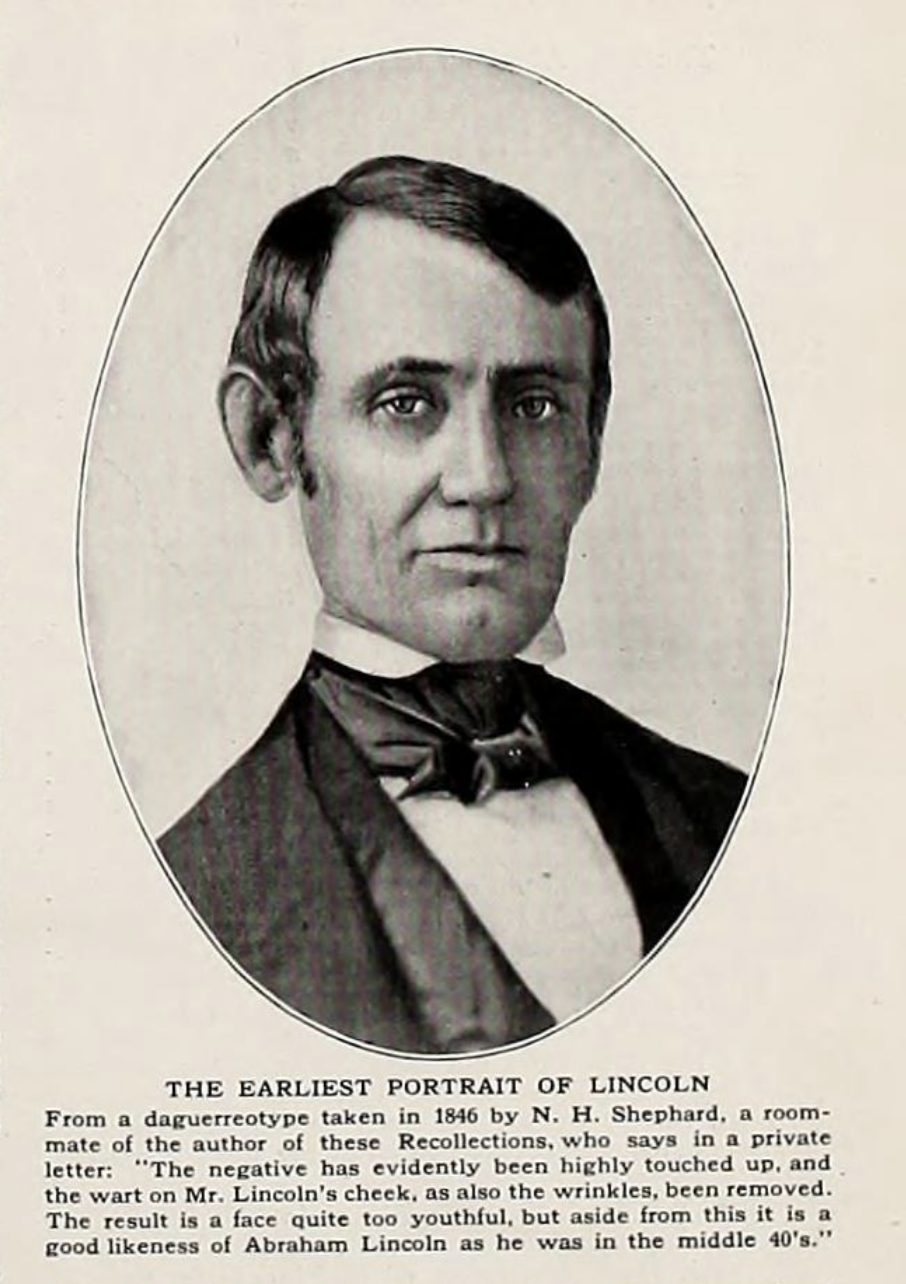
Gibson William Harris (1828–1911) was the sole clerk and student at Lincoln’s office for 18 months, from September 1845 to April 1847. He later encountered Lincoln during the inaugural trip in Cincinnati on 12 February 1861.
Harris’s recollections provide valuable insights into Lincoln’s office habits, personal traits, and his successful 1846 campaign for a seat in the Thirtieth Congress. During this campaign, Harris served as Lincoln’s confidential clerk.
They shared similar backgrounds, as Harris notes: «When Lincoln and I were boys there were no millionaires west of the Allegheny Mountains, and only three in the United States. There were no railroads, no telegraphs, no telephones, no sun-pictures.»
Harris vividly describes «Mr. Lincoln’s Physical Traits» and his «indifference to dress»:
«The antithesis of features and expression was very pronounced in Abraham Lincoln. The expression not merely relieved the plainness of his features; it transformed, on occasions transfigured, them… While his six feet and four inches gave him a commanding stature, he was loosely built, gauntly spare in flesh, flat-chested and inclined to stoop…
His complexion was sallow and his cheeks sunken, both which items were the more noticeable from the fact that he wore neither beard nor whiskers (nor did he ever do so till after his election to the presidency)…
The blue-gray eyes when in repose were rather dull-looking. Nevertheless, to see how they kindled the moment he began addressing you or became interested in a subject under discussion was wonderful; it resembled the uprushing waves of light in a winter sky when an aurora borealis is on.»
«He manifested no concern for his personal appearance, so far as dressiness went. Provided his clothing was clean and comfortable, the cut of it did not trouble him in the least. The blue jeans in which he was clad when I first saw him, in 1840, had been discarded in favor of broadcloth some time before his marriage. The day I entered his office, in 1845, he had on a black suit — coat and trousers of cloth, vest of satin, and the buckram stock about his neck was covered with black silk. Mrs. Lincoln, as was generally known in Springfield, wished him to ‘spruce up’ more, and perhaps this had something to do with the adoption of the buckram stock, forcing him, as it did, to carry his head more erect than would an ordinary tie. In summer he was accustomed to wear shoes of what was known as the Wellington style, but in winter he wore boots. His hat was a regulation ‘stovepipe,’ the same as it was when he filled the presidential chair.»
Crucially for our investigation, Harris recounts Lincoln’s first encounter with photography:
«Early in the tedious days [of September 1845], I made the acquaintance at the hotel of a young man from Syracuse, New York, named N. H. Shepherd, a daguerreotypist who was about opening a gallery in Springfield. Photographs were as yet unknown, and daguerreotyping was considered, as it actually was, a marvelous advance in the art of portraiture.
Together we two, Shepherd and I, looked up a boarding-place, where we became room-mates, remaining such throughout my stay in Springfield. He was among the very first in his line to come as far west as Illinois, and we were warm friends to the end. In the latter part of 1848 he wrote me (at Albion) that he was about to start for California, and promised to write again in a few weeks or months; but further word never came from him, and I have always believed that, like so many others, he was lost on the overland trail… I feel confident I am not mistaken in recognizing the portrait as the work of my friend Shepherd, before whose camera I know Mr. Lincoln sat once or oftener. The claim repeatedly made for it of being the earliest portrait of Abraham Lincoln remains, as far as I know, an undisputed fact.»
Harris was also a witness to the Inaugural Journey: «Mr. Lincoln, in the character of President-elect en route to Washington, spent twenty-four hours in Cincinnati. The date was 12 February 1861, being his fifty-second birthday… For nearly an hour we chatted without interruption, the time passing delightfully for me in reviving old memories and gaining the latest information respecting former friends in Springfield.»
Martin P. Rindlaub’s Recollections
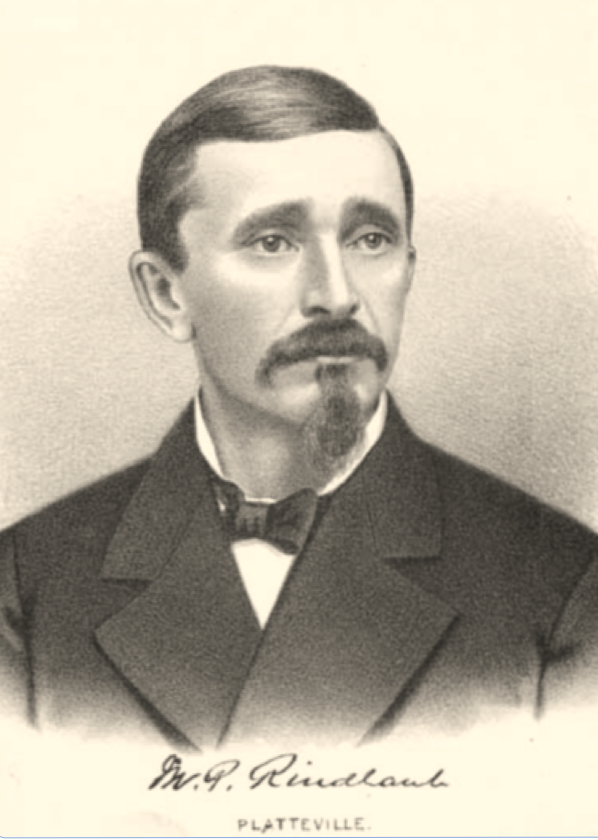
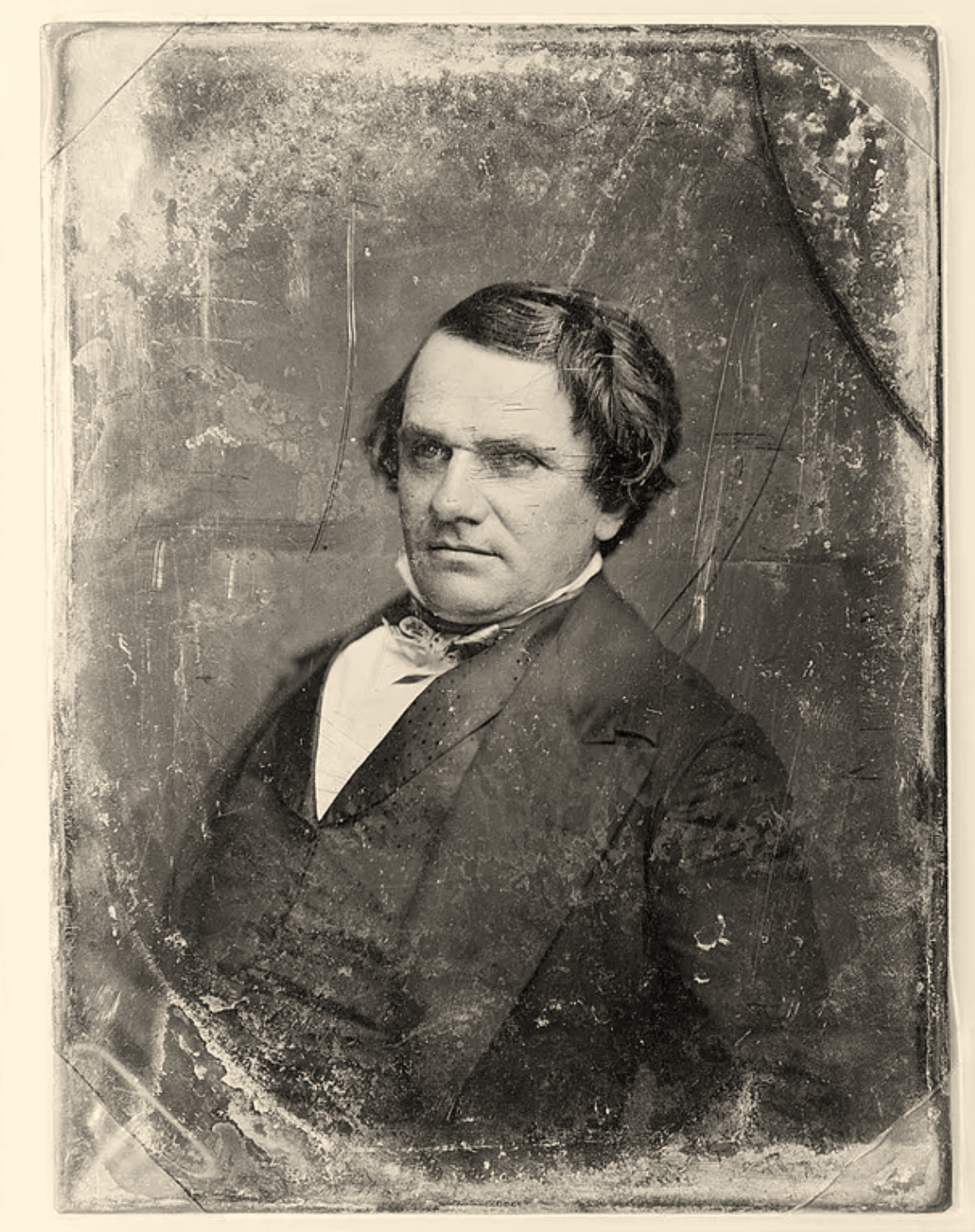
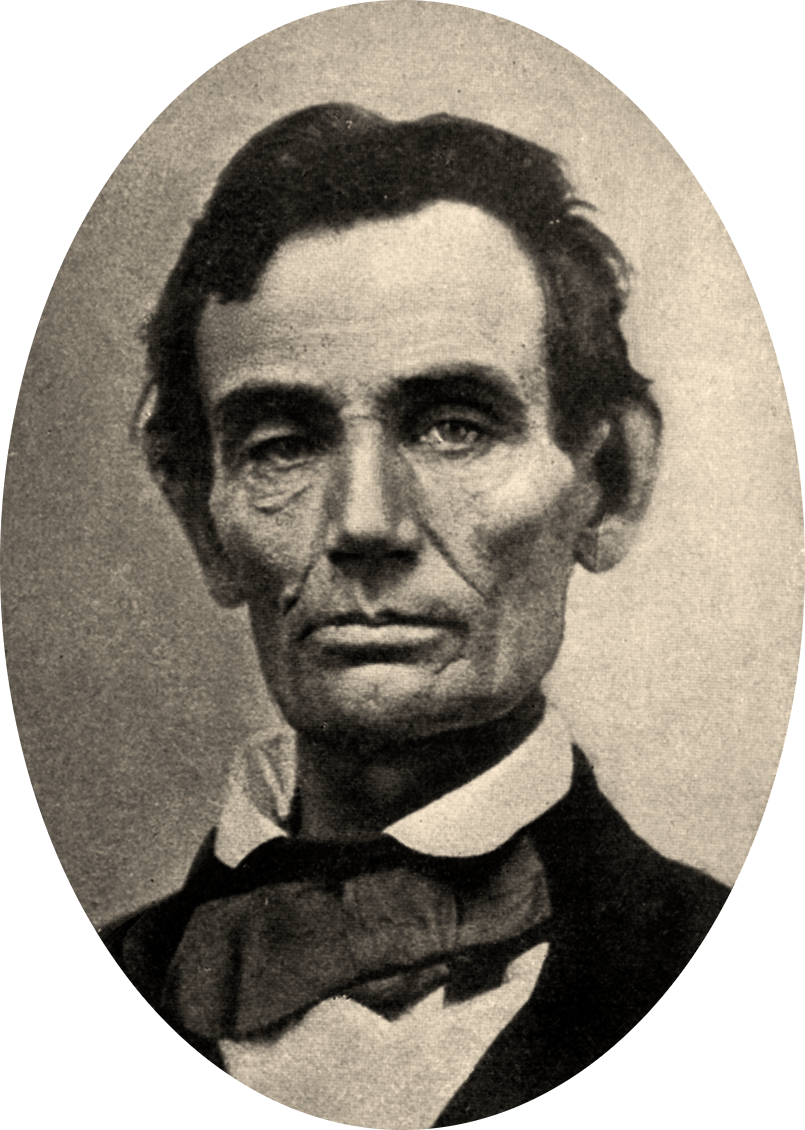
Martin P. Rindlaub (1838–1932), a native of Gettysburg, Pennsylvania, witnessed Abraham Lincoln during the famous Lincoln-Douglas debate in Freeport, Illinois, on 27 August 1858. His detailed account provides valuable insights into Lincoln’s appearance and demeanor.
«…an old-fashioned Conestoga wagon, drawn by four horses, was driven to the stand. On one of the seats sat Lincoln, accompanied by half a dozen farmers in their working clothes. The driver was mounted on the near rear horse and guided his team with a single rein attached to the bridle of one of the lead horses. The burlesque was as complete as possible and the effort was greeted with a good-natured roar.
The contrast between Lincoln and Douglas could hardly have been more marked. Lincoln was six feet four inches tall. He was swarthy as an Indian, with wiry, jet black hair, which was usually in an unkempt condition. He wore no beard, and his face was almost grotesquely square, with high cheek bones. His eyes were bright, keen, and a luminous gray color, though his eyebrows were black like his hair. His figure was gaunt, slender, and slightly bent. He was clad in a rusty-black Prince Albert coat with somewhat abbreviated sleeves.
His black trousers, too, were so short that they gave an appearance of exaggerated size to his feet. He wore a high stove-pipe hat, somewhat the worse for wear, and he carried a gray woolen shawl, a garment much worn in those days instead of an over-coat. His manner of speaking was of a plain, unimpassioned character. He gesticulated very little with his arms, but moved his body from one side to the other. Sometimes he would bend his knees so they would almost touch the platform, and then he would shoot himself up to his full height, emphasizing his utterances in a very forcible manner.»
Rindlaub’s vivid description offers a unique perspective on Lincoln’s appearance before he grew his iconic beard. Rindlaub was 20 years old at the time of the debate. He wrote at least three articles recounting his memories of this event, the most detailed for Kiwanis Magazine in May of 1926.
Grace Bedell’s Advice
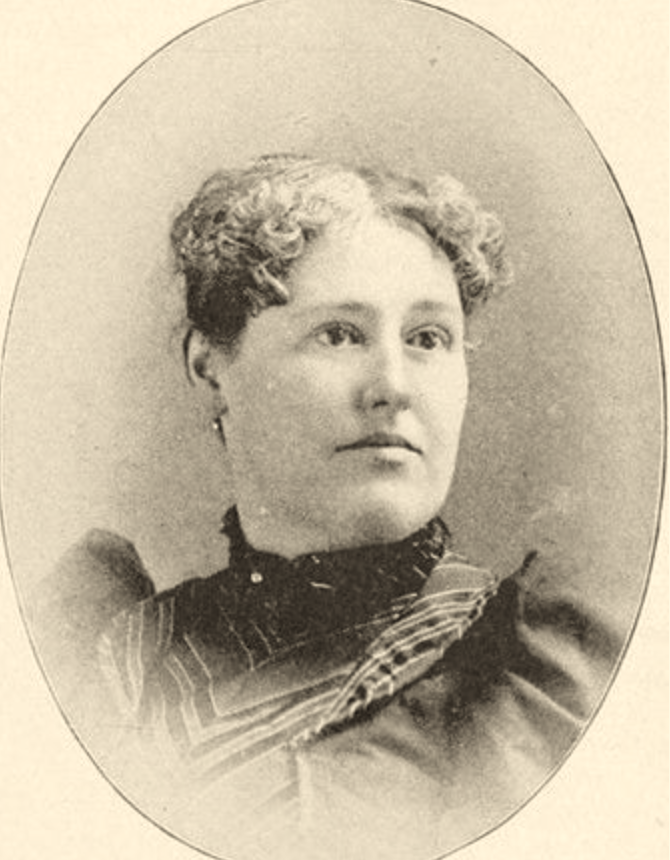
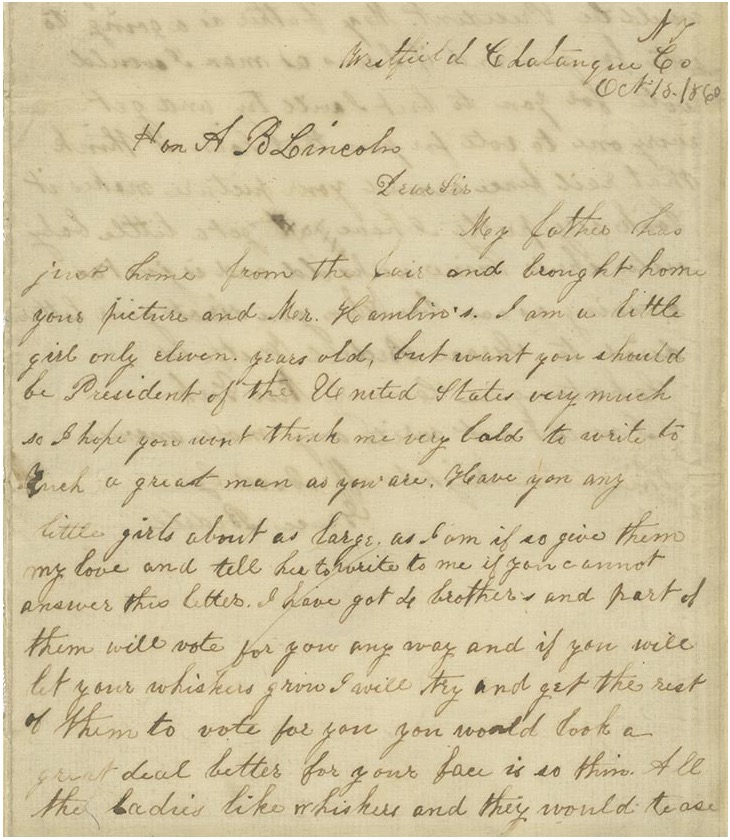
Grace Bedell (1848–1936) was notable as a person whose correspondence, at the age of eleven, encouraged Republican Party nominee and future president Abraham Lincoln to grow a beard. On 15 October 1860, from Westfield, Chautauqua County, NY, Grace Bedell wrote:
«Hon. A. B. Lincoln — Dear Sir, My father has just come home from the fair and brought home your picture and Mr. Hamlin’s. I am a little girl only eleven years old, but want you to be President of the United States very much so I hope you won’t think me very bold to write to such a great man as you are. Have you any little girls about as large as I am? If so, give them my love and tell them to write to me if you cannot answer this letter. I have got 4 brothers and part of them will vote for you anyway and if you let your whiskers grow I will try and get the rest of them to vote for you. You would look a great deal better for your face is so thin. All the ladies like whiskers and they would tease their husbands to vote for you and then you would be President… When you direct your letter direct to Grace Bedell Westfield Chautauqua County New York. I must not write any more. Answer this letter right off — Good bye.»
Lincoln answered right away but made no promises in his reply: «Springfield, Ill., Oct. 19, 1860. Miss Grace Bedell. My dear little Miss. Your very agreeable letter of the 15th is received. I regret the necessity of saying I have no daughters. I have three sons — one seventeen, one nine, and one seven years of age. They, with their mother, constitute my whole family. As to the whiskers, having never worn any, do you not think people would call it a silly affectation if I were to begin it now? Your very sincere well-wisher, A. Lincoln.»
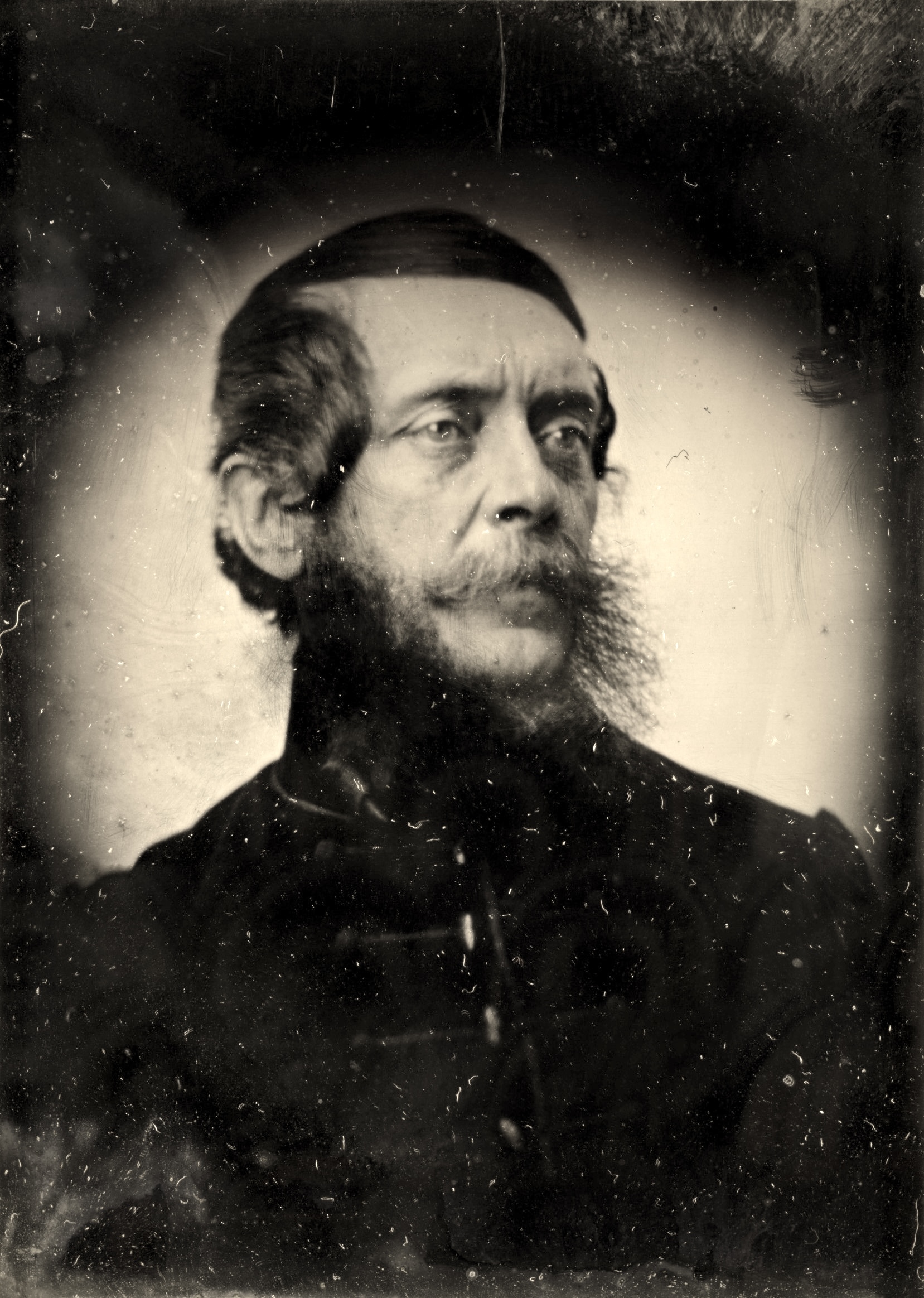
About three weeks later, once he was elected, he started to grow a beard, having received more letters, and probably considered building his image like Kossuth.
Lincoln later met with Bedell during his inaugural journey in February 1861. All reporters published the details and Bedell recalled the event years later: «He climbed down and sat down with me on the edge of the station platform. ‘Gracie,’ he said, ‘look at my whiskers. I have been growing them for you.’ Then he kissed me. I never saw him again.»
Allan Pinkerton’s Warning
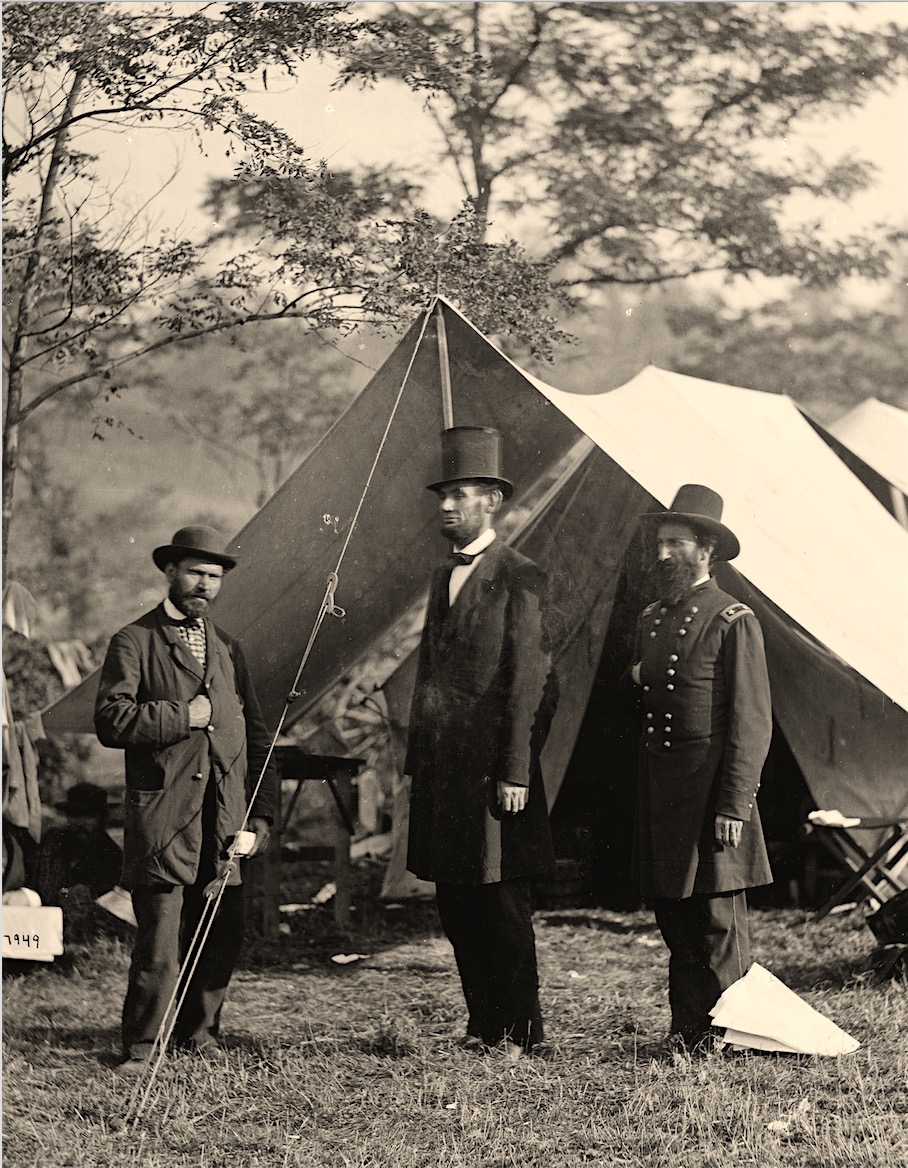
Allan J. Pinkerton (1819–1884) was a Scottish American detective and spy, best known for creating the Pinkerton National Detective Agency. Pinkerton’s business insignia was a wide open eye with the caption « We never sleep. » As the US expanded in territory and rail transport increased, Pinkerton’s agency solved a series of train robberies during the 1850s, first bringing Pinkerton into contact with George McClellan, then Chief Engineer and Vice President of the Illinois Central Railroad, and Abraham Lincoln, the company’s lawyer.
After Lincoln’s election, Pinkerton served as head of the Union Intelligence Service during the first two years, heading off an alleged assassination plot in Baltimore, Maryland while guarding Abraham Lincoln on his way to Washington, D.C. Pinkerton’s warning to Lincoln had a significant impact on the President-elect’s appearance and health:
- Lincoln became visibly anxious and stressed, likely affecting his eating habits and sleep patterns.
- The strain of the secret journey and constant fear for his safety took a toll on Lincoln’s health.
- Lincoln’s appearance worsened, with reports of weight loss and a gaunt look. This sudden change in appearance was noticeable enough to draw public attention and concern.
- The stress may have exacerbated Lincoln’s existing health issues, including his bouts of depression and haggard look.
In Buffalo, Norman B. Judd received two communications from Allan Pinkerton during the inaugural train ride. The first, received in Cincinnati, advised of a plot to assassinate Lincoln in Baltimore. The second, delivered in Buffalo on 17 February, stated that evidence was accumulating. Judd informed Lincoln on 19 February in New York.
That evening in Harrisburg, after a reception in his honor, the President-elect slipped away to begin his clandestine trip, accompanied only by his longtime friend and bodyguard Ward Hill Lamon. To avoid recognition, Lincoln substituted a soft plug hat for his signature stovepipe. Pinkerton agents cut telegraph lines to prevent communication of Lincoln’s movements.
The following morning, angry journalists awakened to learn that Lincoln had vanished. Once allowed to report, most journalists covered the developments forthrightly. However, Joseph Howard of The New York Times exacted his revenge in print. On 25 February, The Times published his fictional account that Lincoln had stolen through Baltimore «disguised in a Scotch plaid Cap and very long military cloak so that he was entirely unrecognizable.» Though the story was maliciously and obviously fabricated, Lincoln’s press opponents pounced on it. The New York Herald criticized that the new president had «crept into Washington» like a «thief in the night.»
Walt Whitman’s Observations
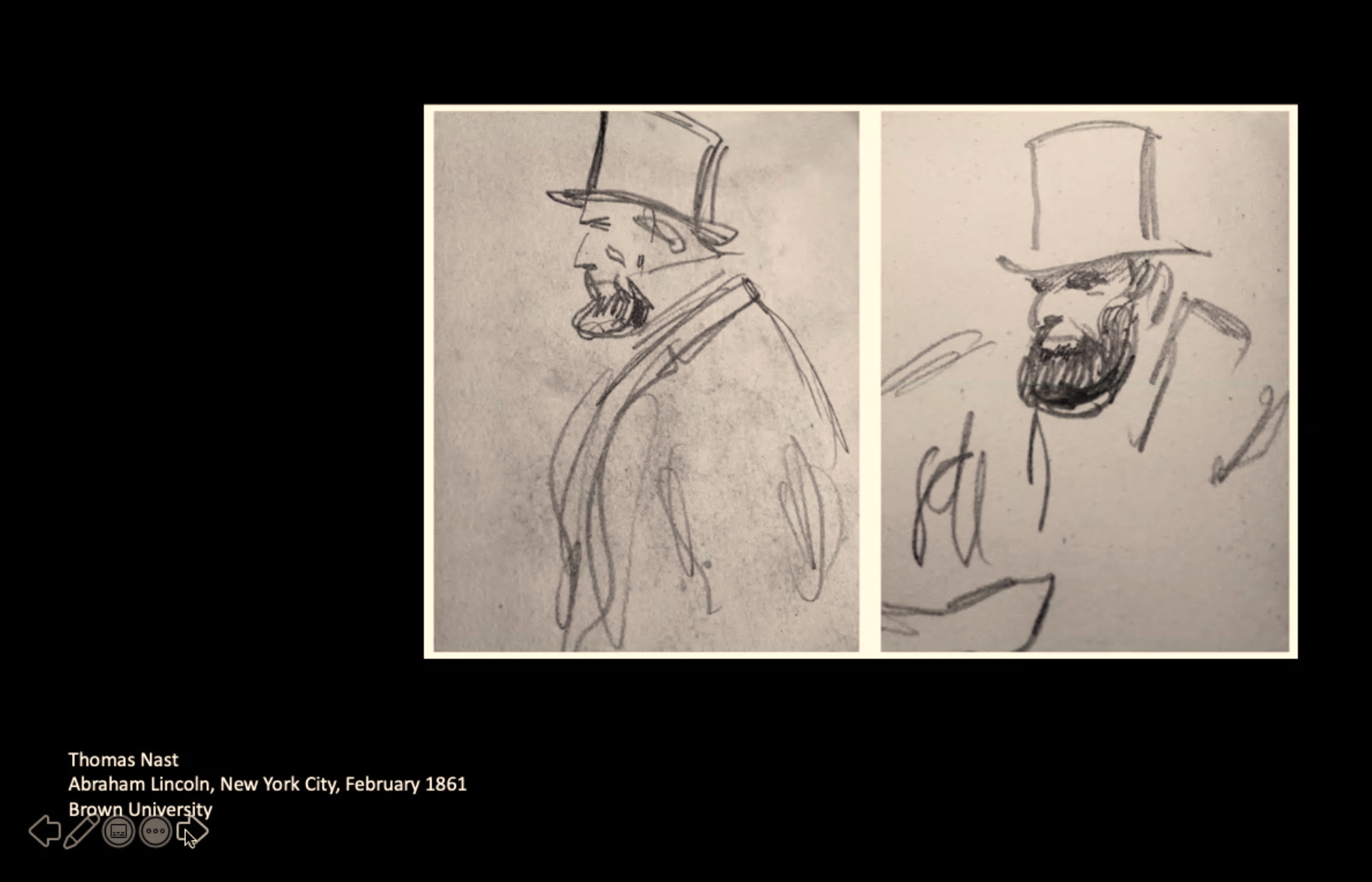
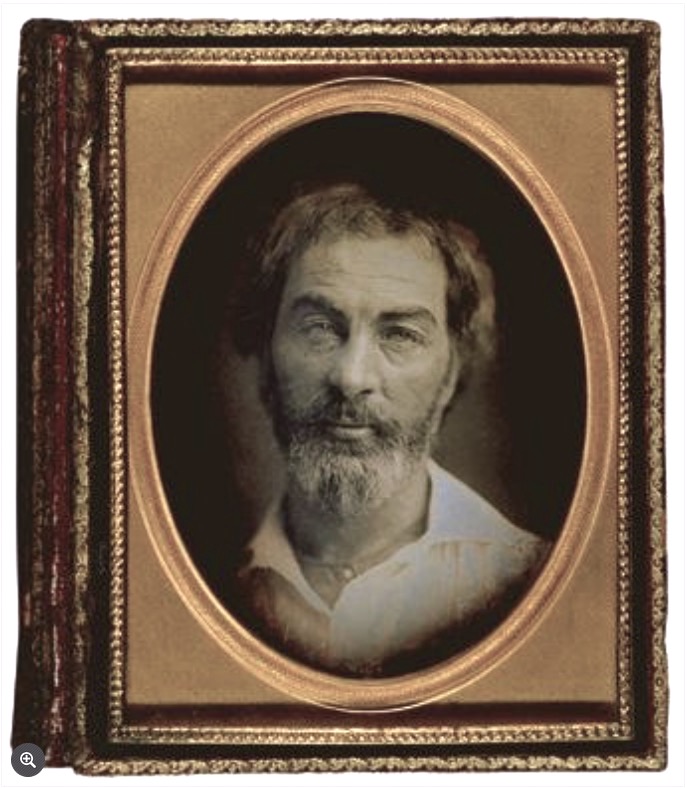
Walt Whitman’s account of Abraham Lincoln’s arrival in New York City on 19 February 1861 provides a vivid and detailed description of the president-elect’s appearance and the crowd’s reaction. Key points from Whitman’s observation include: an unusual and uncouth height; a dark-brown complexion; a seamed and wrinkled yet canny-looking face; black, bushy head of hair; disproportionately long neck; complete black attire; stovepipe hat pushed back on his head; perfect composure and coolness; hands held behind his back; observing the crowd with curiosity in an unbroken silence.
«I shall not easily forget the first time I ever saw Abraham Lincoln. It was a rather pleasant afternoon in New York City, as he arrived there from the West, to remain a few hours and then pass on to Washington to prepare for his inauguration. I saw him in Broadway, near the site of the present post office. He came down, I think from Canal Street, to stop at the Astor House.
The broad spaces, sidewalks, and street in that neighborhood and for some distance were crowded with solid masses of people — many thousands. The omnibuses and other vehicles had all been turned off, leaving an unusual hush in that busy part of the city.
Presently two or three shabby hack barouches made their way with difficulty through the crowd and drew up at the Astor House entrance. A tall figure stepped out of the center of these barouches, paused leisurely on the sidewalk…
There were no speeches, no compliments, no welcome — as far as I could hear, not a word said. Still, much anxiety was concealed in that quiet. Cautious persons had feared some marked insult or indignity to the president-elect — for he possessed no personal popularity at all in New York City and very little political. But it was evidently tacitly agreed that if the few political supporters of Mr. Lincoln present would entirely abstain from any demonstration on their side, the immense majority — who were anything but supporters — would abstain on their side also.
From the top of an omnibus I had a capital view of it all and especially of Mr. Lincoln: his looks and gait; his perfect composure and coolness; his unusual and uncouth height; his dress of complete black, stovepipe hat pushed back on his head; dark-brown complexion; seamed and wrinkled yet canny-looking face; black, bushy head of hair; disproportionately long neck; and his hands held behind, as he stood observing the people.
He looked with curiosity upon that immense sea of faces, and the sea of faces returned the look with similar curiosity. In both there was a dash of comedy, almost farce, such as Shakespeare puts in his blackest tragedies…»
Mathew Brady and Lincoln’s Public Persona
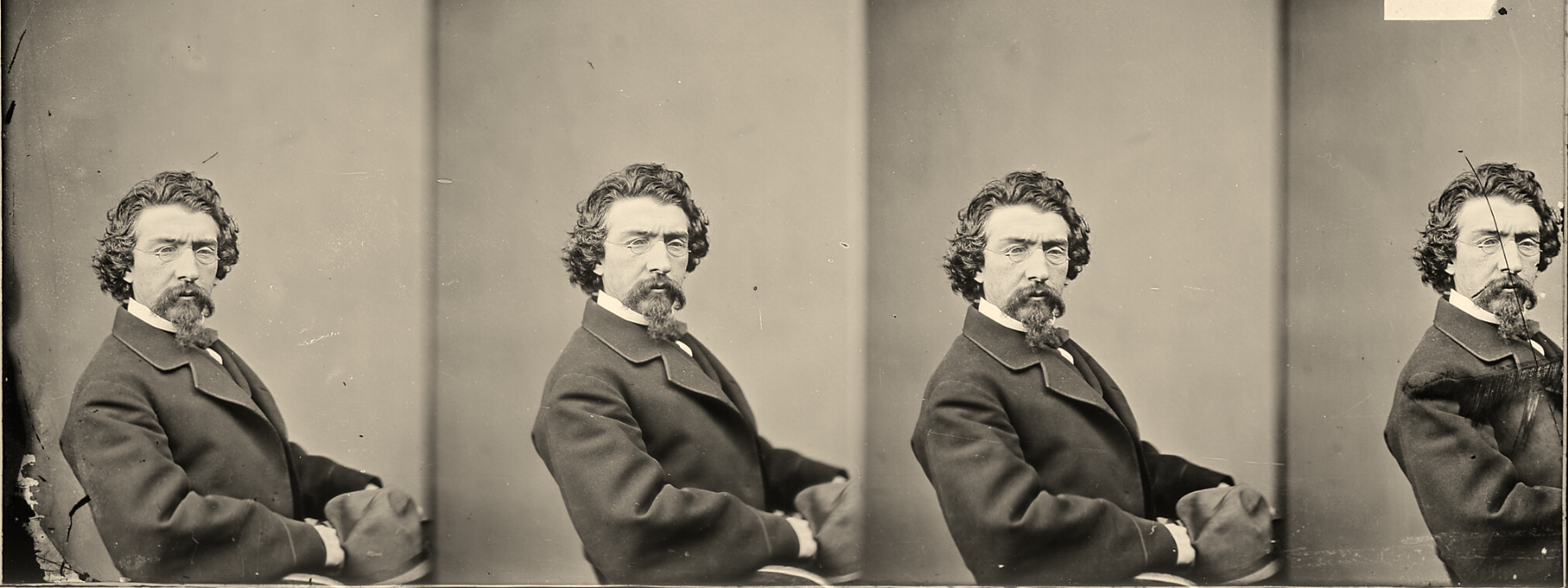
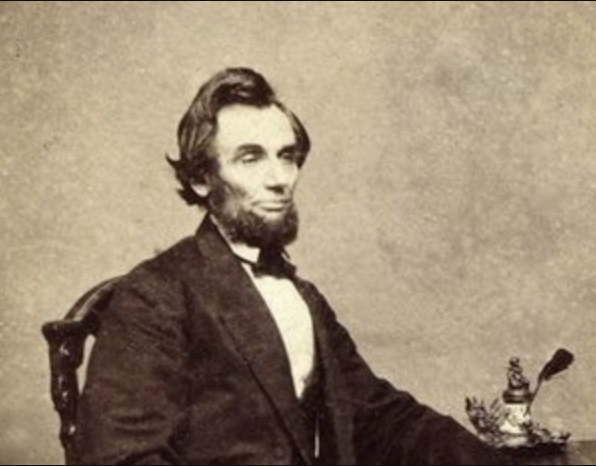
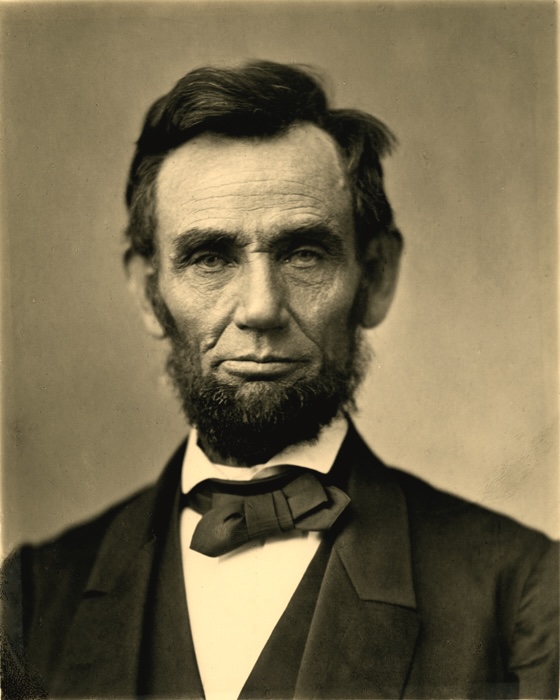
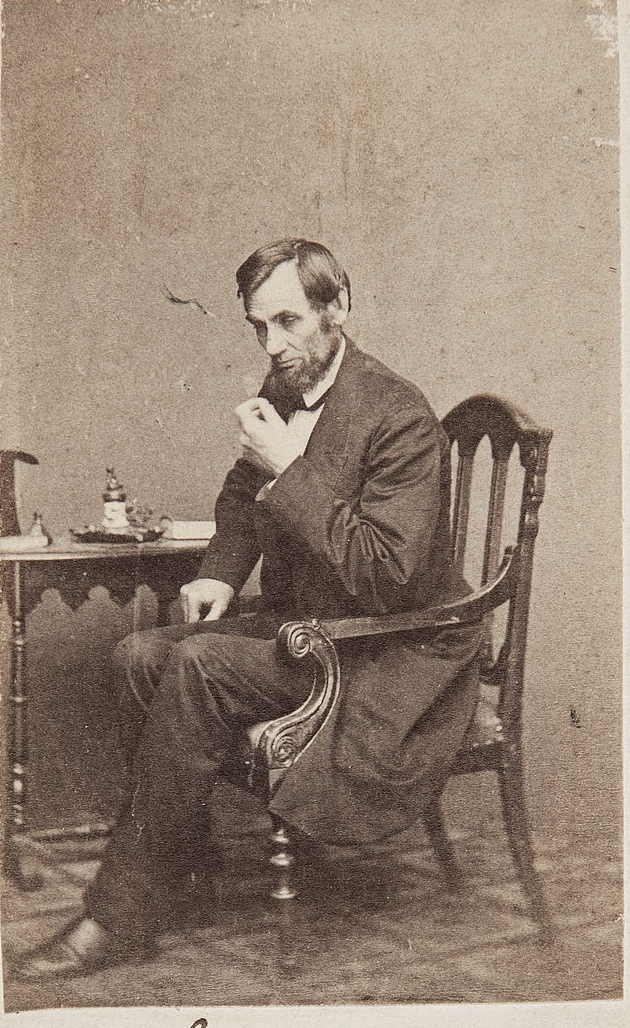
When we look at the work of iconographers who have attempted to make an exhaustive catalog of photographic portraits of Abraham Lincoln, we are fascinated by the contrast between, on the one hand, the candid relationship to photography in the first fifty years of Abraham Lincoln’s life — born into a time before photography — and, on the other, as soon as he became US President, his pioneering and efficient political use of photography, with the complicity of photographer Mathew Brady and his studio assistants. Abraham Lincoln is certainly still the human being whose face is best known to the world’s living inhabitants.
«For Lincoln, this dark technology was a godsend. Despite his penchant for making fun of his appearance, Lincoln knew that his ‘phiz’ was instantly recognizable, all the more so after hair began to appear on it. And recognizability was an asset when all known facts relating to the government of the United States were up for grabs.»
Lincoln historian Ted Widmer highlights the importance of photography to Lincoln’s public image and discusses Lincoln’s relationship with photographer Mathew Brady:
«Lincoln said, ‘Brady and the Cooper Institute made me president.’ For on the same day that he gave the great Cooper Union address, in February 1860, he did something just as significant when he stopped at Brady’s New York studio for a likeness.
Brady, the former painter, was not averse to certain forms of retouching (he made Lincoln’s neck less scrawny by artificially enlarging his collar), and the result was a surprisingly normal-looking candidate. Not a savage from the wilds of Illinois, or a baboon, as he was often called, but a reasonable facsimile of a human being. That image was widely disseminated during the tumultuous campaign, as Americans by the thousands bought small buttons with his tintyped image affixed to them.
But that was then, in the distant antebellum. Now that war had broken out, Americans needed to see their president as he actually looked that spring. In an age that was tiring of romantic clichés and simply wanted facts, the photograph was emerging as the portrait of choice. So Lincoln came to Brady. Repeatedly. He did so as soon as he arrived in Washington in late February, taking a photograph just after the wild train journey that brought him to the White House. That image was widely disseminated in Harper’s Weekly on April 27. And he did so again in May, most likely on May 16, thanks to recent research.
The images that resulted from that session, his first serious sitting as president, are striking. This is not a teller of jokes, or an escapee from the back woods. What the English journalist William Howard Russell called his ‘wild republican hair’ has been subdued and rests in place. He sits regally in an elegant chair — a chair, in fact, that Lincoln had given to Brady, after having rescued it from the House of Representatives. It was likely his former chair when he was a representative. The mood is somber, serious, and intense at times. He is no longer a mere politician — this is the president of the United States.»
In his book Lincoln on the Verge, Widmer offers a comprehensive and insightful analysis of Lincoln’s inaugural journey. He explores the role of photography during Lincoln’s time:
«Photography was a fluid technique in 1861, in every sense. It had made rapid strides since the first inchoate smudges of a backyard in France. Improvements followed fast and furious; the daguerreotype in 1839; the ambrotype in 1851; the tintype in 1856. The United States had no shortage of tinkerers, and like characters in Hawthorne short story, these wizards drew from science, experimenting with bits of silver, iodine and even egg whites to cheat nature out of her secrets.»
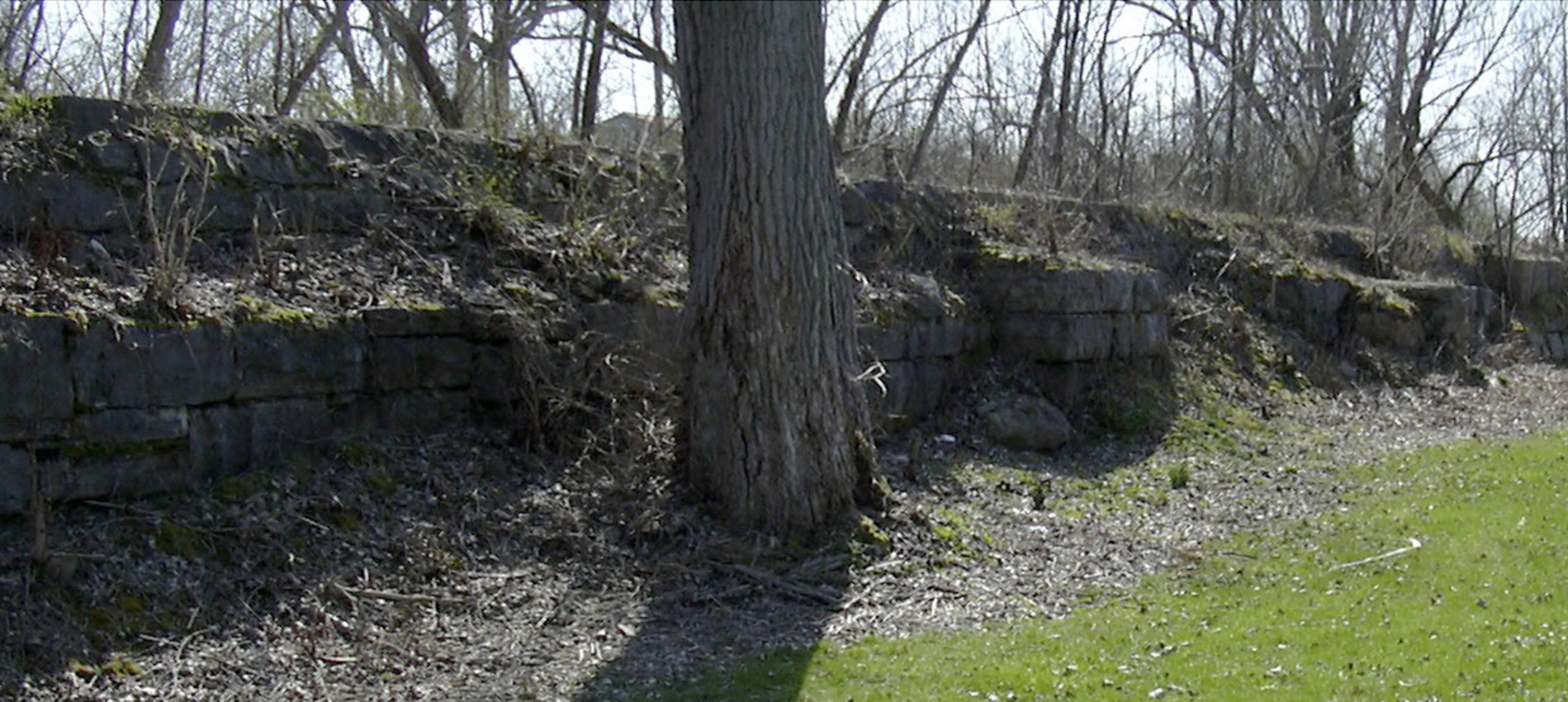
To be continued — Episode 9: « Stop at Clyde, NY, on the Inaugural Train Journey ».
Sources & Notes
- Root, W. J., photographer. A partial view of the Lincoln cabin with open door and group of four including Mr. Thomas Lincoln’s grandson John J. Hall. Chicago, Illinois, ca. 1891. Albumen print. Library of Congress.
- « Abraham Lincoln, President. » Anonymous newspaper article, November 1860. Scrapbook, Lincoln Presidential Library, Springfield.
- Harris, Gibson W. « My Recollections of Abraham Lincoln. » The Woman’s Home Companion, February 1904.
- Rindlaub, Martin P. « Lincoln as I Saw Him. » Kiwanis Magazine, May 1926.
- Volk, Leonard Wells. « Recollections of Abraham Lincoln. » Century Magazine, December 1881.
- Bedell, Grace. Letter to Abraham Lincoln, 15 October 1860.
- Lincoln, Abraham. Letter to Grace Bedell, 19 October 1860.
- Bedell, Grace. Letter to Abraham Lincoln, January 1864 (National Archives, discovered by Karen Needles in 2007).
- Pinkerton, Allan. The Spy of the Rebellion. New York: G. W. Carleton & Co., 1883.
- The New York Times, 25 February 1861; New York Herald, 26 February 1861.
- Holzer, Harold. Lincoln and the Power of the Press: The War for Public Opinion.
- Whitman, Walt. « The Death of Abraham Lincoln. » Lecture delivered in New York on 14 April 1879.
- Whitman, Walt. Specimen Days in America. London: Walter Scott, 1887.
- Widmer, Ted. Lincoln on the Verge: Thirteen Days to Washington. Simon & Schuster, 2020.
- Lossing, Benson John, and Mathew B. Brady. Mathew Brady’s Illustrated History of the Civil War, 1861–65, 1912.
- Wilson, Robert. Mathew Brady: Portraits of a Nation. London: Bloomsbury, 2013.
Laisser un commentaire