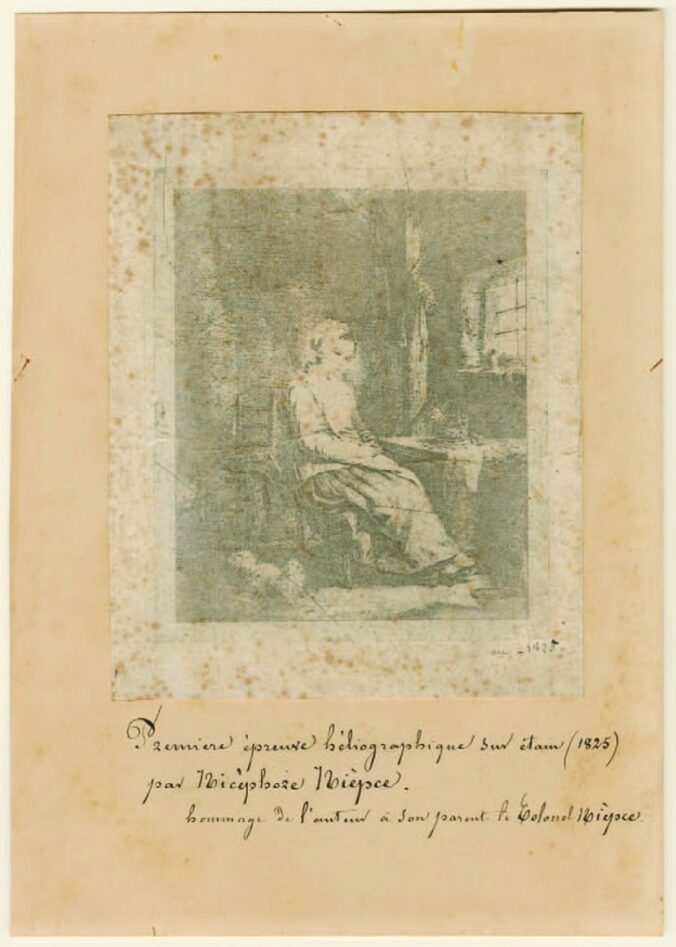
In 1825 Niépce learns to paint with light and etch in turn on copper. Two images survive, the Horse and the Jeune Fille, the first heliographs printed and shown to the world.
Étiquette : Isabelle Evrard
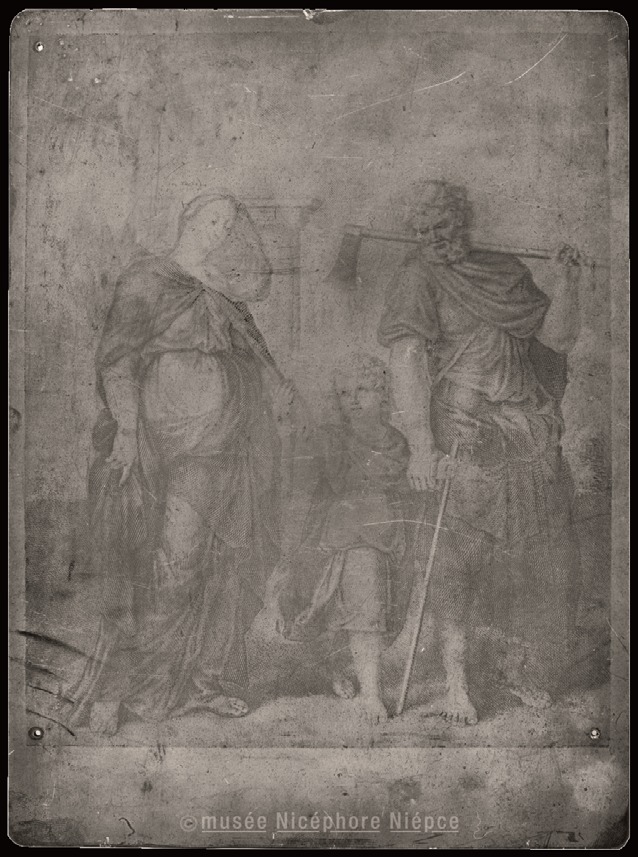
Spring 1826: the white metal of music engravers, bought for the camera, used for copies. The two plates of the Sainte Famille, and a small landscape in an octagon.
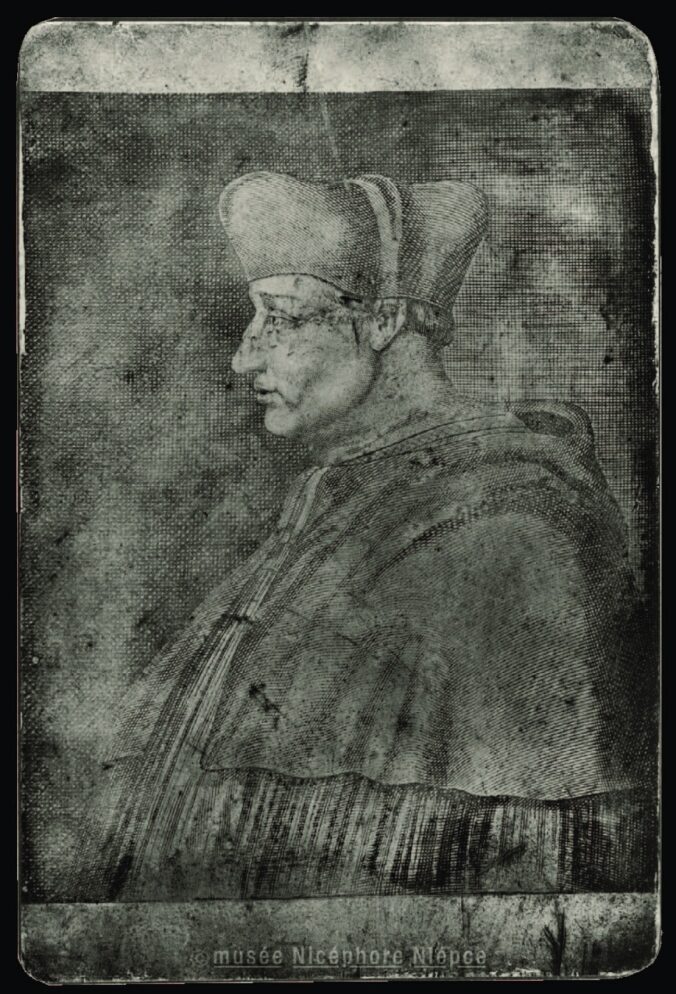
A cousin’s parcel of engravings, August 1826: a prisoner, Erasmus, a cardinal, a ruin near Fréjus, an old jurist. The Cardinal d’Amboise, on nearly pure tin, is the first to succeed.
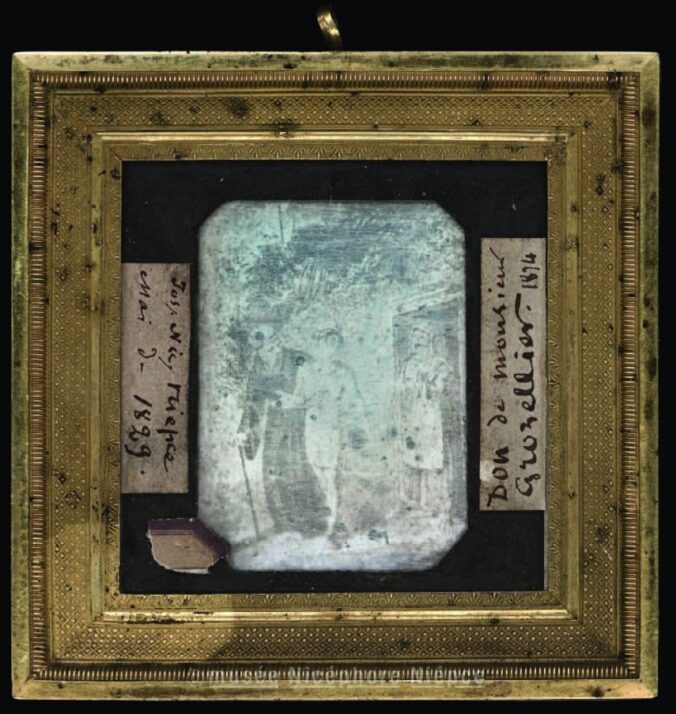
1828-1829: silver plate, well polished, the remedy Niépce had named at Kew. Two small plates survive, three figures and La Fontaine’s hermit.
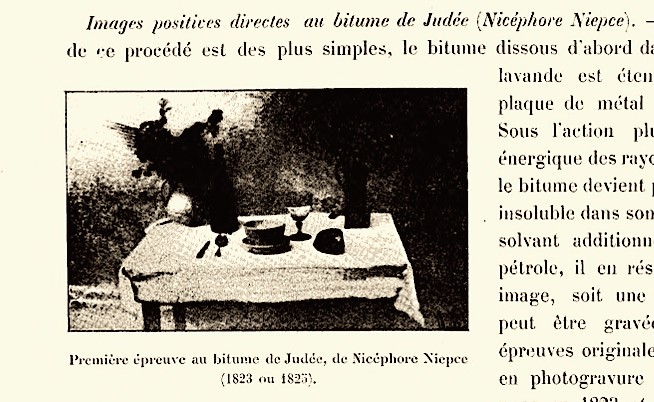
Thirty-three objects survive or are documented, and at least as many are lost. Almost everything kept was kept as evidence.