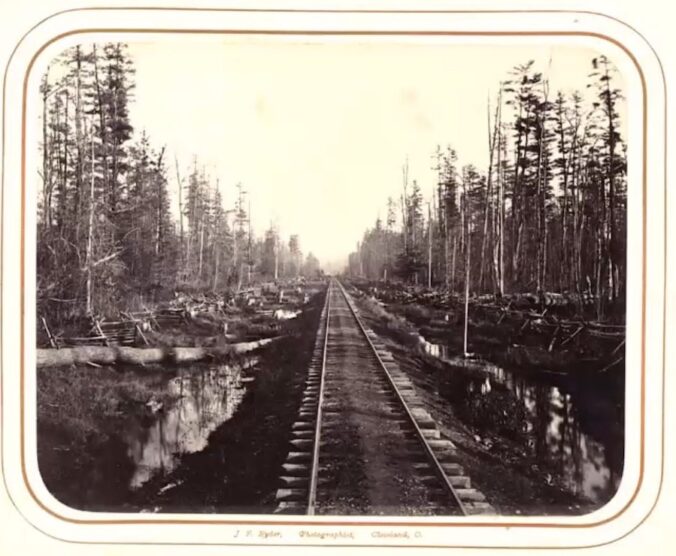
The Inaugural Journey from Springfield to Washington
Extract from the monograph The Mystery of the Lost Daguerreotype — Tracing Lincoln’s Image in 1861 (Senigallia, MMXXVI).
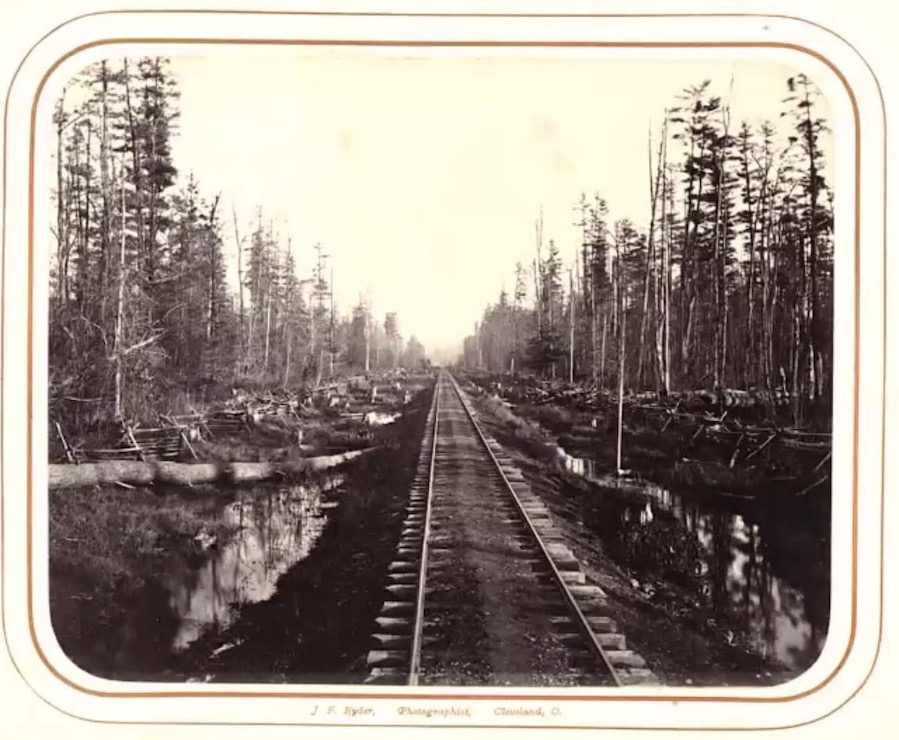
1,900 Miles in 12 Days
The route chosen for the journey to Washington was a somewhat circuitous one, traversing the States of Indiana, Ohio, New York, New Jersey and Pennsylvania, and passing through Maryland to the District of Columbia. It seems to have been the desire of Mr. Lincoln to meet personally the people of the great Northern States, upon whose devotion and loyalty he prophetically felt he must depend for the salvation of the Republic. Everywhere he met the warmest and most generous greetings from the throngs assembled at the railway stations in the various cities.
«Although any President-elect’s journey to Washington would receive its fair share of coverage and the public’s fascination, Lincoln’s cross-country passage was more than that. His journey took on a whole new level of significance as it was an extraordinary and unique event of singular importance. The country was in the midst of a crisis it had never before experienced and an ordeal that none were sure how to resolve… Seven southern states had already seceded from the Union. Several more were threatening to do so. Yet Lincoln had been silent and out of the public eye since his election three months earlier. On this journey, he would finally be seen and heard. The public was now hoping to get answers to the questions they all had.»
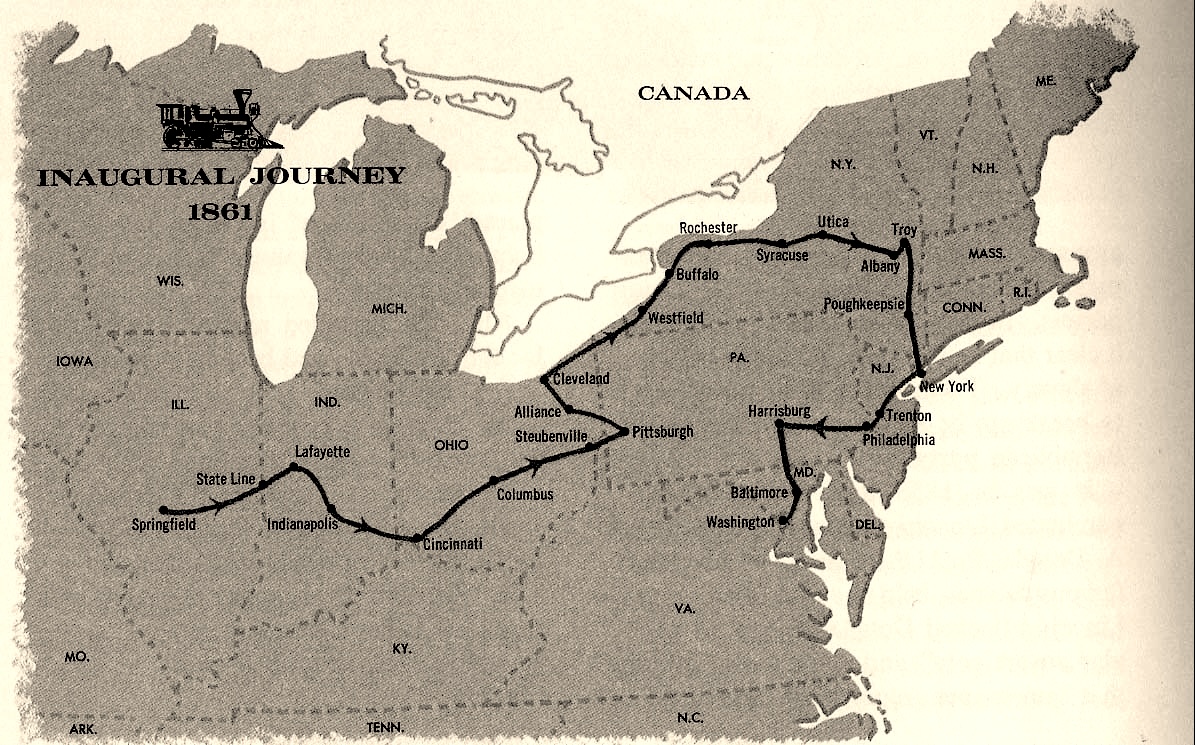
The response to the trip was overwhelming, and the crowds along the way were enormous and enthusiastic. This was the opportunity of a lifetime for most people to see a President in person, and they came out in droves to see him.
New York State played a considerable role in the journey. Almost half of the twelve nights — more than forty percent — were spent in the state’s cities: two nights in Buffalo, one in Albany and two more in New York City. In 1860, New York State, with a population of 3.8 million, was the largest state in the Union. The completion of the Erie Canal in 1825, followed closely by the railroad expansions, opened up the interior of the country to development. Immigrants flocked not only to the frontier lands but also into central and western New York. Buffalo, on the shores of Lake Erie, was the terminus for the Canal; in just a few short years it was transformed from a crude frontier village into a strong, vibrant city and the most important port on the Great Lakes.
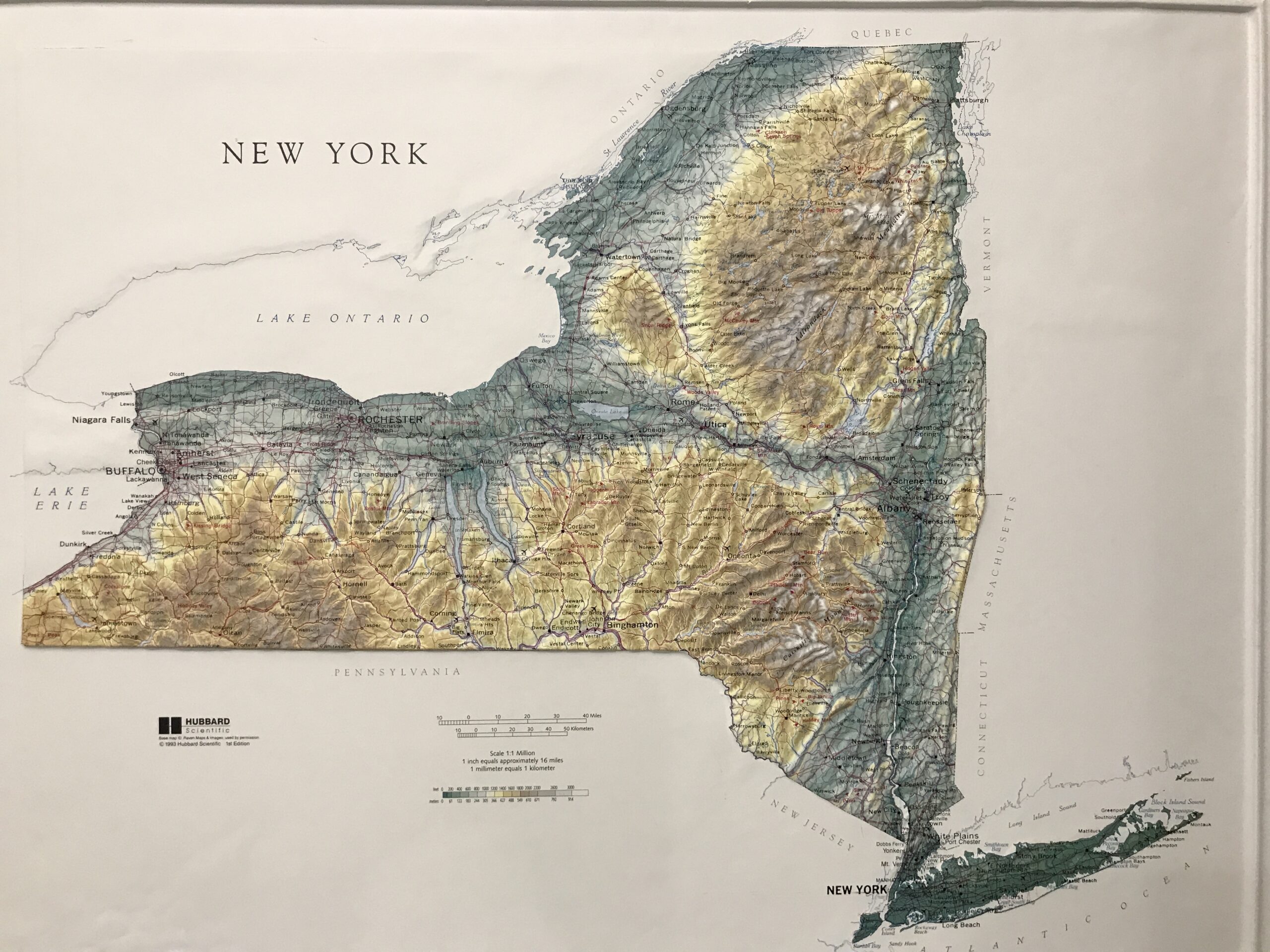
By 1835, Rochester, Syracuse and Utica had tripled their population. New York City, already a major port in the country, became the financial, commercial, insurance and manufacturing center for the country and the world. New York State had truly become « The Empire State. » In 1918, the Canal was replaced by the New York State Barge Canal. Many abandoned sections (most notably between Rochester and Rome) have been filled in to create roads — such as Columbia Street in Clyde, NY.
Special Train Composition
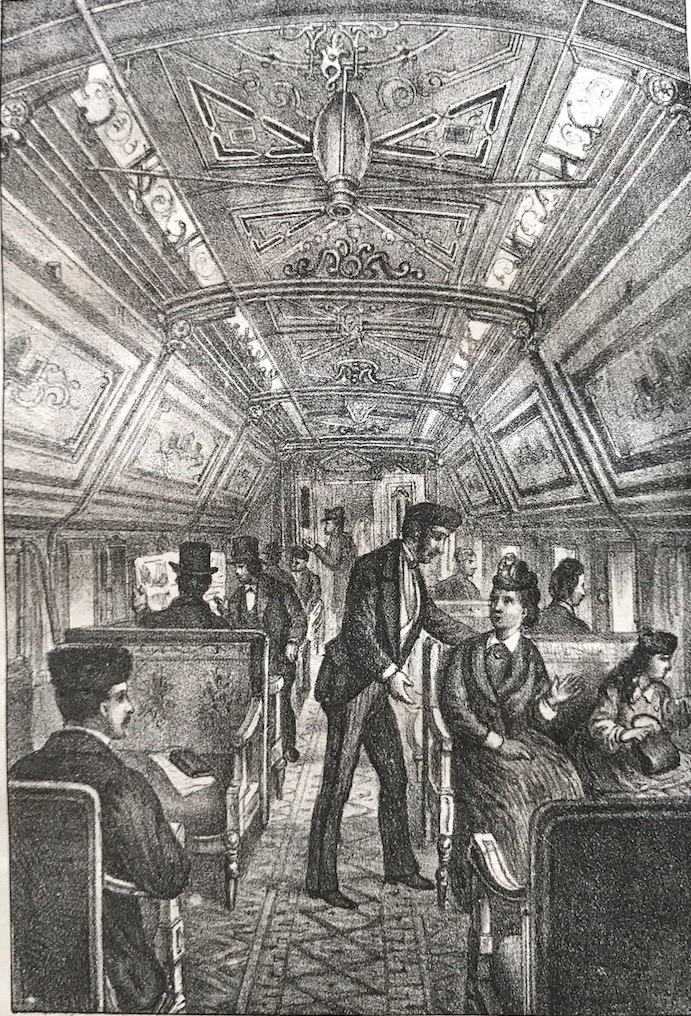
Lincoln would ride in a brand-new elegant « tastefully furnished and decorated » sleeping car equipped with an « improved ventilator, » and pulled by the swiftest and most modern locomotive. As for the route, it was inspired by political obligations and Lincoln’s own hunger to be seen by the public from whom he had been separated for so many months.
Initially, William Wood proved a thorough, if somewhat overzealous, organizer. He personally surveyed the complex array of railroad lines over which the presidential special would ride on the circuitous trip from Springfield to Washington. Knowing better than most that the nation’s rapidly expanding rail systems were still dizzyingly incompatible in terms of track gauge, equipment, and even local time zones, Wood successfully chose a route that offered Lincoln ample time for full exposure in major cities without delaying his arrival in Washington.
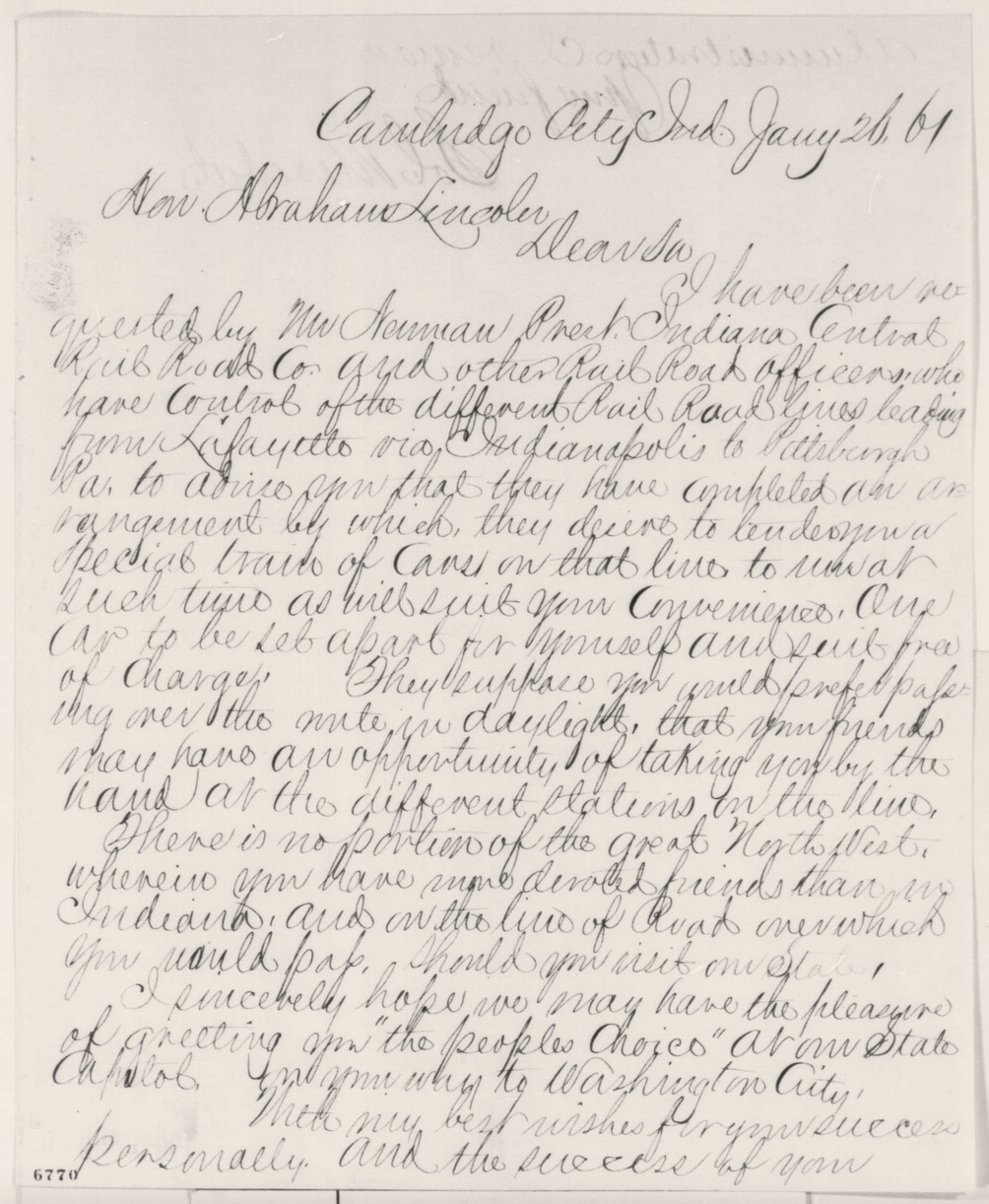
Solomon Meredith wrote from Cambridge City, Indiana, on 26 January 1861:
«Hon. Abraham Lincoln, Dear Sir, I have been requested by Mr. Newman, Prest. Indiana Central Rail Road Co. and other Rail Road officers, who have control of the different Rail Road lines leading from Lafayette via Indianapolis to Pittsburgh Pa., to advise you that they have completed an arrangement by which they desire to tender you a special train of cars on that line… One car to be set apart for yourself and suit free of charge. They suppose you would prefer passing over the route in daylight, that your friends may have an opportunity of taking you by the hand at the different stations on the line…»
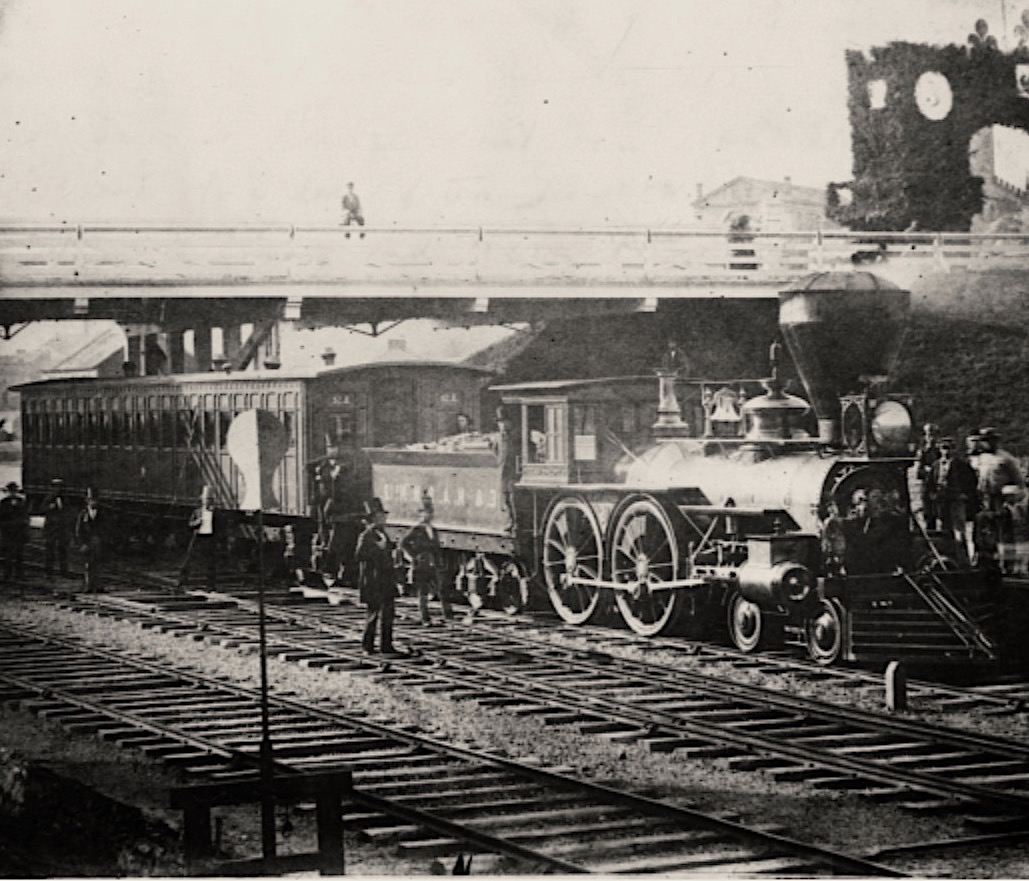
From Buffalo to Rochester, the New York Central Railroad Company was in charge of providing travel accommodations. The « Dean Richmond » locomotive would carry the President-elect to Rochester. Dean Richmond was the Vice-President of the New York Central and, ironically, the State Chairman for the Democratic Party. Lincoln, elected on the Republican Party line, was being pulled across the state by a locomotive named after one of New York State’s leading Democrats. That is exactly how Lincoln would have wanted it to be: he wished to be considered President of the whole United States, not President of the Republican Party.
Sleeping Car for the President
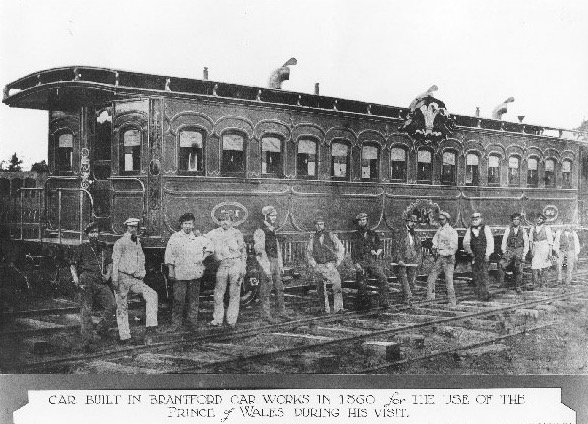
President Lincoln’s inaugural journey has often been compared to the Prince of Wales’ visit to the US and Canada in the summer and fall of 1860. The photograph of the train conveying the Prince of Wales in upper Canada (Provincial Archives of New Brunswick) offers an idea of what the special train used by President Lincoln may have been like.
Mr. Wood, Superintendent of Arrangements, addressed the issue of overcrowding early: «Serious inconvenience has already been occasioned by the unnecessary number of Committeemen who throng the cars — three gentlemen being able to do the work more efficiently than twenty, which is the usual number. Two cars will compose the special train hereafter. No change whatever will be made to the programme now adopted, and a thoughtful attention to these suggestions will contribute greatly to the comfort and health of Mr. Lincoln, who is physically far from adequate to the demands made upon his strength.»
The train departed Buffalo at 5:45 in the morning on Monday, 18 February, with newspaper man Horace Greeley onboard. From the start of the journey to Utica, and in particular on the morning of 18 February, the train consisted of three cars:
1. A baggage car, partially fitted as a smoking car, connected to the locomotive. 2. A « commodious and neatly arranged passenger coach » for committee members, Governor Morgan’s escort, and press from various cities. 3. A sleeping car for Lincoln and his family in the rear, « gorgeously fitted up with sofas, centre tables, mirrors and carpets. »
The Buffalo Express noted: «Over the State Line and Central roads the President elect will experience almost as much luxury in his travel as was enjoyed by the Prince of Wales last fall.» Some sources were more specific: «Lincoln is traveling in a car used few months previously by the Prince of Wales» (Robert S. Harper). This car, built in Brantford, Ontario for the Prince of Wales’ 1860 visit to Canada, was well-documented:
«The exterior of the car, which is 46 feet long by 10 feet wide, presents a splendid appearance. The car has a double roof for the purpose of thorough ventilation, the upper one being supported by beautifully cut gilt brackets. The window frames are made of handsome Canadian oak, and are richly varnished. The handrails are of burnished brass, and rest upon polished oak tracks, which, with the iron work, are painted with the utmost skill and elegance. The inside of the car is chaste, tasteful and elegant… It is divided into three compartments, an ante-room 8 feet 6 inches by 6 feet, a stateroom 28 feet by 8 feet 6 inches, and a retiring room, all furnished in the same style. The window curtains are of fine Canary silk, mounted on patent spring rollers and having silk tassels… The ventilation has been well provided for. The two roofs allow a full free current of air to pass between them and over the patent, double-coned drum ventilators, of which there are two in the stateroom, and one in the anteroom.» (Toronto Star, March 1936.)
Rear Platform of the Train
From the beginning of the journey to Utica, President-elect Lincoln routinely addressed brief speeches from the platform of his train car to the crowds gathered along the tracks, particularly in small towns. This practice allowed him to avoid navigating through dense crowds, especially given numerous warnings about potential threats along the route.
During the daytime, Mr. William Wood, responsible for managing Lincoln’s itinerary, would stand on the platform and introduce visitors to Lincoln, who remained on the train. The rear platform became a focal point for Lincoln’s public appearances during the twelve-day journey.
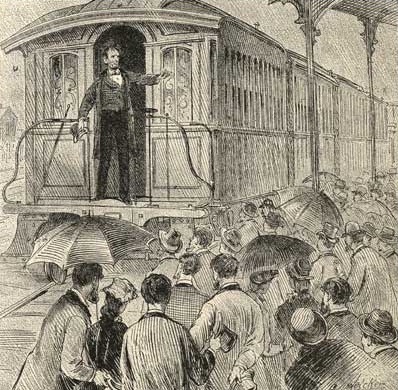
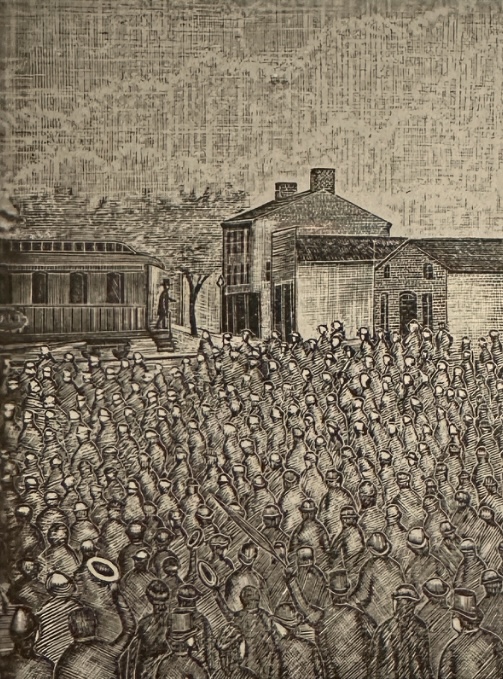
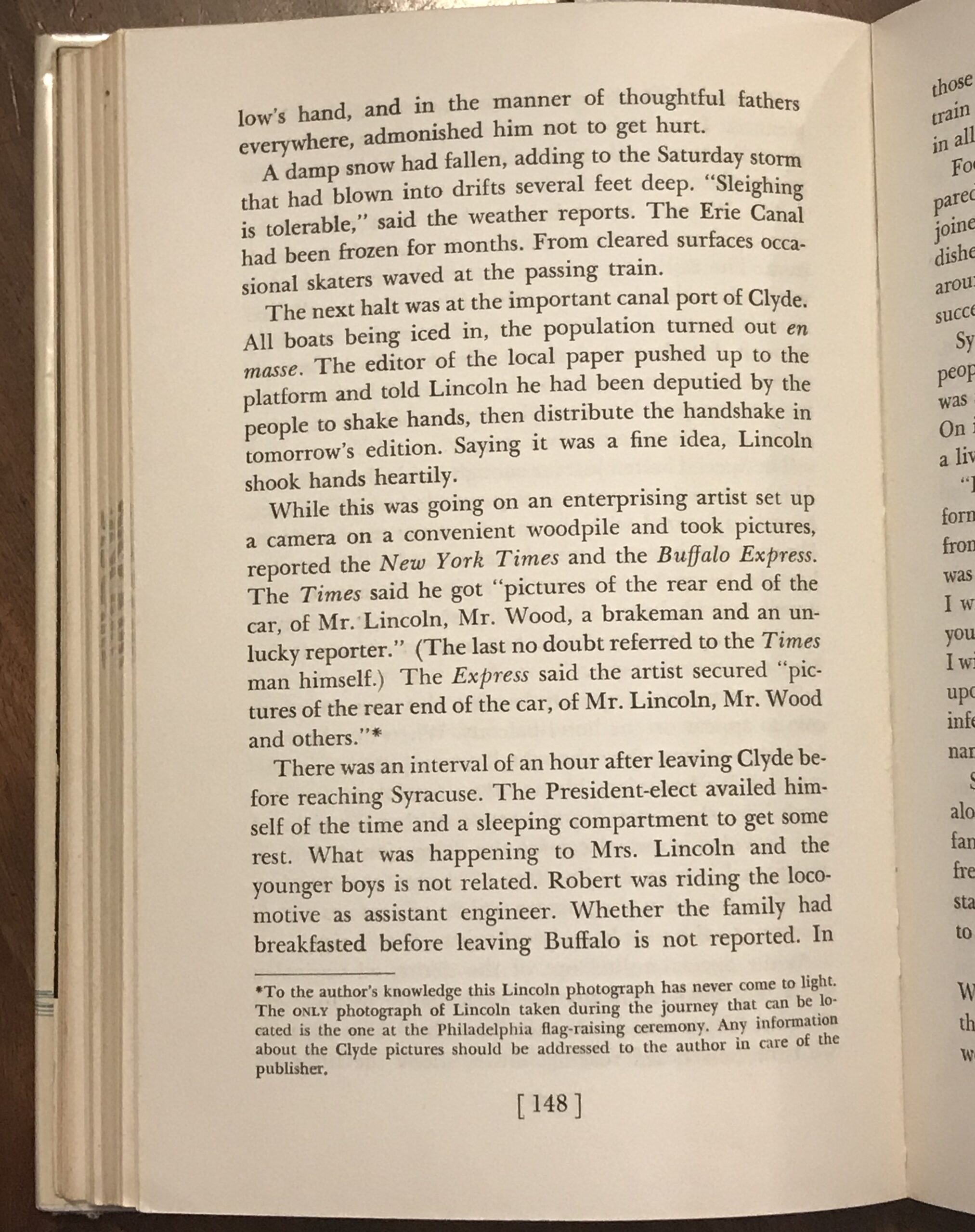
The stop at Clyde, a port on the Erie Canal, was short but well-attended. The New York Tribune reported: «At Clyde an enthusiastic crowd was gathered, who welcomed Mr. Lincoln with a salute and cheers. He thanked the people for the welcome, but had no speech to make, and no time to make it in. He was glad to see them, and bade them good morning.» Lincoln then went back into the sleeping car.
According to Searcher: «The editor of the local paper pushed up to the platform and told Lincoln he had been deputized by the people to shake hands, then distribute the handshake in tomorrow’s edition. Saying it was a fine idea, Lincoln shook hands heartily.»
Mr. Lincoln’s remarks from a platform at Syracuse were more extensive, delivered in front of the Globe Hotel: «I see you have erected a very fine and handsome platform here for me, and I presume you expected me to speak from it. If I should go upon it, you would imagine that I was about to deliver you a much longer speech than I am. I wish you to understand that I mean no discourtesy to you by thus declining. I intend discourtesy to no one. But I wish you to understand that though I am unwilling to go upon this platform, you are not at liberty to draw any inferences concerning any other platform with which my name has been or is connected [laughter and applause]. I wish you a long life and prosperity individually, and pray that with the perpetuity of those institutions under which we have all so long lived and prospered, our happiness may be secured, our future made brilliant, and the glorious destiny of our country established forever. I bid you a kind farewell.»
The rear platform was indeed central to Lincoln’s interactions with the public. Mr. Wood managed introductions and appointments from the platform. «Lincoln devised another clever stratagem for handling demands for a speech. He would remain inside until the conductor of the train should notify him that he was ready to start, so that when Mr. Lincoln stepped out of the door only time would be left to make two or three bows in different directions when the moving train would bear him away from his enthusiastic admirers while he was standing, hat in hand, upon the platform.» (Nicolay)
The platform has two or three steps on each side for climbing or descending. A brakeman would be present to operate the brakes for departure. The rail transport assisted the braking of the special train during the stops by applying brakes on individual wagons, especially the rear car.
Time-Card with Detailed Schedule
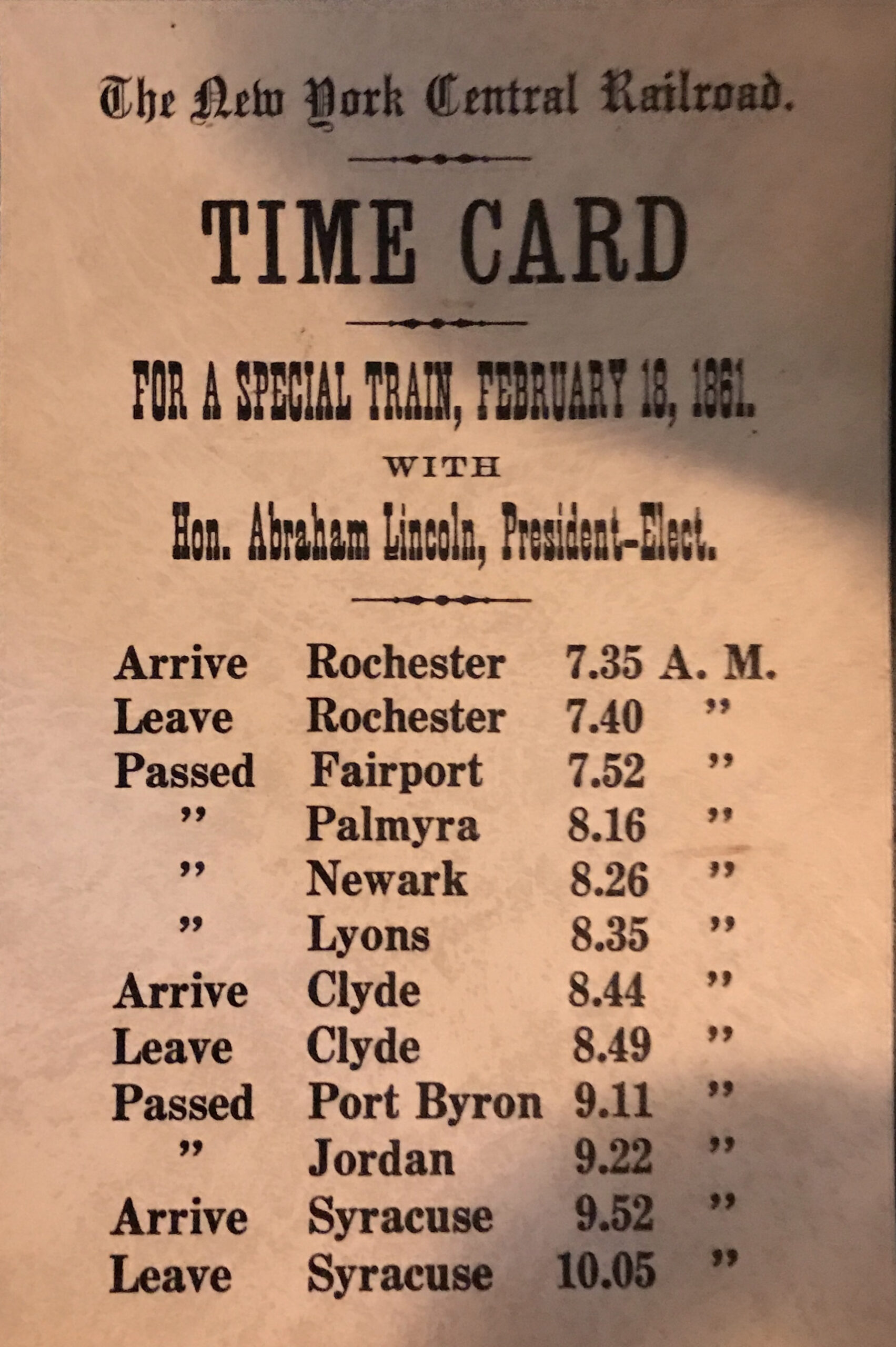
The meticulous planning of President-elect Lincoln’s journey from Springfield to Washington was evident in the detailed schedule prepared by William S. Wood. This schedule was efficiently distributed to the press in the days leading up to the Lincoln family’s departure, along with an authorized list of the traveling party, which Wood elegantly referred to as « the Family and suite. » On 18 February 1861, the train’s engine was replaced at Rochester with No. 84, operated by engineer John Duff.
The local historians’ association’s preservation of a pink paper printout of the Time Card indicates the historical significance attached to this journey even at the local level. The train’s progress was carefully timed and recorded:
- Palmyra: 8:16 AM
- Newark: 8:26 AM
- Lyons: 8:35 AM
- Arrived in Clyde: 8:44 AM
- Departed Clyde: 8:49 AM
- Port Byron: 9:11 AM
The stop in Clyde was scheduled to last exactly five minutes for wood and water replenishment.
Observations and Speculations. For a Daguerreian artist to capture Lincoln’s image in Clyde, considerable premeditation would have been required:
- Approximately one hour needed to prepare the plate.
- The plate would remain usable for only about an hour.
- The artist likely began polishing the plate around 7:20 AM.
- A 15–20 minute walk from the gallery to the station, considering icy conditions.
This meticulously planned schedule not only facilitated Lincoln’s journey but also allowed for precise coordination of public appearances along the route. Interestingly, no photographs of the train have ever been found, which underscores the exceptional and unique nature of Clyde’s local photographer’s initiative.
Lincoln’s Traveling Companions
The journey of President-elect Abraham Lincoln from Springfield to Washington in February 1861 was a significant event, accompanied by a diverse group of individuals. Based on Villard’s Memoirs and John Fagant’s research, the traveling party can be reconstructed:
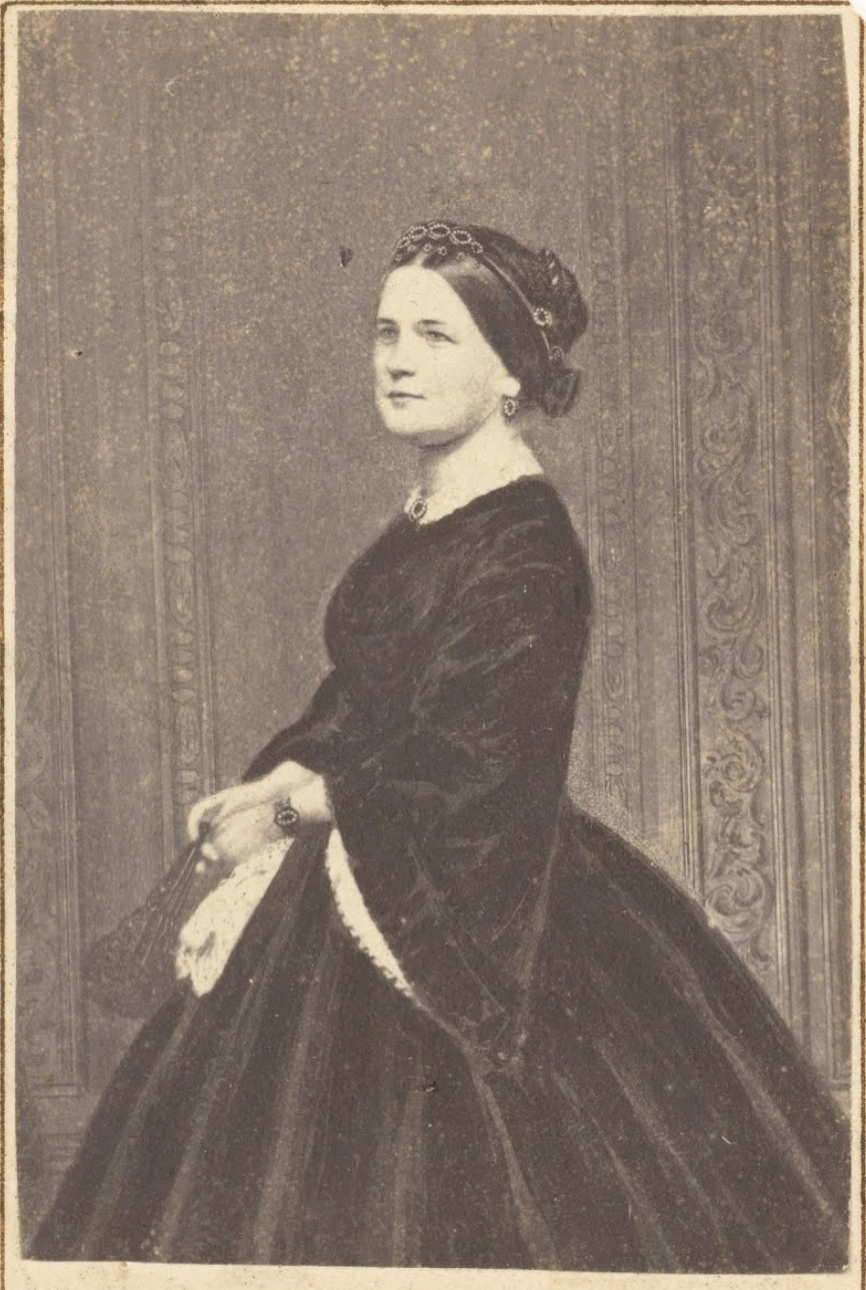
Lincoln Family. Abraham Lincoln; Mary Todd Lincoln (« Lady »); Robert T. Lincoln (eldest son, age 17); Willie Lincoln (age 10); Tad Lincoln (age 7); Elizabeth Todd (« Cousin Lizzie » Grimsley); William Johnson (servant).
Political Associates and Friends. Norman B. Judd (Illinois Republican Party leader); Judge David Davis (Illinois Circuit Court Judge); Ward Hill Lamon (Lincoln’s friend and bodyguard); Dr. W. S. Wallace (Lincoln’s personal physician and brother-in-law); Lockwood Todd (relative of Mrs. Lincoln).
Staff. John G. Nicolay (Lincoln’s private secretary); John Hay (assistant secretary); W. S. Wood (Superintendent of Arrangements).
Military Escort. Colonel Edwin Vose Sumner; Major David Hunter; Captain John Pope; Captain George Hazard; Colonel E. E. Ellsworth (« Zouave » militia leader).
Journalists were present from The New York Times, New York Tribune, New York World, New York Herald, Frank Leslie’s Illustrated Newspaper, Philadelphia Inquirer, Cincinnati Gazette, Chicago Tribune, Cleveland Dealer, Associated Press, Western Telegraph Company, Rochester Democrat and Union, Syracuse Journal and Democrat, and Wayne County Lyons Republican.
Victor Searcher’s Account
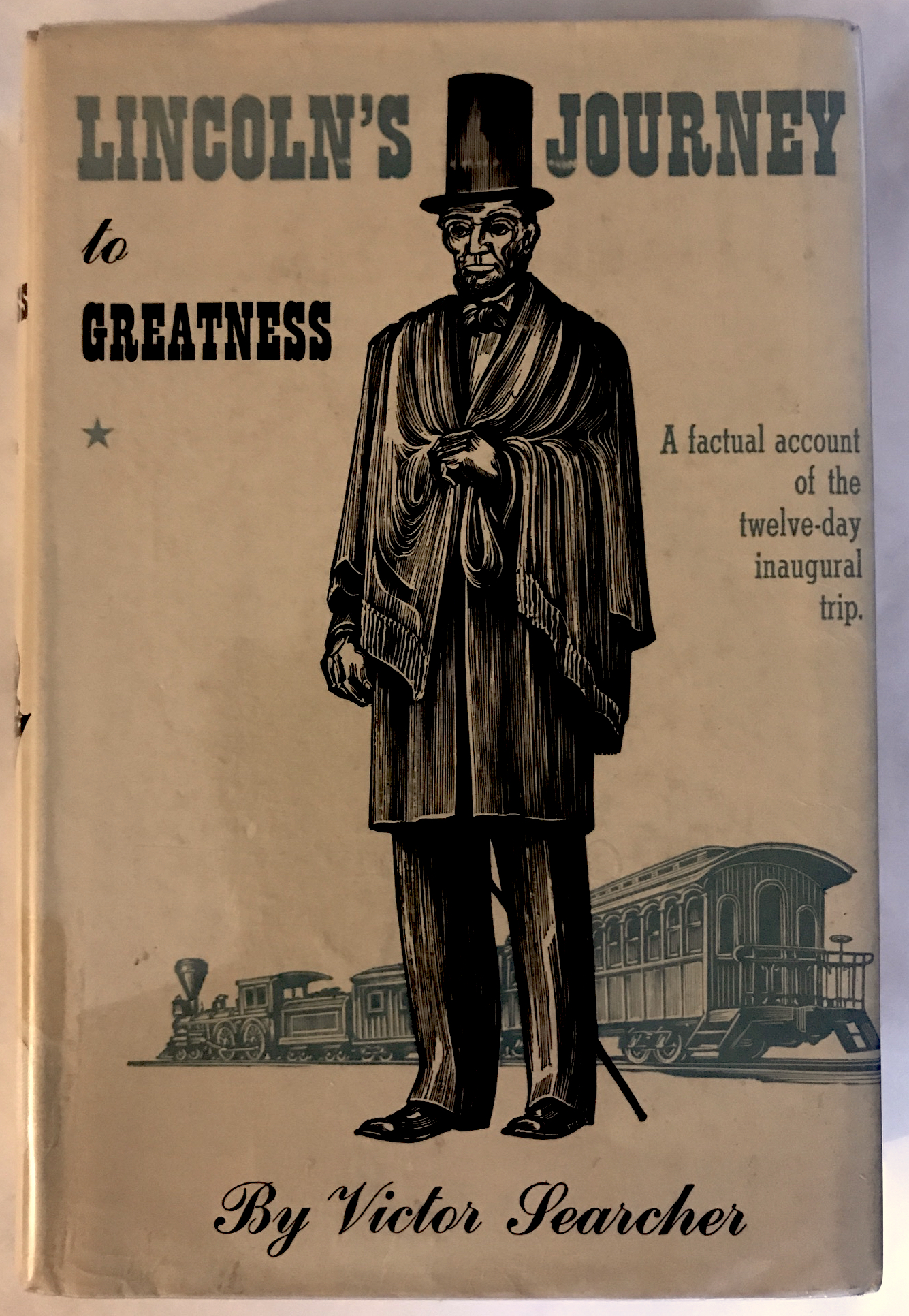
Victor Searcher was a notable Lincoln scholar who made significant contributions to our understanding of Lincoln’s inaugural journey. In 1960 he authored Lincoln’s Journey to Greatness, which offers a detailed account of the inaugural train journey.
Searcher’s work included details about Lincoln’s staff, noting that William Johnson accompanied Lincoln from Springfield to Washington with the intention of joining the White House staff. Searcher wrote that «William emerged from the baggage car carrying a handsome broadcloth over-coat and a hat box. The exchange was made, and the press reported that Lincoln’s appearance improved fifty per cent thereby.»
Searcher provided colorful anecdotes about Lincoln’s interactions during the trip. For example:
«The next halt was at the important canal port of Clyde. All boats being iced in, the population turned out en masse. The editor of the local paper pushed up to the platform and told Lincoln he had been deputized by the people to shake hands, then distribute the handshake in tomorrow’s edition. Saying it was a fine idea, Lincoln shook hands heartily — this is Mr. Pain, the unlucky reporter. While this was going on, an enterprising artist set up a camera on a wood pile and took pictures, reported the New York Times and the Buffalo Express… To the author’s knowledge this Lincoln Photograph has never come to light. Any information about the Clyde pictures should be addressed to the author in care of the publisher.»
John Fagant’s Contributions
John Fagant’s research provides valuable insights into Lincoln’s inaugural journey, particularly the stop in Clyde, New York. His 2010 work, The Best of the Bargain, offers detailed accounts of the events and their historical context.
«Following along the Erie Canal region of the state, the Special train slowed down as it passed through the depots in the villages of Fairport, Palmyra, Newark and Lyons. At 8:44 AM, the train arrived at the scenic and important Erie Canal village of Clyde for a brief five-minute stop.»
Joseph Pain, editor of the Clyde Weekly Times, described the scene: «On Monday morning, bright and early, notwithstanding the heavy snow and deep drifts of Saturday night and Sunday morning, the roads in every direction were filled with teams and leads of human beings coming to see the President-elect. The village streets were thronged with vehicles, and by eight o’clock a large concourse of people were assembled at the depot, anxiously awaiting the Presidential train. When Mr. Lincoln re-entered the car, we again got upon the platform and conversed with Mr. Wood during the short period occupied in wooding and watering. As soon as the locomotive whistled for starting, Mr. Lincoln stepped out upon the platform, and saying, ‘I bid you all farewell,’ bowed several times to the crowd, who returned the greeting with enthusiastic cheers.»
The Photograph. Fagant notes: «The only existing photograph of Lincoln during the twelve-day Inaugural journey was taken at the Philadelphia flag-raising ceremony on 22 February. However, there was another photograph taken earlier in the trip, and that was during the five minute stop at Clyde.»
Three newspapers reported on this event:
- The Buffalo Morning Express (21 February 1861): «an enterprising artist had placed upon a convenient wood-pile a camera with which he secured pictures of the rear end of the car, of Mr. Lincoln, Mr. Wood and others.»
- The New York Times (19 February 1861): «an enterprising artist had placed upon a convenient wood-pile a camera with which he secured pictures of the rear end of the car, of Mr. Lincoln, Mr. Wood, a brakeman, and an unlucky reporter.»
- The Lyons Republican: «A daguerreian artist had made preparations to daguerreotype Mr. Lincoln, and asked that he might stand still on the platform of the car long enough to afford the opportunity.»
Fagant suggests John B. Roberts of Clyde as a possible photographer, noting that Roberts had photographed Horace Greeley a few months earlier.
To be continued — Episode 6: « Traveling Companions — Mary Todd, Cousin Lizzie, the Secretaries and the Train Manager ».
Sources & Notes
- Fagant, John. The Best of the Bargain: Lincoln’s Journey to Washington. Albany, NY: State University of New York Press, 2010.
- Harper, Robert S. Lincoln and the Press, 1951, p. 85.
- Morrison, Wayne E. Morrison’s History of Clyde, Wayne Co., New York, 5th edition, 1980.
- Nicolay, John G. « Some Incidents in Lincoln’s Journey, » in Burlingame, ed., Oral History of Lincoln.
- Searcher, Victor. Lincoln’s Journey to Greatness: A Factual Account of the Twelve-Day Inaugural Trip. Philadelphia: John C. Winston, 1960.
- Solomon Meredith to Abraham Lincoln, 26 January 1861. The Abraham Lincoln Papers at the Library of Congress.
- Villard, Henry. Memoirs of Henry Villard, Journalist and Financier, 1835–1900. Boston and New York: Houghton, Mifflin, 1904, volume 1.
- Wolly, Brian. « Lincoln’s Whistle-Stop Trip to Washington. » Smithsonian Magazine, 9 February 2011.
- Buffalo Morning Express, 21 February 1861; The New York Times, 19 February 1861; The Lyons Republican, February 1861.
- Toronto Star, Tuesday 17 March 1936, and Saturday 22 March 1936.
Laisser un commentaire