NN5 · Le Prisonnier, les mains attachées · NN6 · Cardinal d’Amboise · NN7 · Vue d’une ruine près Fréjus · NN8 · Portrait d’Estienne Pasquier · NN9 · Paysage en tondo
On 4 August 1826 Alexandre du Bard de Curley, at Nuits-Saint-Georges, the cousin who had found, and often lent, the money the brothers borrowed, sent to Le domaine du Gras, at Saint Loup-de-Varennes, near Chalon, “un volumineux paquet de gravures” (a bulky parcel of engravings). The parcel itself is lost; four, perhaps five, of its sheets can be followed.
Niépce took stock of it five days later: “J’ai fait l’inventaire de ce museum ambulant où se trouvent plusieurs morceaux de l’École anglaise, entre autres les portraits de quelques grands personnages, voire même des caricatures fort plaisantes. J’ai parcouru la ville de Londres, où j’ai failli me perdre dans les vapeurs du charbon de pierre, ce qui m’a empêché d’admirer en détail toutes ses beautés. J’ai jeté aussi un léger coup d’œil sur d’autres points de vue également remarquables par cette teinte vaporeuse […] j’ai exhumé les restes du phénix des docteurs, du célèbre Érasme, et j’ai recueilli un malheureux attaché tout nu, par les poignets, à un poteau” (9 August 1826). From the same parcel came the Cardinal d’Amboise (NN6), probably the view near Fréjus (NN7), and Étienne Pasquier (NN8).
“I have made an inventory of this traveling museum, in which there are several pieces of the English school, among others the portraits of a few great personages, and even some very amusing caricatures. I have walked through the city of London, where I nearly lost myself in the coal smoke, which kept me from admiring all its beauties in detail. I also cast a quick glance at other views equally remarkable for that hazy tint […] I have exhumed the remains of the phoenix of doctors, the famous Erasmus, and I have taken in an unfortunate man tied naked, by the wrists, to a post.”
Note. Curley’s parcel, 4 August 1826; Niépce to Du Bard de Curley, 9 August 1826, BnF (facsimile on archivesniepce.com)
In these letters, as in this catalogue, gravure and “engraving” cover any print from an intaglio plate, etchings included: Niépce’s own plates were bitten by acid, not cut with the burin, and the technique of a sheet is named only where it matters (see the Note on Method).
NN5 · Le Prisonnier, les mains attachées
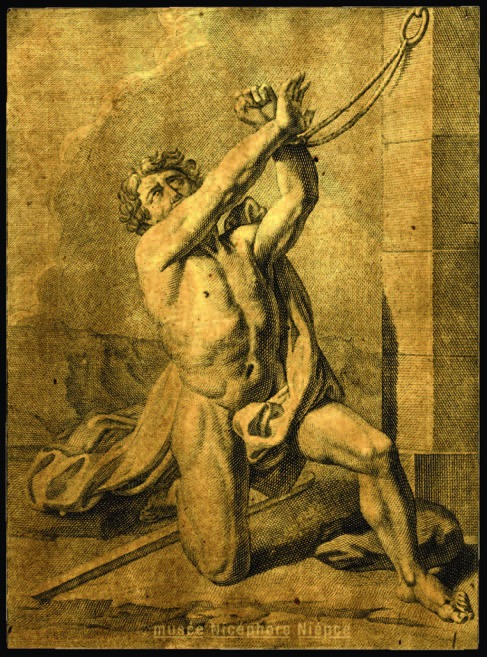
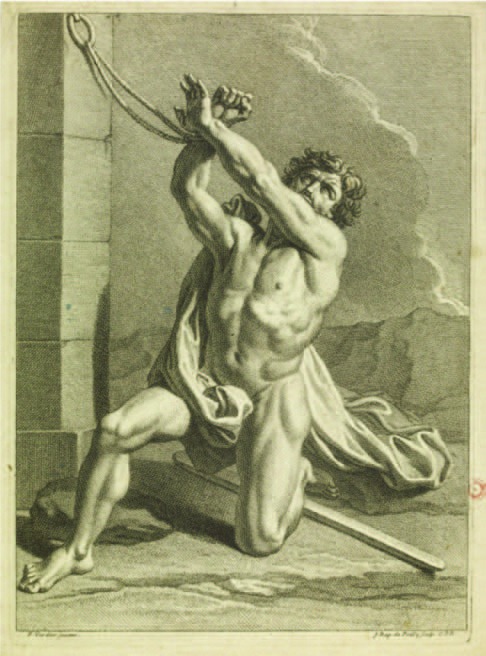
A Prisoner, His Hands Bound
Autumn 1826 (transparency) · No plate · No prints
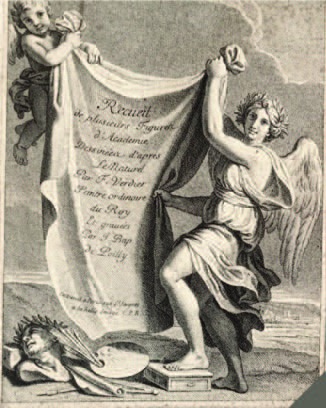
t1 · Engraving by Nicolas-Jean-Baptiste de Poilly after François Verdier, from the Recueil de plusieurs Figures d’Académie dessinées d’après le naturel par F. Verdier… made translucent with varnish by Niépce, autumn 1826. Image 230×170 mm, sheet 245×180 mm. Chalon-sur-Saône, Musée Nicéphore Niépce, inv. 1975.149.2.4. Identified by Maxime Préaud.
Provenance. Alexandre du Bard de Curley, sent to Niépce on 4 August 1826; Isidore Niépce; Musée de Chalon, 1861; missing c. 1976-1999; Musée Nicéphore Niépce, July 2000.
Source print. The engraving itself (t1): Nicolas-Jean-Baptiste de Poilly (1712-1758), from the Recueil de plusieurs Figures d’Académie dessinées d’après le naturel par F. Verdier, Peintre ordinaire du Roy, et gravées par J. Bap. de Poilly, Paris, “à la Belle Image” (at the sign of the Belle Image), [c. 1747].
Of the sheets in Curley’s parcel, Niépce tried Erasmus first, and failed. Then he turned to the Cardinal, and succeeded. On 2 November he wrote that he had tried only two of Curley’s prints, and the Prisoner, chosen with Erasmus on 9 August, was not one of them.
The sheet was nevertheless varnished, ready to be laid on a plate of the largest format: at about 245×180 mm it would have fitted the plates of the Sainte Famille (NN3). No plate, no print is known. The naked prisoner remained what Niépce had called him in jest, a “malheureux” (an unfortunate) rescued from the parcel, and he waits still.
Note. Varnished into translucency, the sheet can be read from both sides. Held up to the light from the back, the varnished sheet shows the prisoner reversed: this is the image the plate would have received. The plates of the Sainte Famille (NN3) and of the Cardinal (NN6) show their figures reversed, as here; the prints pulled from them set them right again. A translucent engraving held up to a window is thus the closest we can come to seeing what Niépce’s plate saw.
Missing Erasmus. The portrait of Erasmus was the first of Curley’s engravings to be tried. On 2 November 1826 Niépce calls it, by a slip of the pen, “le portrait de Ramus” (the portrait of Ramus): the sheet, “tachée et plissée en quelques endroits” (stained and creased in places), gave “un mauvais résultat” (a poor result) (2 November 1826). Neither the engraving nor any plate survives.
NN6 · Cardinal d’Amboise
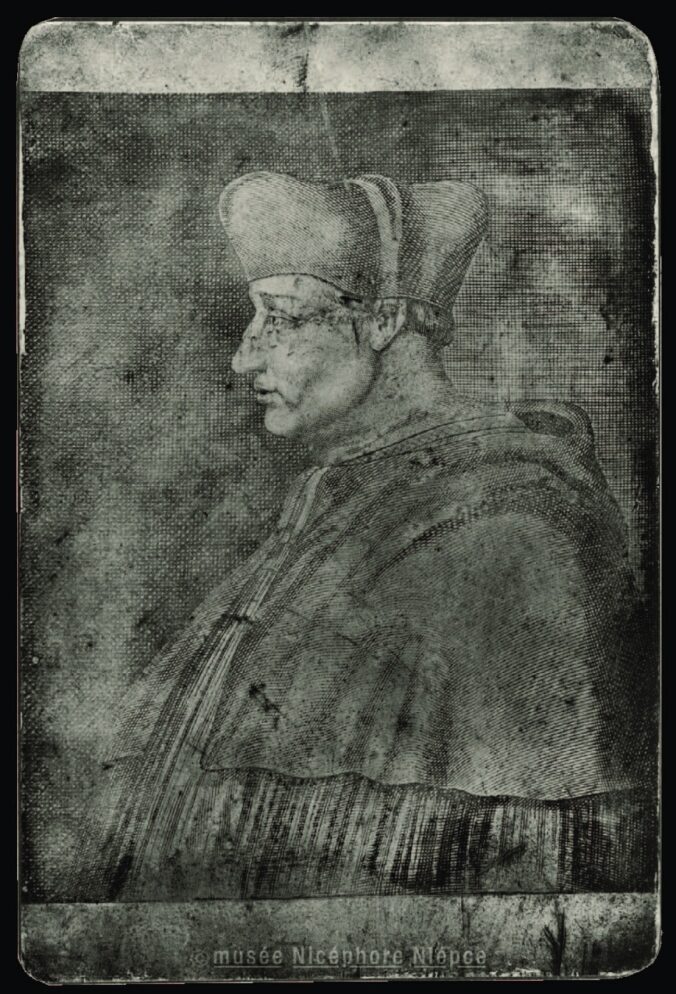
Portrait of Georges, Cardinal d’Amboise
Autumn 1826 (tin plates) · February 1827 (prints on paper)
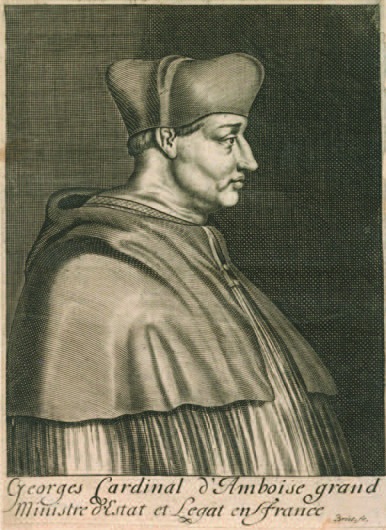
t1 · Engraving by Isaac Briot (1585-1670), portrait of Georges, Cardinal d’Amboise, from Michel Baudier, Histoire de l’administration du Cardinal d’Amboise, Paris, Pierre Rocolet, 1634, made translucent with varnish by Niépce, summer or autumn 1826, 168×135 mm. Chalon-sur-Saône, Musée Nicéphore Niépce, inv 1975.149.2.1.
The first proofs were pulled in the autumn of 1826, probably in Dijon, by Berthaux-Durand, the printer of the year before, “l’ami de M. Carbillet” (the friend of Mr. Carbillet), whom Niépce now called “un mauvais imprimeur du pays” (a poor local printer): stronger in tone than any before, he wrote, but poorly printed. None can be identified today.
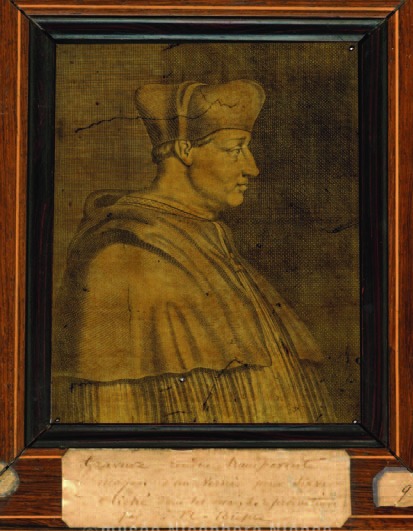
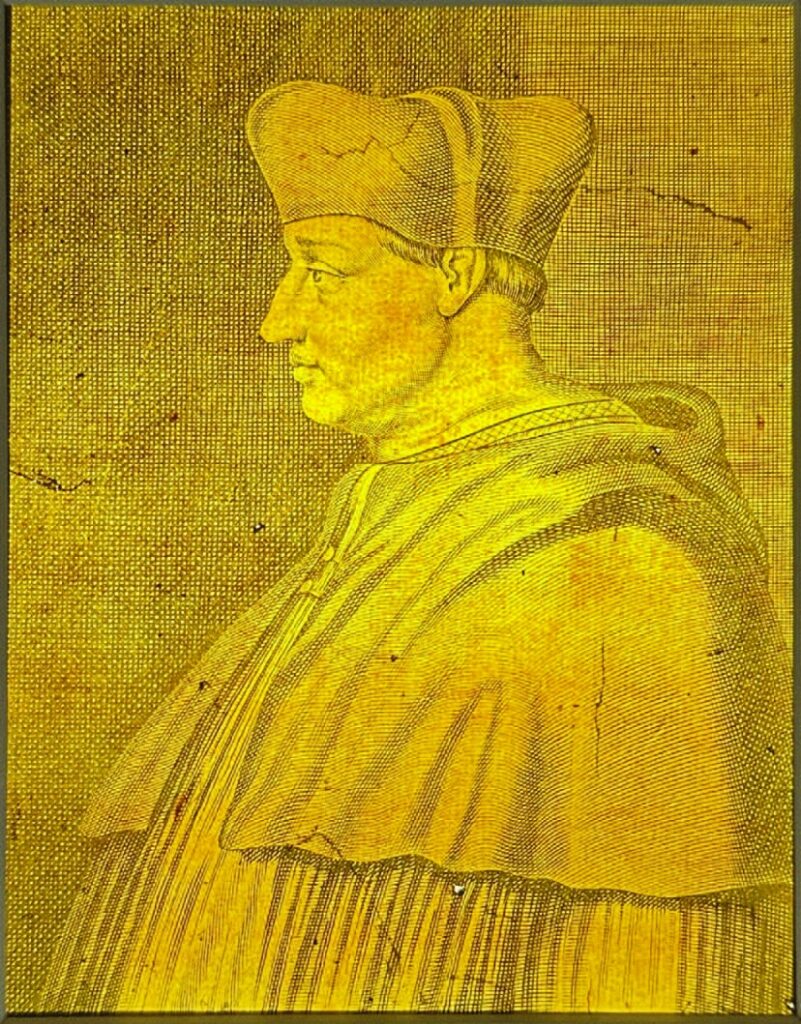
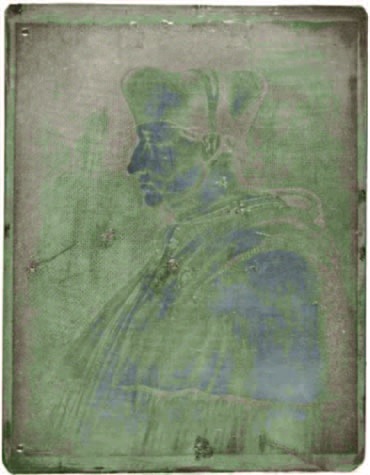
m1 · Plate of tin (98.5 %), etched, image 166×130 mm, plate 198×132 mm. Musée Nicéphore Niépce, inv. 1975.149.2.5 (B. Lavédrine, P1A).
m2 · Plate of tin (94.9 %), etched, image 166×136 mm, plate 179×141 mm; small circles in three corners. Musée Nicéphore Niépce, inv. 1975.149.2.6 (B. Lavédrine, P1B).
Provenance. m1: Isidore Niépce; given by him to the Musée de Chalon-sur-Saône, c. 1864; Musée Nicéphore Niépce. m2: sent to Lemaître, 2 February 1827, and returned by him, 5 March 1827; Isidore Niépce; given by him to Jules Chevrier (“je crois avoir donnée à M. Chevrier”, which I believe I gave to Mr. Chevrier, draft to Fouque, 1867), who had restrikes pulled from it (1862-1864, 1870, 1881); Musée de Chalon-sur-Saône; Musée Nicéphore Niépce.
m3 · Plate of tin, etched, image 166×131 mm, plate 180×139 mm, in a gilt frame (273×240 mm). London, Victoria and Albert Museum, Royal Photographic Society Collection. Hunt 1844, no. 4.
Provenance. Given by Niépce to Francis Bauer, Kew, 22 November 1827; borrowed from Bauer by Charles Wheatstone or a friend, and shown by William Brockedon to the Graphic Society, London, 20 February 1839; Bauer sale, Christie’s, London, 24 November 1841, probably lot 189 or 190 (£1 15s), bought by Robert Brown; [his assistant John J. Bennett, 1858]; […]; R. W. Robinson, by whom given to the Royal Photographic Society, 1924; transferred with the RPS Collection to the Victoria and Albert Museum, London, 2017.
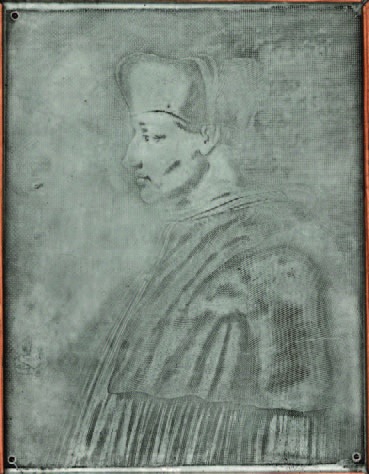
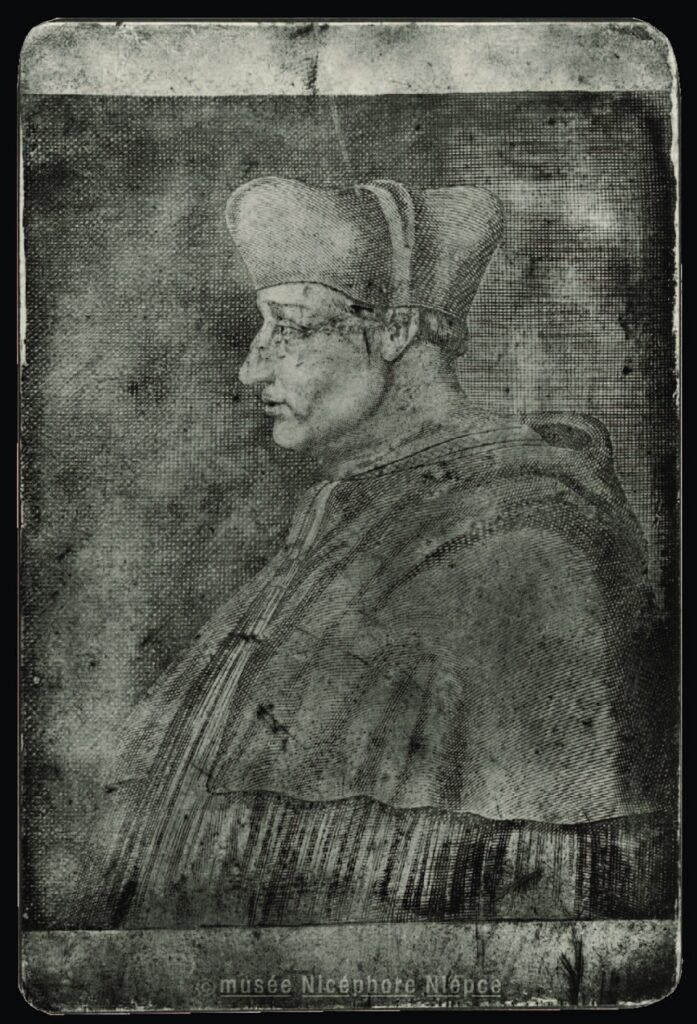
p1 · Print on paper, plate mark 172×132 mm, sheet 191×140 mm, from m2, February 1827 (Lemaître). On the recto, in ink: “A Monsieur Jules Chevrier Souvenir affectueux. I[sido]re Niépce” (To Mr. Jules Chevrier, with affectionate remembrance); on the verso, in Isidore’s hand: “le Cardinal d’Amboise / premier résultat héliographique de / feu Mr Jh Nicéphore Niépce 1824” (the Cardinal d’Amboise, first heliographic result of the late Mr. Joseph Nicéphore Niépce, 1824). Musée Nicéphore Niépce.
p2 · Print on paper, 1827, from m1, plate mark 196×130 mm, sheet 287×212 mm. Inscribed by Bauer: “Impression from Pewter plate of Heliographic Drawings by Mons. Nicéphore Niépce of Chalon sur Saone received from him at Kew November 22d 1827. F. Bauer.” London, Victoria and Albert Museum, Royal Photographic Society Collection. Hunt 1844, no. 4.
Provenance. Given by Niépce to Francis Bauer, Kew, 22 November 1827; Bauer sale, Christie’s, London, 24 November 1841, lot 191 (with p3 and Niépce’s memoir of 8 December 1827), bought by Robert Brown; his assistant John J. Bennett, 1858; [his sale, Tunbridge Wells, April 1884]; Henry Peach Robinson, Tunbridge Wells, by whom exhibited; his son Ralph Winwood Robinson, by whom given to the Royal Photographic Society, 1924; transferred with the RPS Collection to the V & A M, 2017.
p3 · Print on paper, 1827, from m1, plate mark 195×129 mm, sheet 259×213 mm. Austin, Harry Ransom Center, The University of Texas at Austin, Gernsheim Collection. Hunt 1844, no. 4.
Provenance. Given by Niépce to Francis Bauer, Kew, 22 November 1827; Bauer sale, Christie’s, London, 24 November 1841, lot 191 (with p2 and Niépce’s memoir of 8 December 1827), bought by Robert Brown; his assistant John J. Bennett, 1858; H. B. Pritchard, Tunbridge Wells, April 1884; Helmut Gernsheim, 1952; University of Texas at Austin, 1964.
Not numbered · Print on paper, plate mark 177×138 mm, from m2, probably one of Chevrier’s restrikes, labeled in 1890 as Lemaître’s proof of February 1827. Paris, Société française de photographie, on deposit with the BnF, label: “Le Cardinal d’Amboise. Épreuve sur papier tirée en février 1827 par le graveur Lemaître d’après la planche originale obtenue par Nicéphore Niépce en 1826. Don d’Eugène Niépce à la Société française de photographie en 1890. La planche originale sur étain est au musée de Châlon-sur-Saône.” (Proof on paper pulled in February 1827 by the engraver Lemaître from the original plate obtained by Nicéphore Niépce in 1826. Gift of Eugène Niépce to the Société française de photographie in 1890. The original plate on tin is in the museum at Chalon-sur-Saône.)
Note. Marignier (1999, p. 582) records two further prints, both now lost. One passed from Isidore Niépce to La Blanchère; the other belonged to the Musée de Lyon*.
* cited in the Bulletin de la Société française de photographie (May 1890, p. 148), in Potonniée (1925, p. 159, no. 1) and in catalogue of the Bibliothèque nationale, 1967, Niépce, no. 76d.
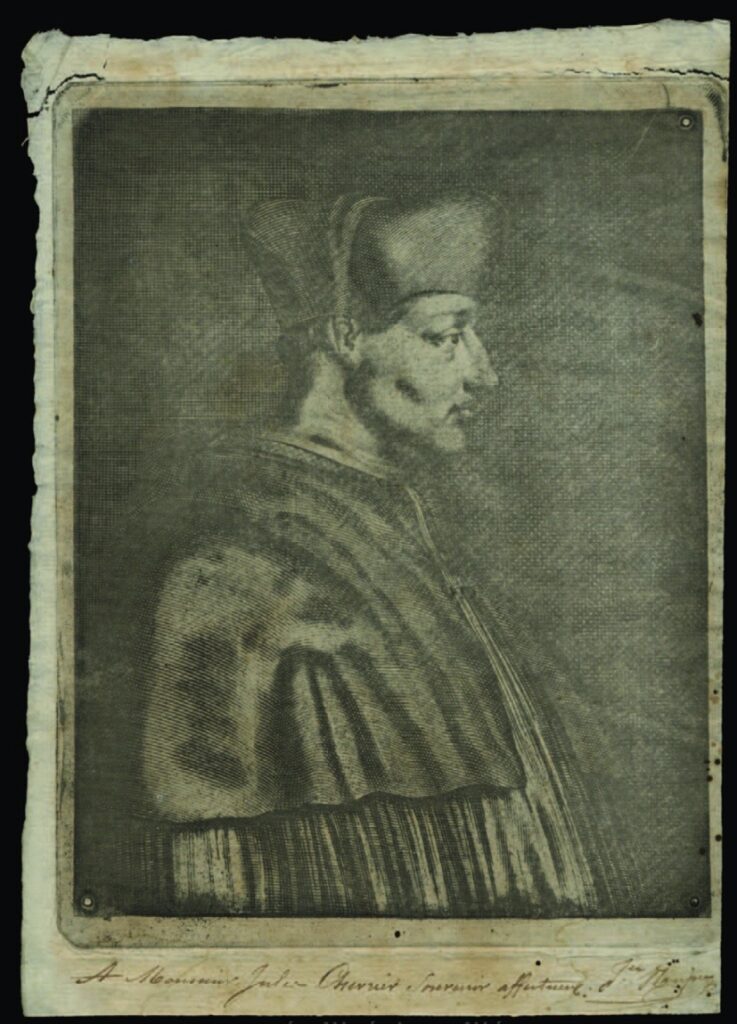
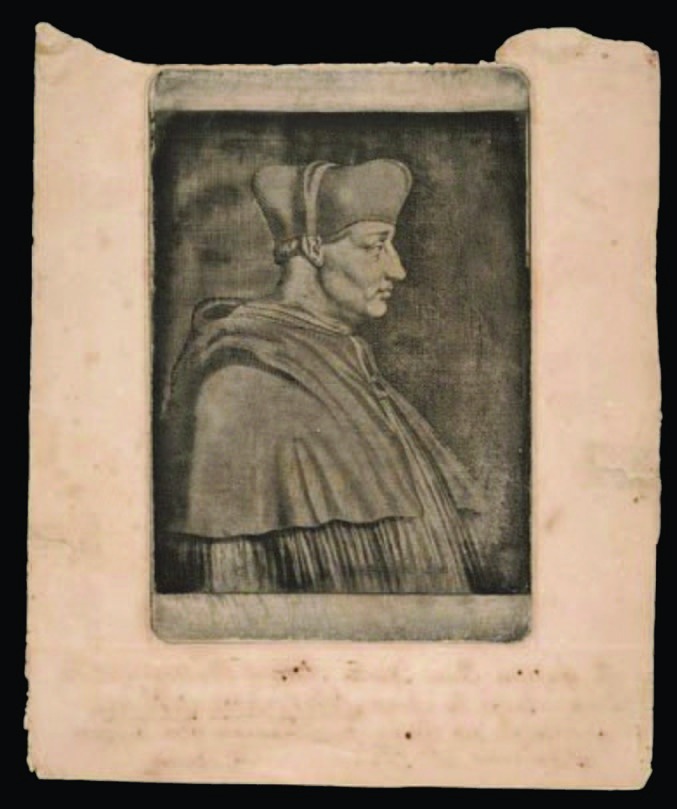
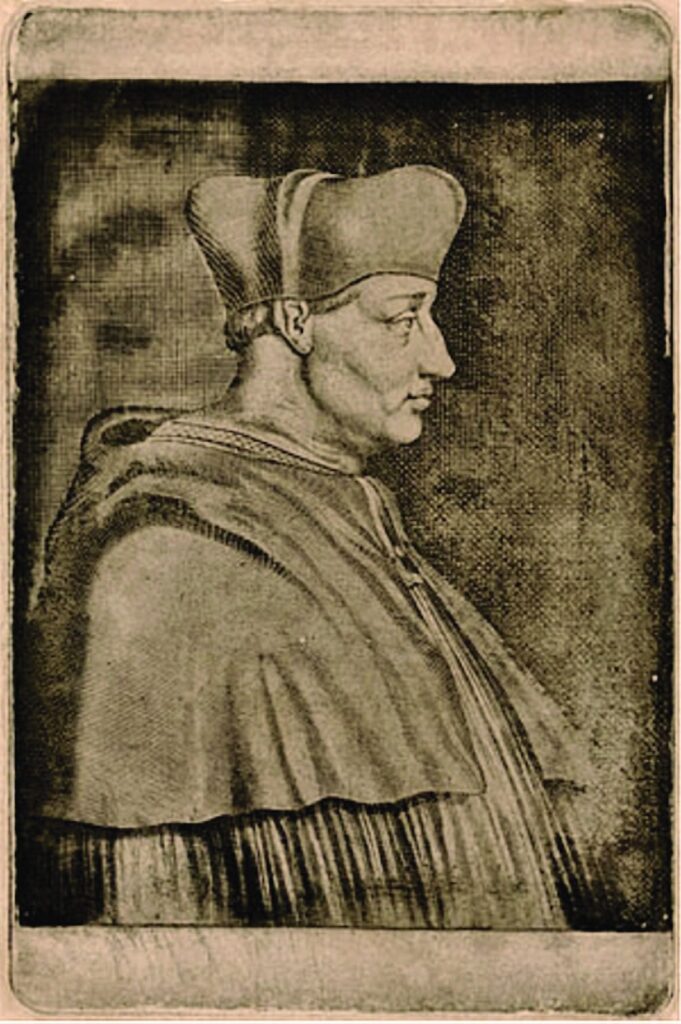
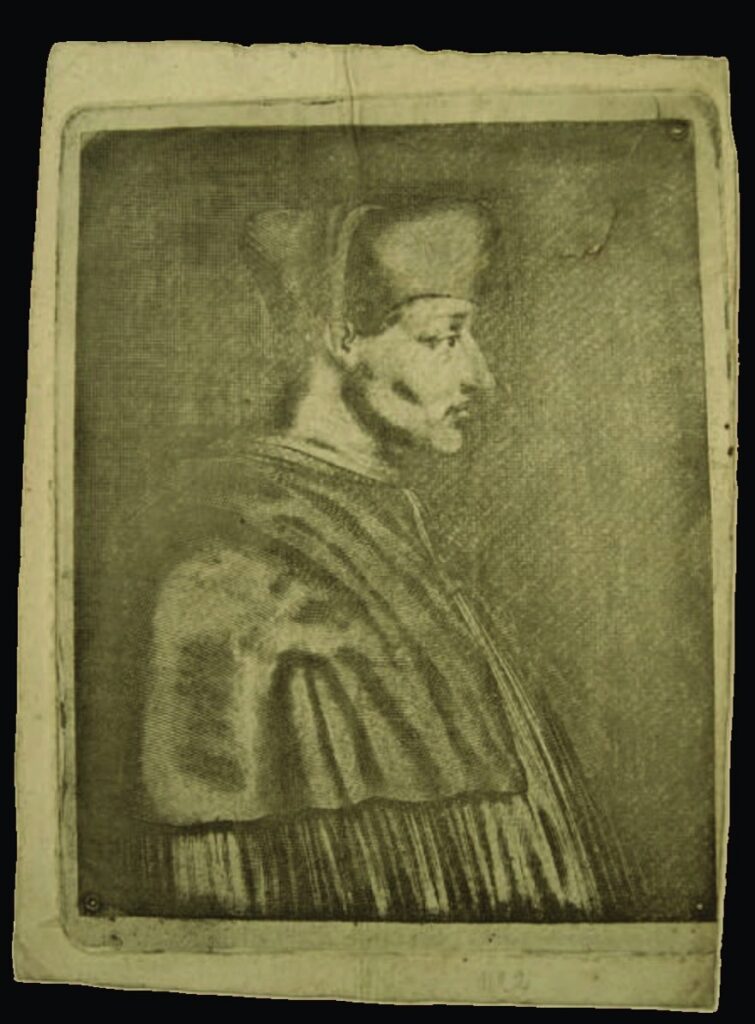
Briot’s cardinal came out of Curley’s parcel in August 1826 (see NN5). After the failure of Erasmus, the Cardinal was the second engraving Niépce tried, and the first to succeed. On 2 November 1826 he told his cousin that it had given him “des épreuves plus fortes de ton que toutes celles que j’avais obtenues précédemment” (proofs stronger in tone than any I had obtained before); but the printing, “confiée à un mauvais imprimeur du pays” (entrusted to a poor local printer), lacked sharpness and correctness, and he kept the proofs to himself. None of the surviving prints can be identified with certainty as one of these.
After this disappointment, on 2 February 1827, two of the plates went to Lemaître in Paris, with the Sainte Famille (NN3) and a landscape in double copy (NN7). His verdict, on 7 February, spared nothing: “Les deux portraits sont les meilleurs essais que vous ayez faits, mais que de travail vous avez encore à faire si vous voulez atteindre à la perfection ! Celui des deux portraits qui est le mieux gravé, c’est-à-dire le plus profondément, donnerait à l’impression l’épreuve d’une planche usée par un fort tirage.” (The two portraits are the best trials you have made, but how much work you still have to do if you want to reach perfection! The better engraved of the two portraits, that is, the more deeply bitten, would print like a plate worn out by a long run.) He pulled proofs nonetheless, and returned the plates on 5 March.
In late August 1827 Niépce left for England, not to make his invention known but to join his brother Claude, gravely ill at Kew. The heliographs reached him there, in his luggage or sent after him; by 31 October he could write to Aiton of “Mes épreuves encadrées faites sur étain paraîtront sans doute trop faibles de ton; ce qui provient de ce que les jours ne contrastent pas assez avec les ombres résultant de la réflexion du métal” (My framed proofs made on tin will no doubt seem too weak in tone; this comes from the lights not contrasting enough with the shadows produced by the reflection of the metal). On 22 November Francis Bauer received a plate and two prints of the Cardinal, and wrote the date on one of them. In February 1839, those objects, lent by Bauer to Talbot’s circle, were shown to the Graphic Society in London in place of Talbot’s photogenic drawings.¹
Prints and plates. Two features of the plates reappear on paper. The small circles in three corners of m2 are found on p1, the print Isidore dedicated to Chevrier, and on the print at the Société française de photographie; Marignier had already identified both as pulled from this plate.² The plain bands at top and bottom of m1 are found on p2 and p3, the two prints given to Bauer; the Harry Ransom Center dates the plate of its own print to 1826.³ The circles identify the plate. On this evidence, Lemaître printed p1 from m2 in February 1827, and the prints given in England were pulled from m1. Lemaître sent back one proof for each plate, “cinq planches gravées avec cinq épreuves” (five engraved plates with five proofs) on 5 March, and on 28 March charged for “cinq épreuves… que j’ai fait tirer pour 1 f” (five proofs… which I had pulled for 1 f); p1, given by Isidore to Chevrier, is that proof, on its paper and ink. The SFP example, which bears the same circles, cannot be a second one; its label, written in 1890, dates it from family tradition, and it may be one of Chevrier’s restrikes.
The two matrices had different fortunes: m2 passed from Isidore to Jules Chevrier, who had it printed again; m1 went to the museum.
Chevreul. On 23 May 1853, according to La Lumière (28 May 1853), Chevreul laid before the Académie des sciences “deux planches gravées sur étain par Nicéphore Niépce” (two plates engraved on tin by Nicéphore Niépce), sent “de Chalon-sur-Saône, 2 février 1827” and printed by Lemaître. They came from the parcel of February 1827: two of the Cardinal, two of the landscape (NN7), and the Sainte Famille (NN3). Which two were shown is not recorded; probably Cardinal and Landscape, plates of similar size and different subjects, they may be among the plates now at Chalon.
Between Niépce’s death and Chevrier’s restrikes, the Cardinal was printed again. Several works in progress list these early impressions, among them a large loose sheet, pulled for the mayor of Chalon, now in the Museum of Fine Arts, Houston, to be published by the Musée Nicéphore Niépce in its forthcoming exhibition catalogue, March 2027.
Note. From Isidore the plate passed to Jules Chevrier, of Chalon, who had it printed again: a loose edition around 1862-1864, followed by an impression by Cadart et Luce, Paris, 1870, on the initiative of Blanquart-Évrard, “liberally offered… by Mr. Jules Chevrier of Châlons-sur-Saône, owner of the original plate”, and 1881. These restrikes are not numbered.
¹ Minutes of the Graphic Society, 20 February 1839, quoted by L. J. Schaaf.
² J.-L. Marignier, Niépce. L’invention de la photographie, Paris, Belin, 1999, pp. 582-583.
³ Harry Ransom Center, The University of Texas at Austin, Gernsheim Collection, “printed from a plate made in 1826”.
NN7 · Vue d’une ruine près Fréjus
View of a Ruin near Fréjus (traditionally Paysage d’après Le Lorrain, Landscape after Claude Lorrain)
Autumn 1826 (tin plates) · 1827 (print on paper, lost)
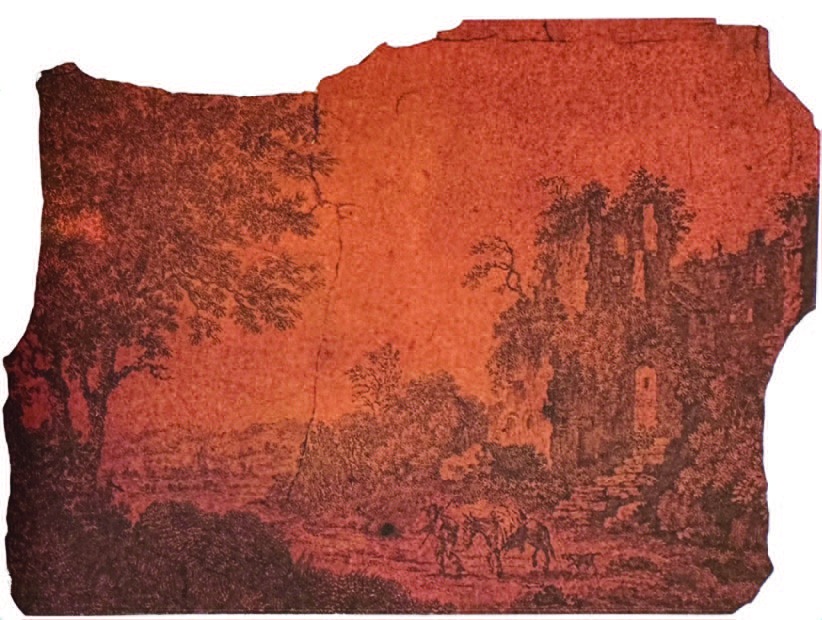
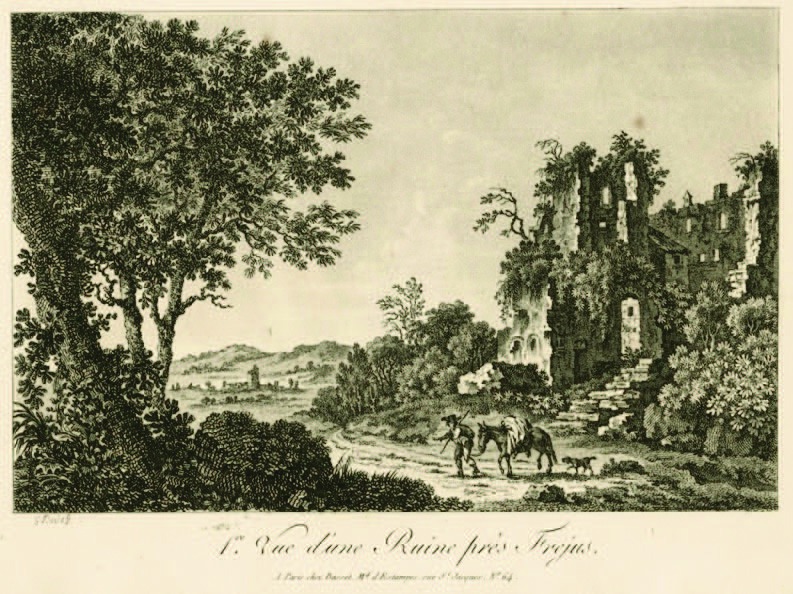
t1 · Etching by G. Paris, 1re Vue d’une Ruine près Frejus (First View of a Ruin near Fréjus), signed lower left “G. Paris f.”, “A Paris chez Basset, Md d’Estampes, rue St Jacques, N° 64” (Paris, at Basset’s, print seller, 64 rue Saint-Jacques), made translucent with varnish by Niépce. Now 120×165 mm (severely torn). Paris, BnF, Département des Estampes et de la photographie, Réserve Z-83.
Provenance. Janine Niépce, Paris, whose heliographic archive the author helped her to describe, identify and assess; BnF, 2004.
m1 · Plate of tin (94.9 %), etched, 142×208 mm, image 119×178 mm. Musée Nicéphore Niépce (gift of Isidore Niépce), inv. 1975.149.2.7 (B. Lavédrine, P3).
[m2] · Plate of tin, etched, “about the size of a half-plate”. Inscribed on the back by its owner: “This prototype was presented to me at Kew, in the year 1827, by Mons. N. Niépce, the discoverer of this art. B. Cussell”. Lost.
Provenance. Given by Niépce at Kew, 1827, to B. Cussell, in whose house Claude Niépce lodged and died; sold with Cussell’s effects after his death; a dealer, who scraped the back to see whether it was silver; Joseph Ellis, Brighton, by 1862. Hunt himself only thought it showed the same view as Bauer’s print.
[p1] · Print on paper, image 6¾ × 4½ in (171×114 mm), “from a plate 8½ × 7½ inches”: “a landscape and a ruin; the lines in places beautifully sharp” (Hunt 1844, no. 5). Lost.
Provenance. Given by Niépce to Francis Bauer, Kew, 1827; Bauer sale, Christie’s, London, 24 November 1841, lot 191 (“another impression of a landscape by the same process”), bought by Robert Brown; [shown at the Camera Club, London, 1894].
Source print. The model is not by Claude Lorrain: it is a commercial landscape by G. Paris, “1re Vue d’une Ruine près Frejus”, sold by Paul-André Basset (1759-1829), print publisher and wallpaper maker in the rue Saint-Jacques. The translucent sheet, torn, darkened and seen through its varnish, had kept its source hidden for two centuries; it was identified by the author in 2024, from the only other impression so far located, now in the collection of Michael S. Sachs, United States. The title “1re Vue” shows that it belongs to a series.
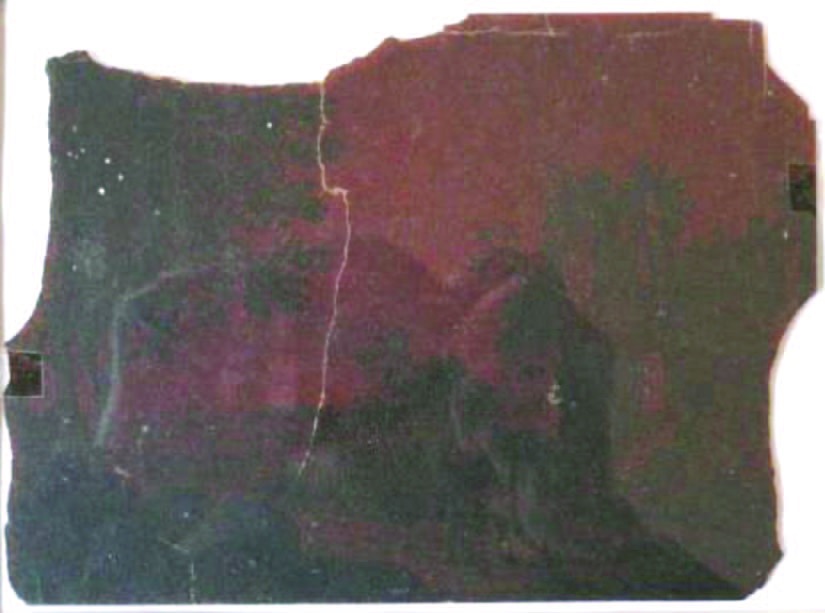
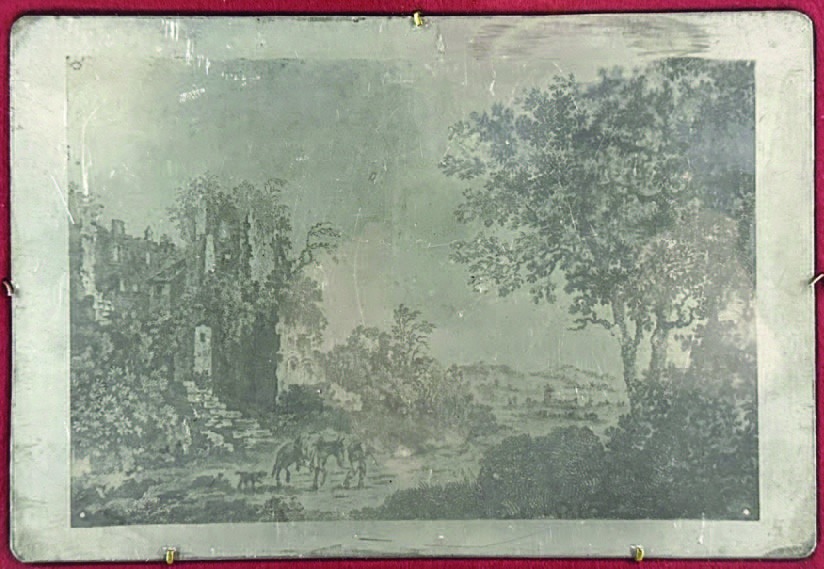
Bonnet and Marignier suggested in 2003 that the landscape described by Lemaître might be the plate at Chalon. Janine Niépce also took this sheet to be the “Paysage” (Landscape) among the eight prints Lemaître sent on 28 March 1827. Lemaître’s letter of 7 February 1827 now shows that the landscape was already at Le Gras, and on a plate, before that date. On 2 February 1827 Niépce had sent Lemaître five tin plates: the Sainte Famille (NN3), and “une double copie d’un portrait et d’un paysage” (a double copy of a portrait and of a landscape). The portrait was the Cardinal (NN6). The landscape was this one. All were etched faintly, “surtout celles qui représentent le paysage” (especially those that show the landscape).
Lemaître’s verdict, on 7 February, describes both copies: “Des deux paysages celui qui est gravé par accident a seulement un ciel qui offre une teinte, qui paraîtrait être le résultat de la gravure à l’aquatinta […] la partie des devants sous la masse d’arbres, au lieu d’être la plus vigoureuse de la gravure, serait après le ciel la plus faible.” (Of the two landscapes, the one that is engraved by accident has only a sky that shows a tint, which would seem to be the result of aquatint engraving […] the foreground under the mass of trees, instead of being the strongest part of the engraving, would be, after the sky, the weakest.) The mass of trees is there, at the right of the plate, with the ruin on the left and a muleteer, his mule and a dog on the road. Lemaître pulled one proof from each plate, and returned plates and proofs on 5 March.
In August 1827 Niépce left for Kew, where his brother Claude lay ill. The landscape went with him twice. A print went to Francis Bauer, who described it to Robert Hunt as “a landscape and a ruin”; it was in all likelihood Lemaître’s proof, the only recorded impression of the plate. The second plate went to B. Cussell, the brothers’ landlord, who inscribed it as a “prototype”. In 1862 Joseph Ellis found it at a dealer’s, its back scraped by someone who had hoped it was silver: being tin, it escaped the melting pot.
So this modest view of a ruin, bought at a print shop in the rue Saint-Jacques, crossed the Channel twice, as plate and as print, like the Cardinal: a plate at Chalon, a plate and a print in England.
Whether the engraving came in Curley’s parcel is not known; but among its portraits and caricatures Niépce had glanced at “d’autres points de vue” (other views) (see NN5), and a view of a ruin, sold in Paris by Basset, would not have been out of place among them.
Note on the title. The name Paysage d’après Le Lorrain is found in French publications from at least 1945 (Lécuyer) and is used by Marignier. Hunt, in 1844, describes only “a landscape and a ruin”. Where the attribution to Claude came from is not known.
Note on the size. The translucent sheet, now torn to 120×165 mm, can no longer be measured against the plate. The image on the Chalon plate (119×178 mm) and Bauer’s print, as Hunt measured it (114×171 mm), differ as an intaglio impression should, pulled on damp paper that shrinks as it dries. The plate size Hunt gives for that print, 8½ × 7½ inches (about 216×191 mm), fits neither dimension of the Chalon plate (142×208 mm); it has not been verified.
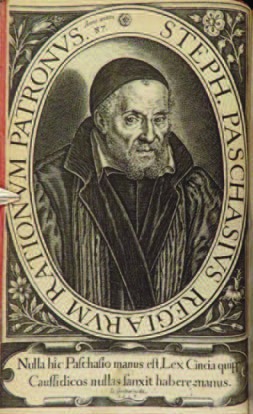
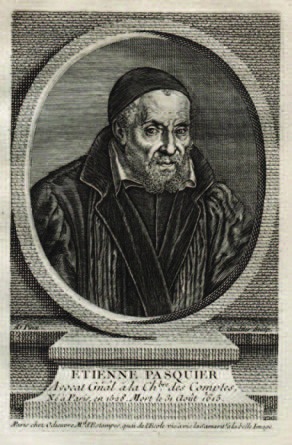
NN8 · Portrait d’Estienne Pasquier, Anno ætatis 87
Étienne Pasquier, Aged Eighty-Seven
Autumn 1826 (transparency) · No plate · No prints
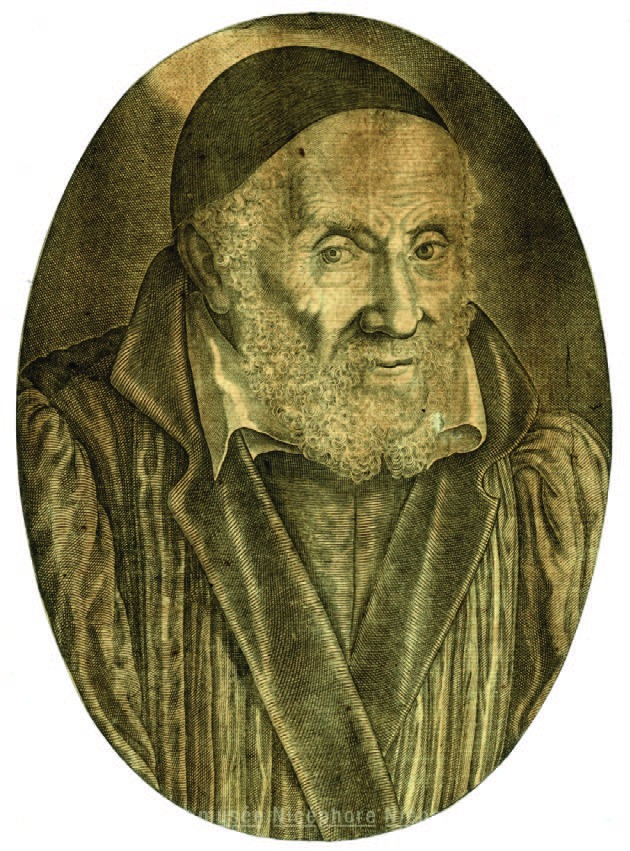
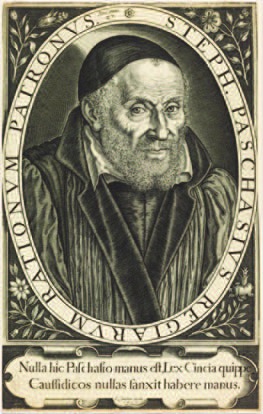
t1 · Engraving, portrait of Étienne Pasquier after Léonard Gaultier’s plate of 1617 (“Anno ætatis 87”), cut to the oval and made translucent with varnish by Niépce before 2 November 1826. About 231×165 mm. In an old wooden frame (334×273 mm), with labels: “Gravure rendue transparente / au moyen d’un vernis pour servir / de cliché dans ses essais de reproduction / par J. N. Niepce”; “don de Mr Isidore Niepce” (Engraving made transparent by means of a varnish to serve as a negative in his trials of reproduction, by J. N. Niépce; gift of Mr. Isidore Niépce); a round label of the Société d’histoire et d’archéologie de Chalon-sur-Saône, no. “161”; a rectangular label, “15”. Chalon-sur-Saône, Musée Nicéphore Niépce, inv. 1975.149.2.3.
Provenance. Alexandre du Bard de Curley, sent to Niépce on 4 August 1826; Isidore Niépce; Musée de Chalon-sur-Saône, 1861 (gift of Isidore Niépce); missing c. 1976-1999; transferred to the Musée Nicéphore Niépce, July 2000.
Source print. Léonard Gaultier engraved the portrait in 1617; Jaspar Isac copied it for the folio edition of the Recherches de la France (1643). The size of Niépce’s sheet suggests the later enlargement. Identified as Pasquier by Isabelle Evrard in 2005, from Niépce’s letter of 2 November 1826; known until then as “un vieillard à mi-corps” (an old man, half-length) (Marignier 1999, p. 582).
Varnish. Analysed under Bertrand Lavédrine in 2006-2007: a spirit varnish of pine resin, most probably colophony.
On 2 November 1826, fresh from the success of the Cardinal (NN6), Niépce told his cousin: “J’ai préparé à cet effet une autre de vos gravures, le portrait d’Étienne Pasquier; et je ne négligerai rien pour que cette nouvelle tentative ait un succès décisif.” (I have prepared for this purpose another of your engravings, the portrait of Étienne Pasquier; and I shall spare nothing to make this new attempt a decisive success.) Three days later he wrote to Claude that rain, fog and cold had stopped his work. He did not resume it before the spring, and by then Lemaître’s parcel had brought him other models.
No plate, no print of Pasquier is known. The portrait was cut to its oval, by Niépce or before him, and the border that named the sitter, gave his age and signed the plate is missing. Stripped of his identity for the sake of the light, Pasquier became, for a century and a half, “un vieillard à mi-corps”: an old man without a name, waiting, like the Prisoner (NN5), for an experiment that never came. He recovered his name in 2005, from the letter that had prepared him for the light.
The jurist who wrote the Recherches de la France spent his life defending French priorities against foreign claims.
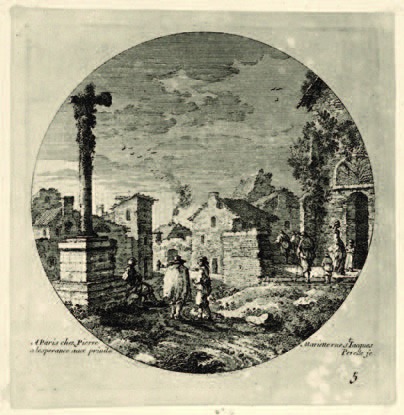
NN9 · Paysage en tondo, à la manière de Perelle
Landscape in a Tondo, in the Manner of Perelle
Autumn 1826 (?) (tin plate) · No prints
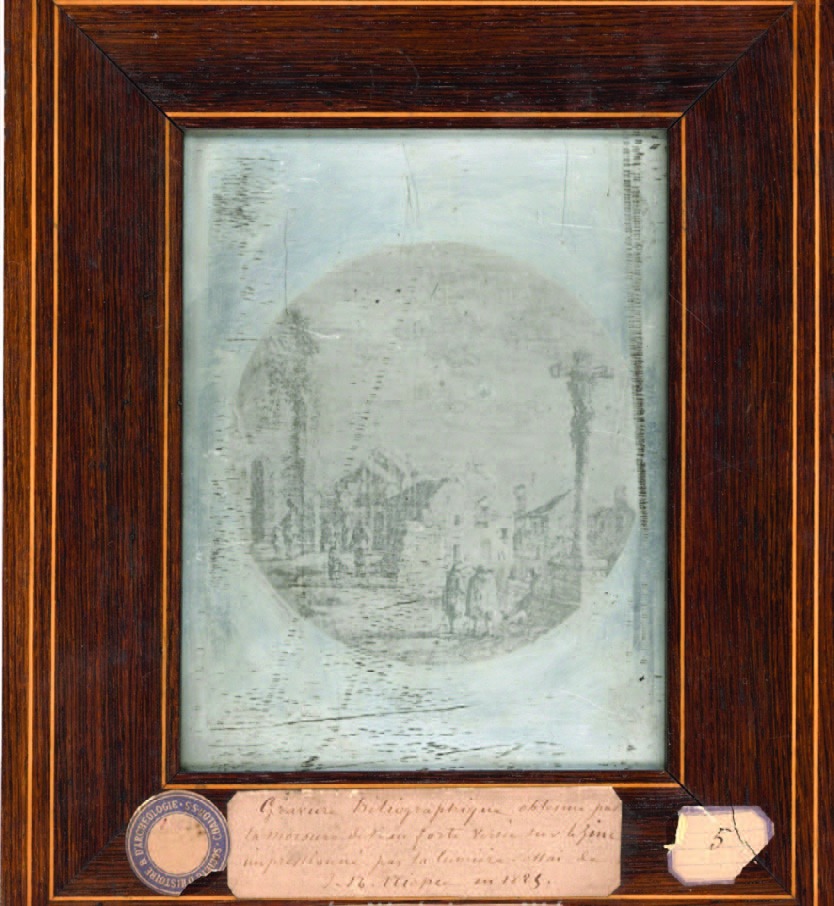
m1 · Plate of tin (97.1%), etched, 198×152 mm, the image within a circle about 121 mm in diameter. In an old frame, with a label in ink in the hand of Isidore Niépce: “Gravure héliographique obtenue par la morsure de l’eau-forte sur le zinc impressionné par la lumière, essai de J. N. Niépce en 1825” (Heliographic engraving obtained by the biting of acid on zinc impressed by light, trial by J. N. Niépce in 1825). Chalon-sur-Saône, Musée Nicéphore Niépce, inv. 1975.149.2.12 (B. Lavédrine, P9, “Paysage circulaire”, circular landscape).
Provenance. Isidore Niépce; Musée de Chalon-sur-Saône (Armand-Calliat 1950, no. 982), [after 1861]; missing c. 1976-1999 [Société d’histoire et d’archéologie de Chalon-sur-Saône]; Musée Nicéphore Niépce.
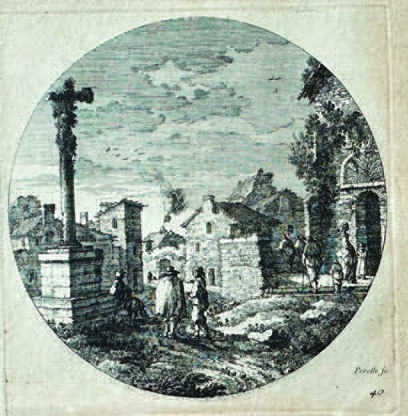
Source print. A landscape in the manner of the Perelle family, close to a known etching but not identical with it. The exact sheet Niépce used has not been found, and the translucent source is lost.
Literature. Meulien 1885, p. 293, no. 5; Potonniée 1925, p. 158, no. 4; Armand-Calliat 1950, no. 982; Jay 1978, p. 35; Marignier 1999, p. 580.
No letter mentions this plate. It is placed here by its metal and its format. Lavédrine found it to be nearly pure tin (97.1%), like the Cardinal (NN6) and the view near Fréjus (NN7), not the tin-lead alloy of the spring of 1826. And it shares one dimension, 198 mm, with the Cardinal (NN6-m1): the plates of that winter that Niépce called “plus petites” (smaller) than the Sainte Famille.
Nothing connects this engraving with Curley’s parcel; it stands in this chapter for its metal and its probable date, not its origin. A seventeenth-century etching in the manner of Perelle, of the kind Curley’s “museum ambulant” (traveling museum) could well have contained, it may have come from there; but no letter says so.
Isidore’s label, nearly the same words as on the small landscape (NN4), calls the plate zinc and dates it to 1825. The analysis gives tin, and the metal a date after May 1826. Here, at least, two errors.
Unlike the other subjects, the image is round. Niépce had cut no round plates; he laid a round engraving on a rectangular one, and the circle of tin left bare around it shows how little he cared to fill a plate when the model did not.
Laisser un commentaire